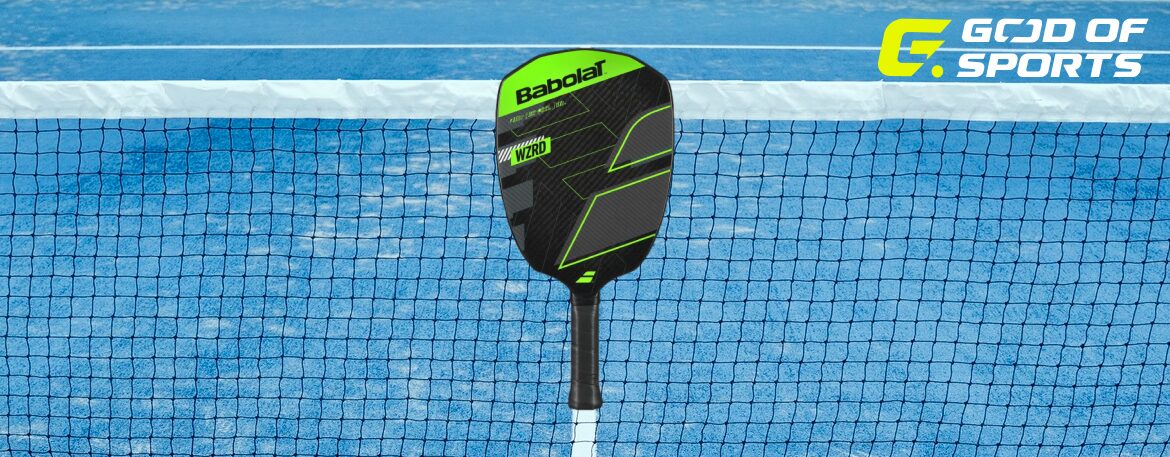
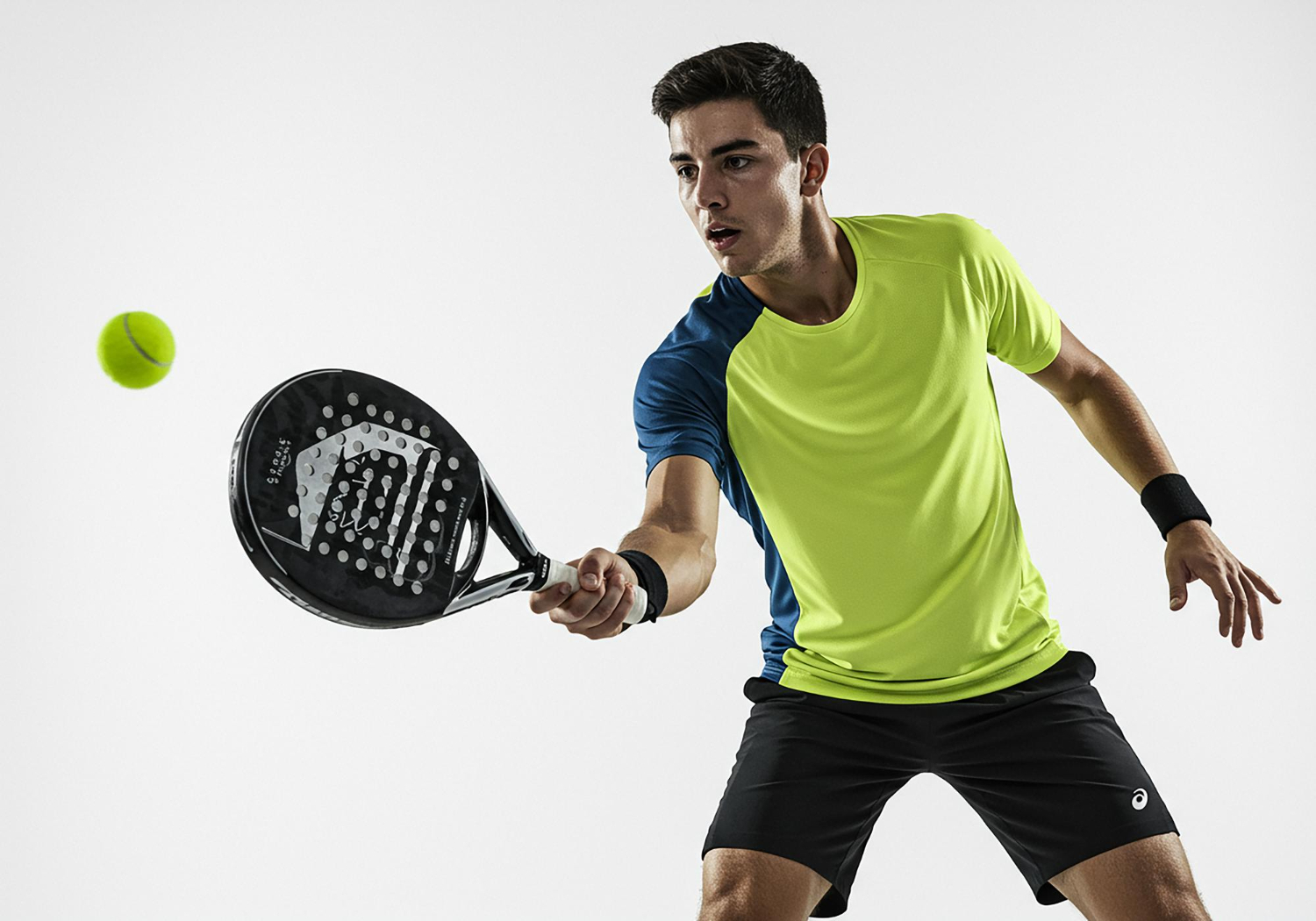
Babolat WZRD Pickleball Racket in Court image

Babolat WZRD Pickleball Paddle Review: Precision, Spin, and Control for the Strategic Player

Babolat WZRD Pickleball Paddle Review: Precision, Spin, and Control for the Strategic Player

If you’re a player who excels in the soft game and values precision, spin, and control over raw power, the Babolat WZRD Pickleball Paddle is designed for you. With its cutting-edge technology and unique design, the WZRD is the ultimate tool for players who thrive in strategic play, particularly when it comes to executing drop shots, dinks, and other finesse shots. In this review, we’ll dive into its key features, performance aspects, and who this paddle is best suited for.


First Look: A Strategic Design Built for Precision

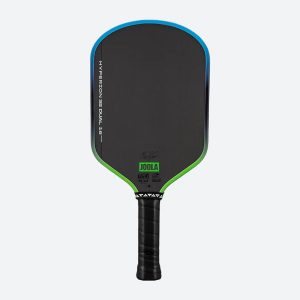
The Babolat WZRD immediately stands out with its sleek, athletic design. The paddle features a black and green color scheme, combining bold visuals with top-tier functionality. The Babolat logo is prominently displayed, signaling both quality and performance.

But the WZRD is not just about looks. It’s built to perform with precision. Its 20mm core thickness gives it a solid feel while enhancing control. This paddle’s polypropylene honeycomb core offers just the right balance between power and touch, making it ideal for players who need to execute fine, controlled shots.

Weighing in at 8.5 oz (240g), the WZRD is designed for players who want stability without the added bulk. Whether you’re at the kitchen line or the baseline, the paddle’s balanced weight offers both comfort and enhanced maneuverability.


Materials and Construction: Premium Tech for Top Performance

One of the standout features of the Babolat WZRD Pickleball Paddle is its 3K woven carbon fiber face. This biaxial carbon fiber weave allows for both flexibility and strength, ensuring that the paddle delivers a responsive feel while increasing dwell time. This means that the ball stays on the paddle longer, allowing for better control and spin.

In addition to the carbon fiber face, the WZRD incorporates RPM Max Grit technology, which gives the paddle its unique texture. This rough surface allows players to generate excellent spin, whether executing a topspin drive or a backspin return.

The SWC Pure Feel technology reduces unwanted vibrations, increasing comfort while expanding the sweet spot. This helps players avoid hand fatigue and allows for consistent performance during long rallies.


Performance: Spin, Control, and a Touch of Power

When it comes to on-court performance, the Babolat WZRD shines in its ability to deliver precision while offering just enough power when needed. Let’s take a closer look at how it performs:

Control: 5/5

The WZRD is designed with control in mind. Its solid build and polypropylene honeycomb core ensure a predictable response on every shot, making it perfect for dinks, drop shots, and volleys at the net. Players who like to play a strategic, controlled game will appreciate the consistency this paddle offers.

Spin: 4.5/5

Thanks to its RPM Max Grit surface, the WZRD generates fantastic spin. Whether you’re trying to keep your opponent off-balance with a slicing return or adding topspin to your serve, this paddle helps you execute with precision. The 3K carbon fiber face amplifies the effect of the spin, allowing for sharp angles and high-bouncing shots.

Power: 3.5/5

While the WZRD isn’t built for raw power, it doesn’t lack in this area. The polypropylene core and solid weight allow for sufficient power during drives and smashes. However, it excels more in touch-based play rather than in power-driven shots. Players who prefer to play fast-paced or aggressive power games might find it a little too focused on finesse.

Maneuverability: 4.5/5

Despite its precision-driven design, the WZRD maintains excellent maneuverability. The 8.5 oz weight provides enough stability while allowing for fast reactions and quick transitions at the net. Whether you’re adjusting to a sudden shot or recovering from a fast exchange, the WZRD responds quickly and efficiently.

Who Should Consider the Babolat WZRD?

The Babolat WZRD is perfect for advanced players who specialize in control, spin, and precision. If you focus on finesse and strategy, whether you’re executing soft dinks, controlling the pace of the rally, or aiming for sharp angles, this paddle gives you the tools you need to dictate the game.

However, if you’re more of a power player who thrives on aggressive, fast shots, the WZRD may not be the best choice for you. The smaller sweet spot and focus on control might not suit those who prefer a more power-oriented paddle.

In short, the WZRD is for players who prefer strategic play, with the ability to generate excellent spin and control.

Still not sure you want to buy this pickleball paddle? Watch our full video review and make the choice:

Pros and Cons

 Pros:

  • Exceptional control for strategic players
  • Outstanding spin capability thanks to RPM Max Grit
  • Comfortable grip and SWC Pure Feel technology for reduced vibrations
  • Solid maneuverability for fast exchanges
  • Durable 3K carbon fiber face construction

 Cons:

  • Power may be lacking for aggressive players
  • Small sweet spot requires precision on every shot
  • Not ideal for players who focus on power-based or aggressive play

Final Verdict: The Precision Paddle for Strategic Play

The Babolat WZRD Pickleball Paddle is the ideal choice for players who thrive on control, precision, and spin. Its advanced technology and high-quality construction ensure that you can execute a wide range of strategic shots with consistency and finesse. While it may not provide the same level of power as other paddles, it excels in its ability to manage the game with precision and skill.

Overall Rating: 4.5 / 5

  • Control: 5/5
  • Spin: 4.5/5
  • Power: 3.5/5
  • Maneuverability: 4.5/5

If you prefer a paddle that enhances your finesse game and allows you to control the court with strategic shot-making, the Babolat WZRD is a must-have.

For more information and to grab the Babolat WZRD Pickleball Paddle, head over to God of Sports.


Smash the Walls: The Complete 2025 Squash Guide

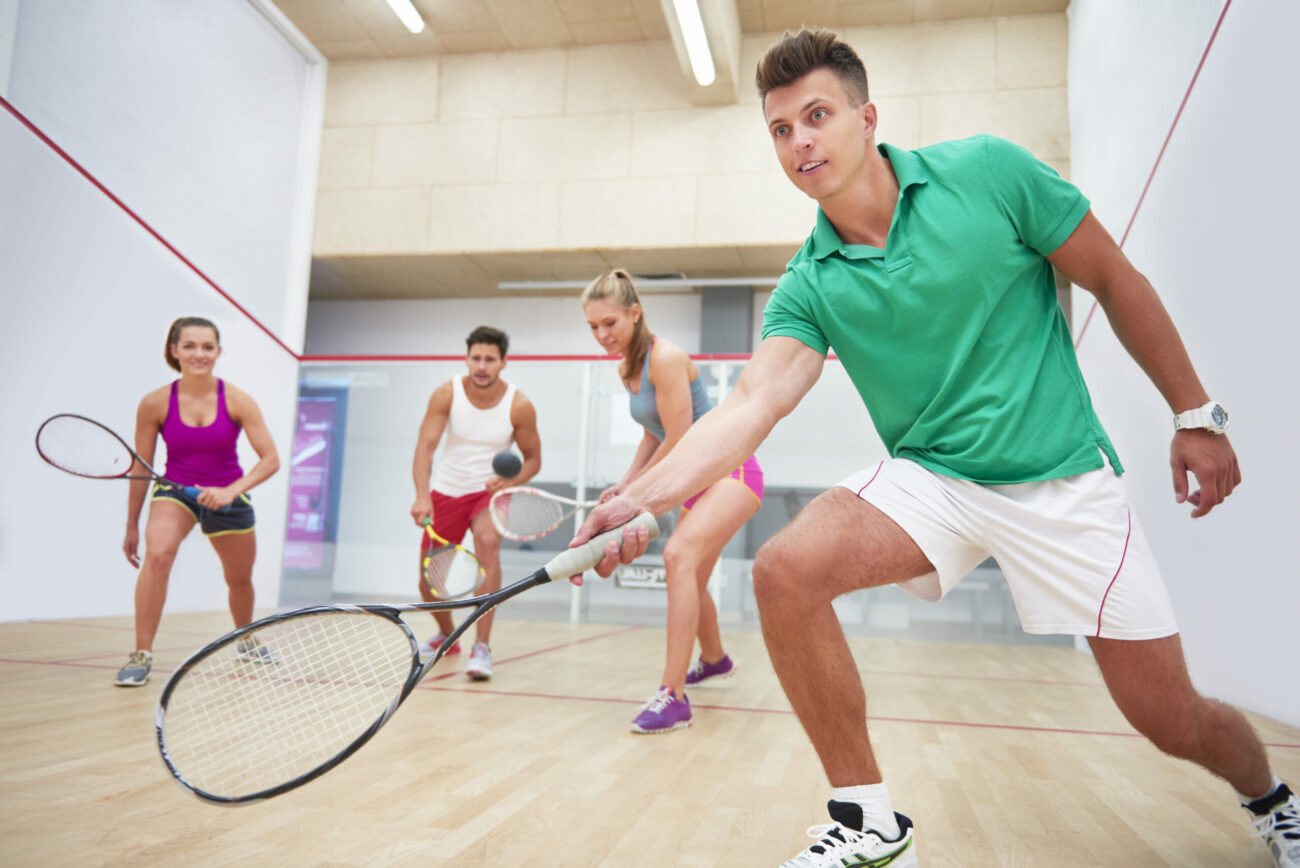
Step onto a squash court and you’ll immediately sense it: the walls are alive, the ball moves like lightning, and every rally feels like a sprint wrapped inside a chess match. Squash is one of the few sports that simultaneously tests speed, stamina, skill, and strategy.

Named the world’s healthiest sport multiple times in global fitness studies, squash pushes you to your limits in short, intense bursts. It’s no wonder that professionals like Ali Farag, Nour El Sherbini, and Mohamed ElShorbagy are considered not just great athletes but masters of tactical intelligence.

This guide is your all-in-one squash playbook for 2025—whether you’re just starting, refining your game, or aiming to dominate your league. You’ll learn rules, court design, equipment picks, training tips, and the mental edge pros rely on.

What is Squash? How is it played?

Squash began in 19th-century England when schoolboys realized a punctured ball demanded more skill to control. Today, it’s a global sport played in over 185 countries.

Singles vs Doubles

  • Singles: Standard version, 2 players on a 9.75m × 6.4m court.
  • Doubles: Played by 4 players on a wider 9.75m × 7.62m court.

How It’s Played

  1. Player A serves.
  2. Player B must return the ball before it bounces twice.
  3. Ball can strike side/back walls but must always hit the front wall.
  4. Rally continues until a fault, tin, or double bounce occurs.

Matches are best-of-five, with games played to 11 (PAR scoring).

Why it’s unique: Unlike tennis or badminton, the walls create infinite shot angles, making anticipation and positioning just as important as raw power.

What are the Rules of Squash?

Scoring

  • Point-a-Rally (PAR) to 11 is standard worldwide.
  • At 10–10, you must win by 2 points.

Serving

  • Start in one of the back service boxes.
  • Ball must hit the front wall above the service line and land in the opposite quarter.

Rally Play

  • Ball must strike front wall above the tin and below the out line.
  • Use side and back walls freely.
  • Rally ends if the ball goes out, hits the tin, or bounces twice.

Interference Calls

  • Let: Rally replayed due to accidental obstruction.
  • Stroke: Point awarded if your clear winning shot was blocked.

Pro tip: Good movement includes clearing your opponent’s path. At elite levels, failing to clear can cost you strokes.

What is the Layout of a Squash Court?

A squash court is compact but technical:

  • Dimensions (Singles): 9.75 m (length) × 6.4 m (width).
  • Front Wall: Has 3 boundaries—out line (top), service line (middle), tin (bottom).
  • Back Wall: Often glass, especially in tournaments.
  • Service Boxes: Two squares in back corners for serving.
  • Short Line: Splits the court into front and back halves.

Tin Height

  • Standard: 48 cm (19″).
  • Professional events: 43 cm (17″) for more attacking play.

Types of Courts

  • Plaster/wood: Traditional club courts.
  • All-glass courts: Used for PSA tournaments, with LED-lit boundaries for spectators.

Top 5 Squash Rackets (2025 Picks)

1) Tecnifibre Slash 125 Squash Racquet
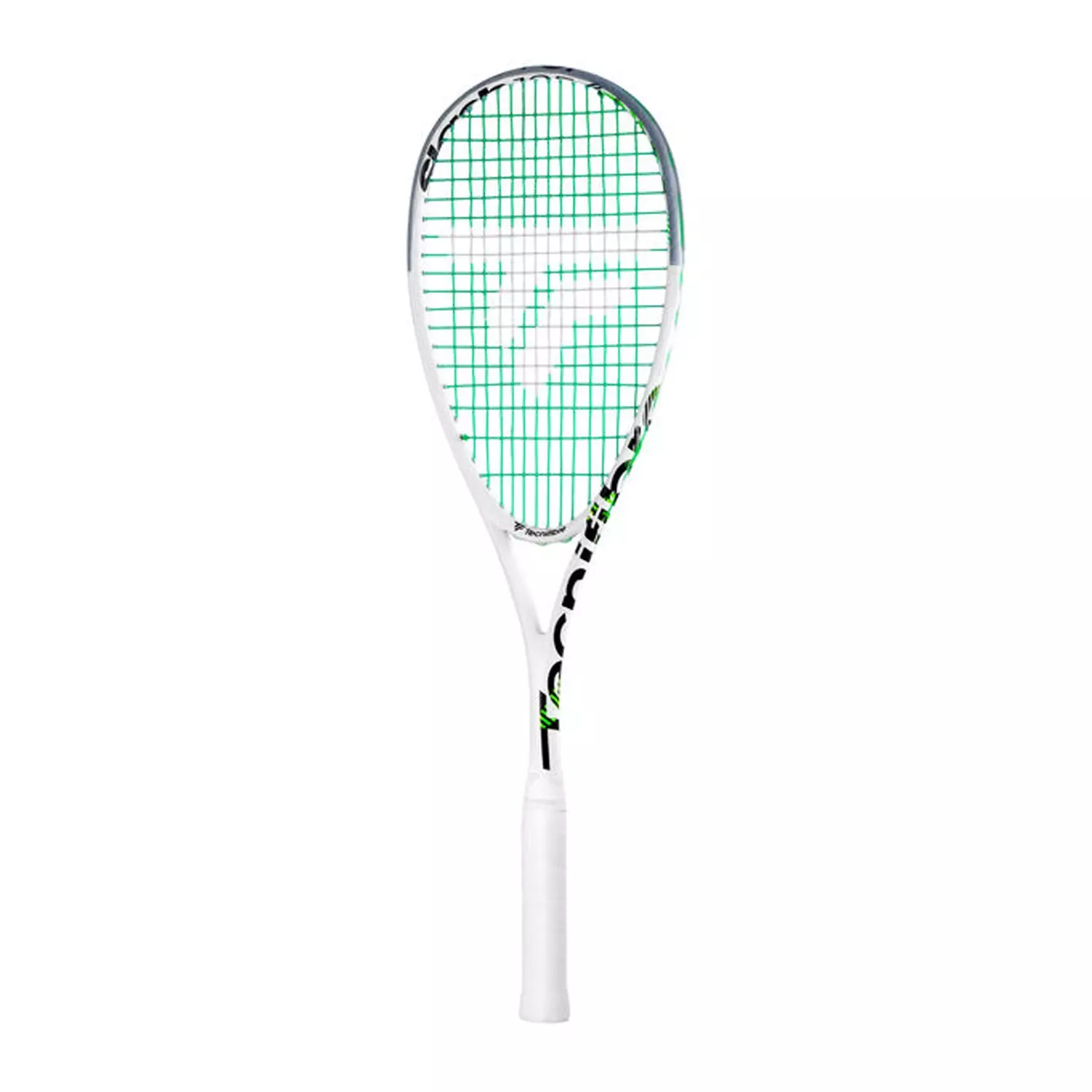
Tecnifibre Slash 125 Squash Racquet

A modern “attack” frame that’s light through the air but still stable, great if you like holding the swing and snapping the ball short or drilling quick straight drives. The Slash line is known for easy racquet-head acceleration, so deception and volleying feel natural. If you generate your own pace, the 125g variant hits the sweet spot for touch + countering.

Who it suits: All-court and attacking players who volley often and like to hold/disguise.

Why it stands out:
Lively power from the teardrop bed, quick maneuverability, confidence on counter-drops.

Try this string/tension:
Multifilament 24–26 lbs for a crisp-but-forgiving pocket.

Buy Now

2) HEAD Microgel Blast Squash Racquet
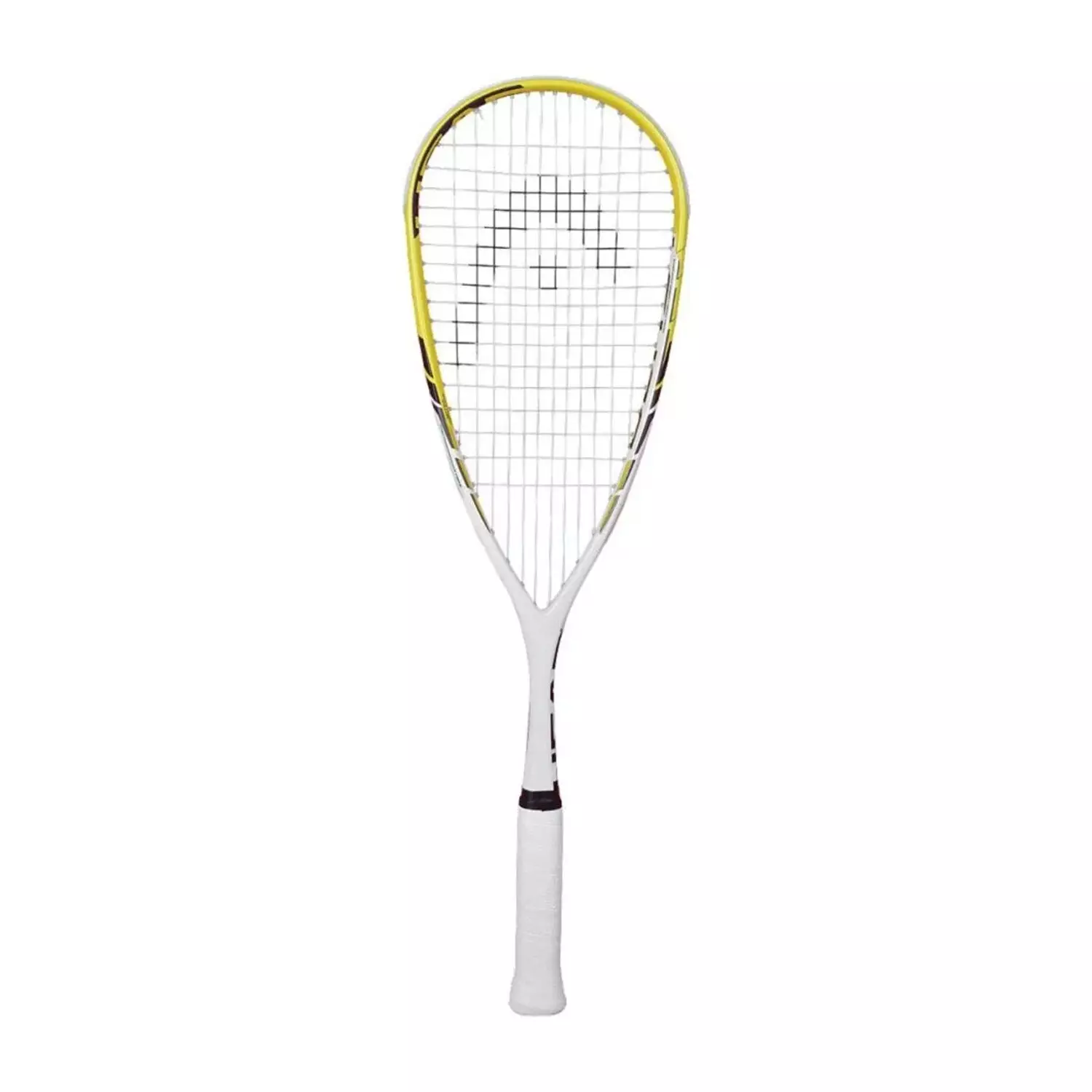
HEAD Microgel Blast Squash Racquet

A value workhorse with classic HEAD feel. The frame gives a forgiving contact and predictable length, so it’s a strong choice if you’re moving from beginner to club-level and want something solid that won’t punish slight timing errors.

Who it suits: Improving intermediates looking for stability and straight-hitting discipline.

Why it stands out:
Friendly feel on off-center hits, easy depth to the back corners, and price-to-performance.

String/tension idea: 25–27 lbs if you want a touch more control on rails.

Buy Now

3) HEAD Graphene 360 Speed 125 Squash Racket
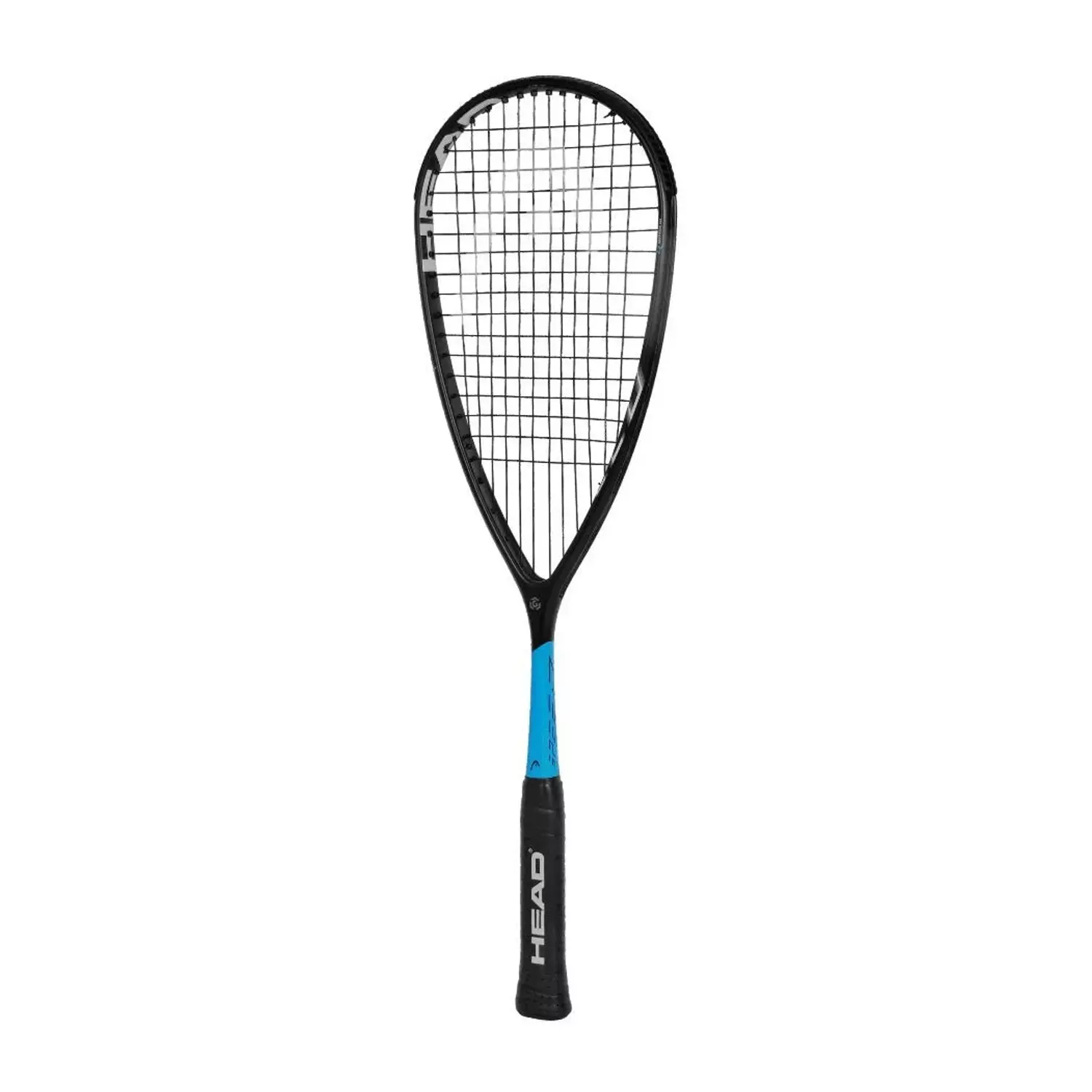
HEAD Graphene 360 Speed 125 Squash Racquet

A high-performance frame engineered for attacking players. At 125 g, it offers explosive power while still giving the option to fine-tune control thanks to its Adaptive Fan Pattern. The teardrop head and Graphene 360 technology combine for crisp energy transfer and stability, making it a true pro-level choice.

Who it suits: Advanced players who thrive on aggressive drives, volleys, and fast-paced attacking rallies.

Why it stands out: Graphene 360 stability, Corrugated Technology for stiffness, and Adaptive Fan Pattern stringing—giving you both power and precision in one frame.

String/tension idea: 24–25 lbs to balance touch at the front and depth at the back corners.

Buy Now

4) Prince Shadow Response 400 Squash Racket
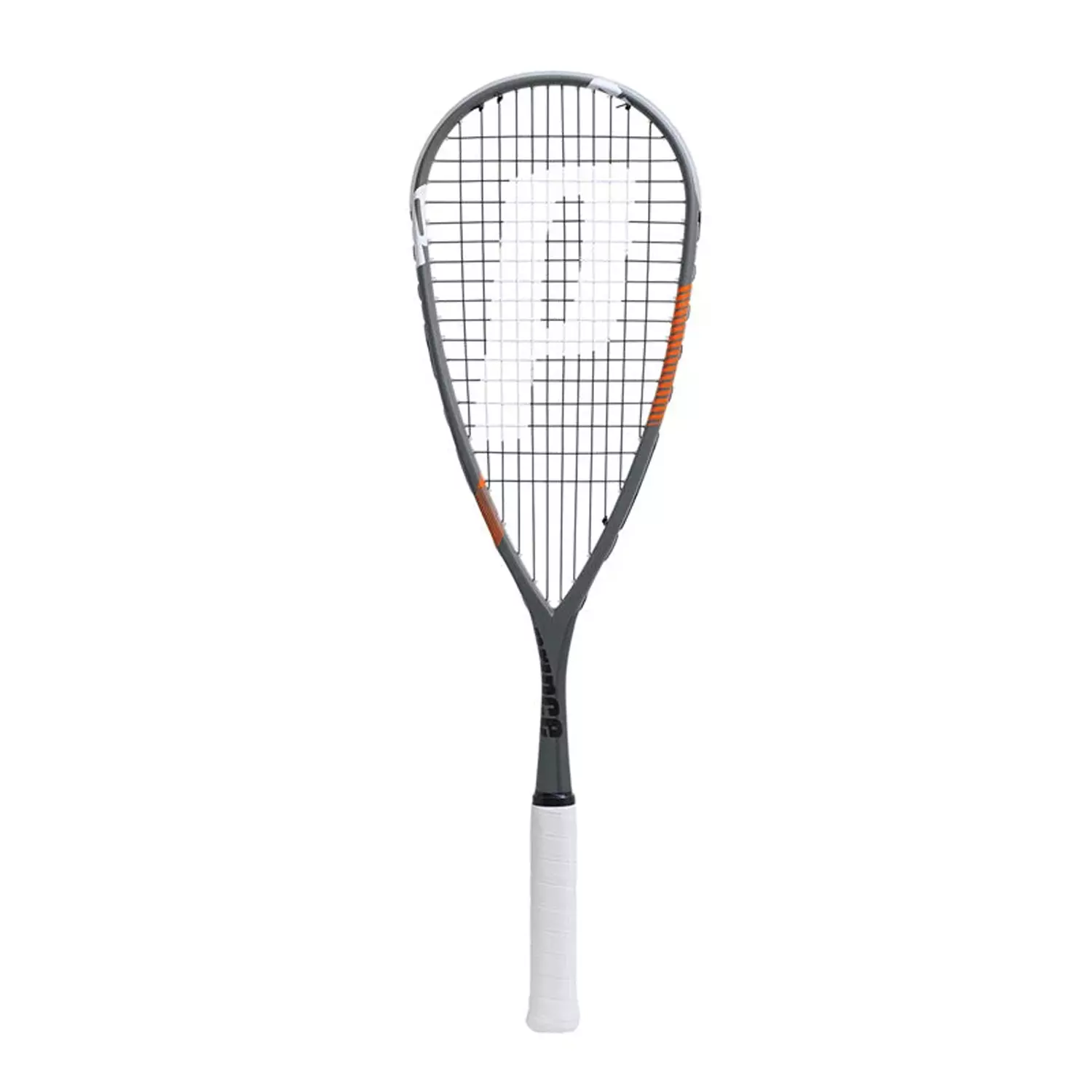
Prince Shadow Response 400 Squash Racquet

A dependable, mid-weight racquet designed with graphite construction for a steady all-round game. Its 135 g frame and neutral balance make it forgiving yet responsive, ideal for players moving beyond entry-level equipment.

Who it suits: Club players and improving intermediates who want a stable racquet that doesn’t demand perfect technique.

Why it stands out: Neutral balance makes it versatile, delivering a consistent feel on straight drives and boasts without overcomplicating handling.

String/tension idea: 25–27 lbs for sharper control while maintaining forgiving power.

Buy Now

5) HEAD Cyber Tour 2024 Squash Racket
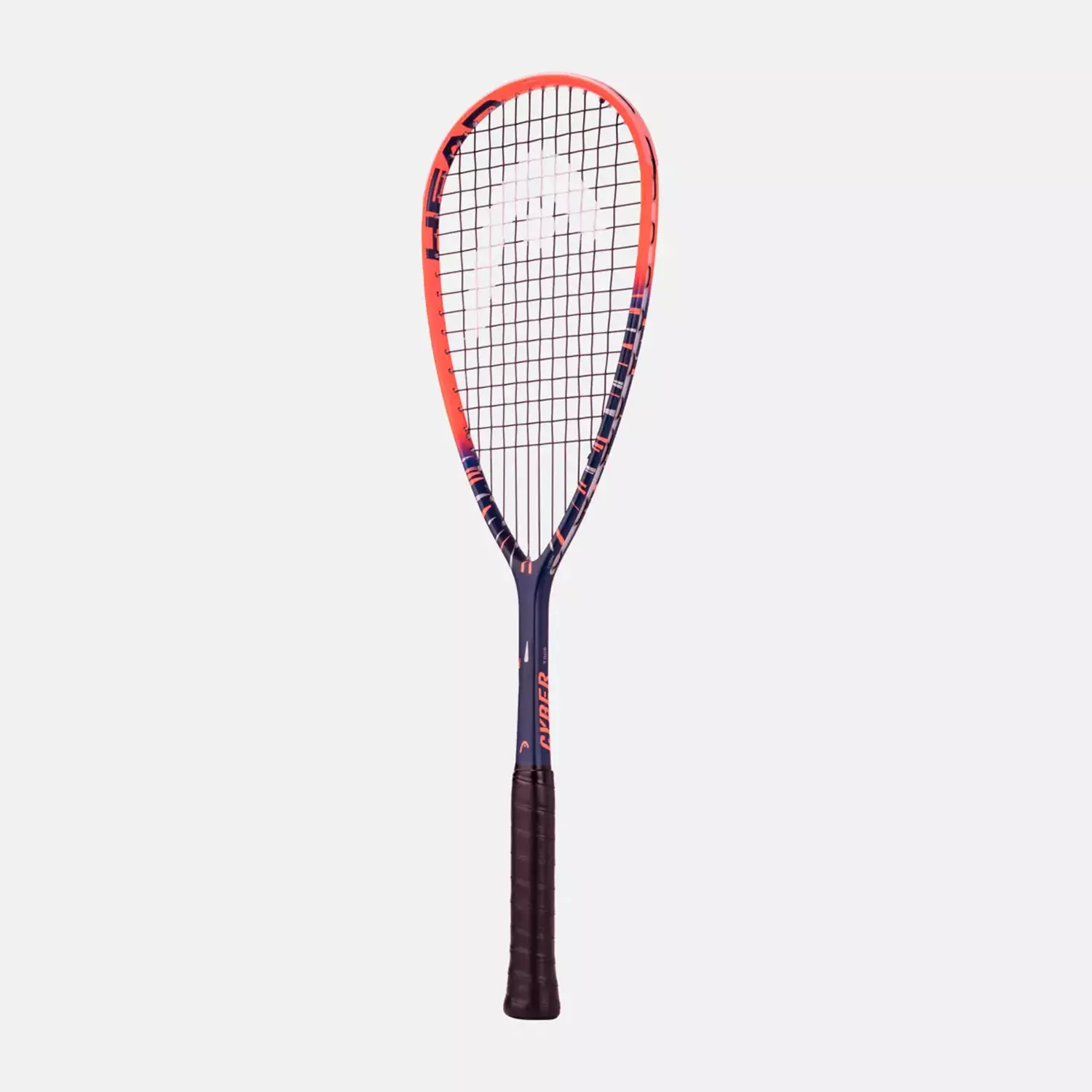
HEAD Cyber Tour 2024 Squash Racquet

A beginner-friendly racquet with a forgiving teardrop design that helps generate easy power. At ~160 g, it’s heavier than advanced frames but provides the momentum new players need to strike confidently. Amplified Fibre Technology gives extra stiffness, improving pop for recreational rallies.

Who it suits: Beginners and recreational players who want an affordable racquet that builds confidence and consistency.

Why it stands out: Large sweet spot, forgiving frame, and easy power make it a smooth entry into squash without overwhelming new players.

String/tension idea: 23–24 lbs to keep the ball lively and make length shots easier.

Buy Now

Top 5 Squash Balls in 2025 (Our Picks)

1) HEAD Tournament Squash Balls (12 Pcs)

A solid intermediate / club-level ball offered in a 12-pack, the HEAD Tournament is designed with a special rubber compound to deliver longer and higher bounce under normal conditions. It’s typically listed as a single yellow dot / slow ball, providing more liveliness than high-level double dot balls yet still emphasizing control and rally stability.
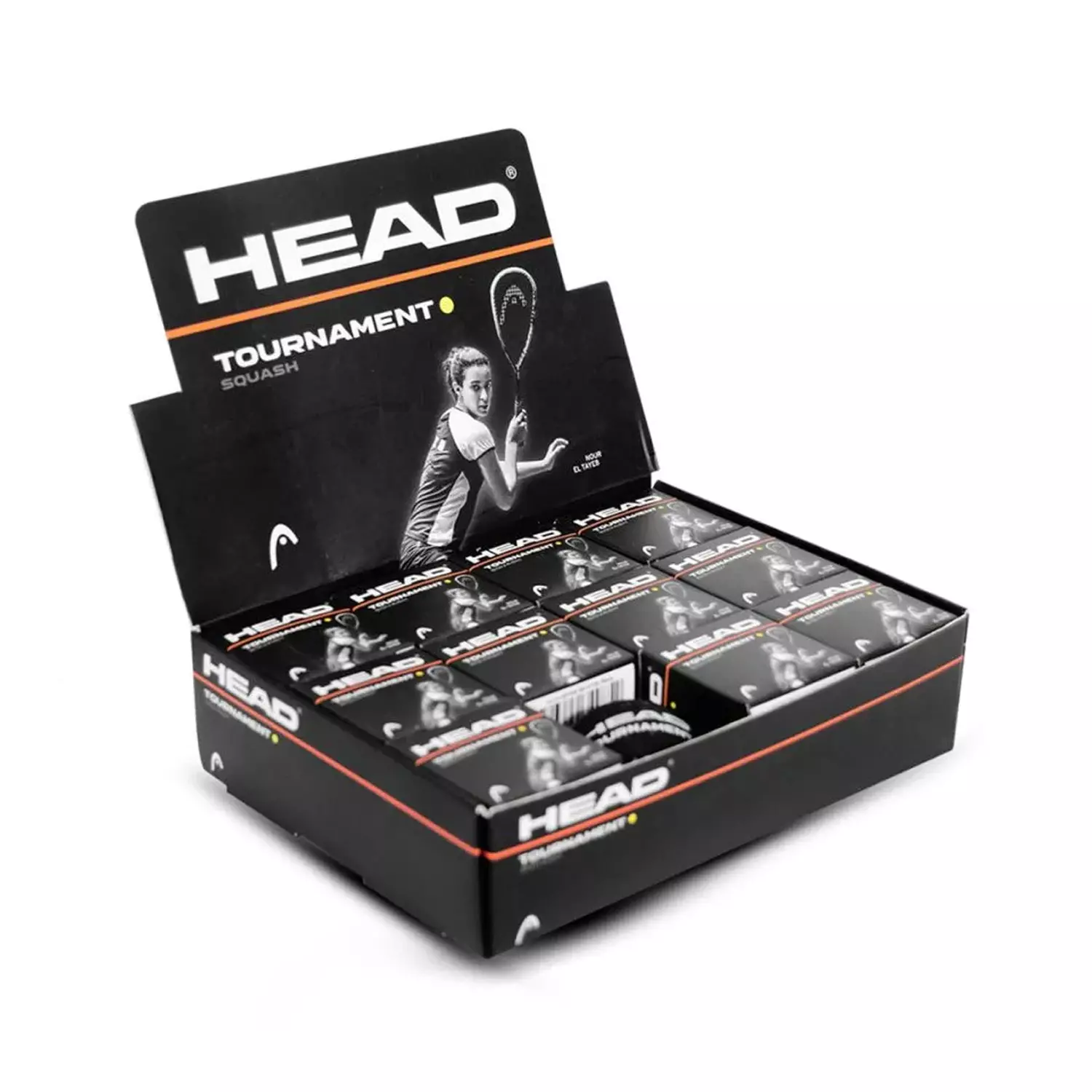
HEAD Tournament Squash Balls (12 Pcs)

Who it suits:

  • Club players who want a dependable ball that lasts and gives good rallies.

  • Players who find double yellow too “dead” on cooler courts.

  • Intermediate level players transitioning from beginner balls.

Why it stands out:

  • Uses a compound aimed at enhanced rebound and resilience.

  • Provides more bounce (hang time) than pure “competition / tournament” balls, making rallies easier and more forgiving.

  • Because it’s in a 12-pack, good for team use, practice sessions, or long tournaments.

String / tension idea:

  • No direct “stringing” for a ball, but in practical play: if rallies seem “too slow,” warm the ball more (hit it hard for several minutes).

  • On cold days, pairing this ball with a slightly lower tension string setup (on your racket) can help maintain better feel when the ball’s bounce is marginal.

Buy Now

2) HEAD Prime Double Dot Squash Ball

This is HEAD’s higher-end double yellow dot ball, meant for advanced and serious players who demand precision and lower bounce. The Prime ball is engineered for both indoor and outdoor play, offering consistent performance and durability.
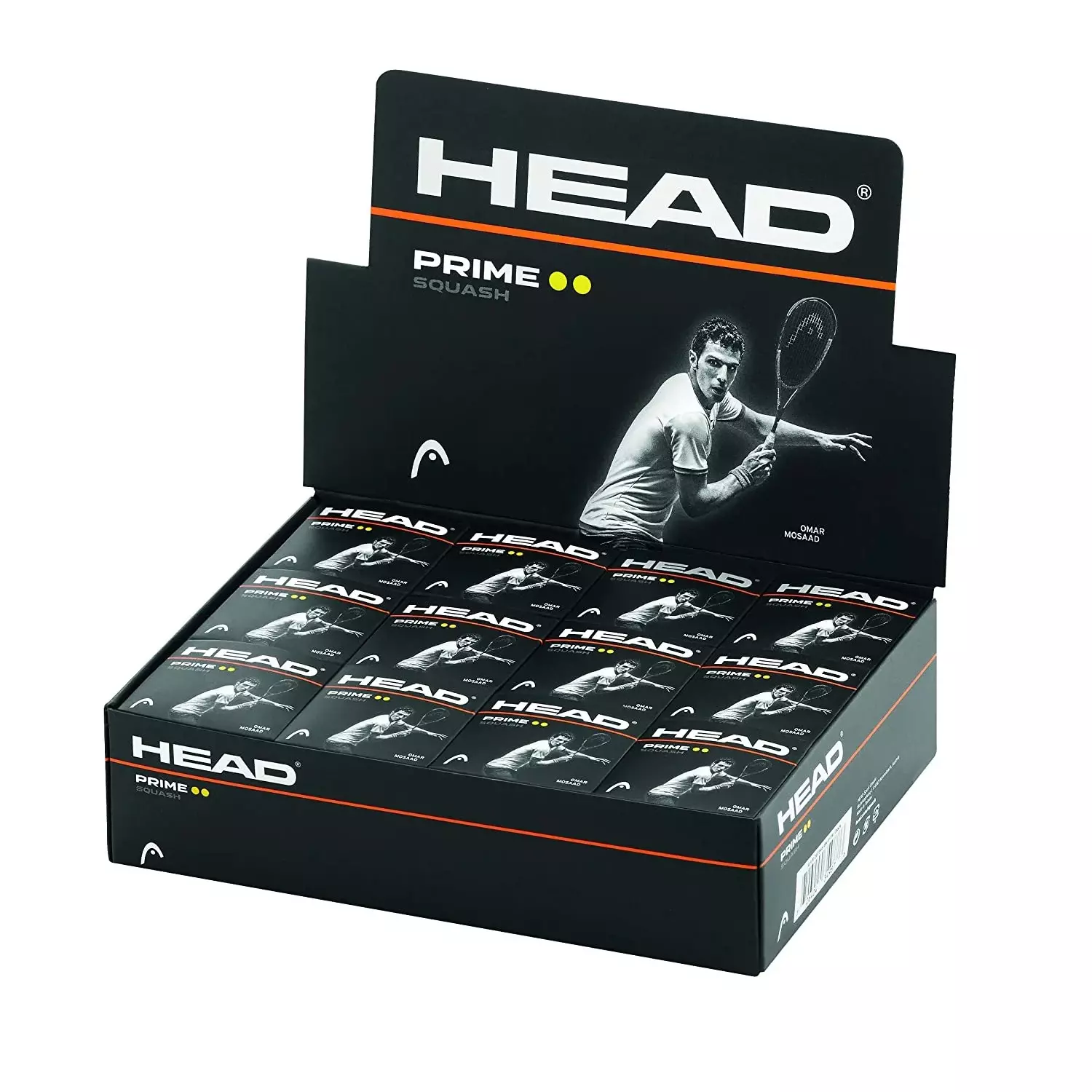
HEAD Prime Double Dot Squash Balls (12 Pcs)

Who it suits:

  • Advanced players comfortable playing with minimal bounce.

  • Club leagues and competitive play where regulation balls are required.

  • Courts in warmer climates where the ball can “heat up.”

Why it stands out:

  • As a double yellow dot, it gives low bounce, demanding stronger drives and better shot precision.

  • Built with durable rubber to maintain consistent bounce over many rallies.

  • Designed to perform reliably across varying indoor and outdoor conditions.

Setup / usage tip:

  • Warm it aggressively before play (30+ hard hits) to bring it up to bounce.

  • On hot courts, monitor for over-bounciness; sometimes a slightly softer string or lower tension helps balance things.

Buy Now

3) Dunlop Pro Double Dot Squash Ball (Box of 12)

The Dunlop Pro double yellow dot ball is one of the most recognized tournament balls globally. It’s the official ball for PSA and WSF events, offering the slowest bounce, demanding high skill, and excellent consistency.
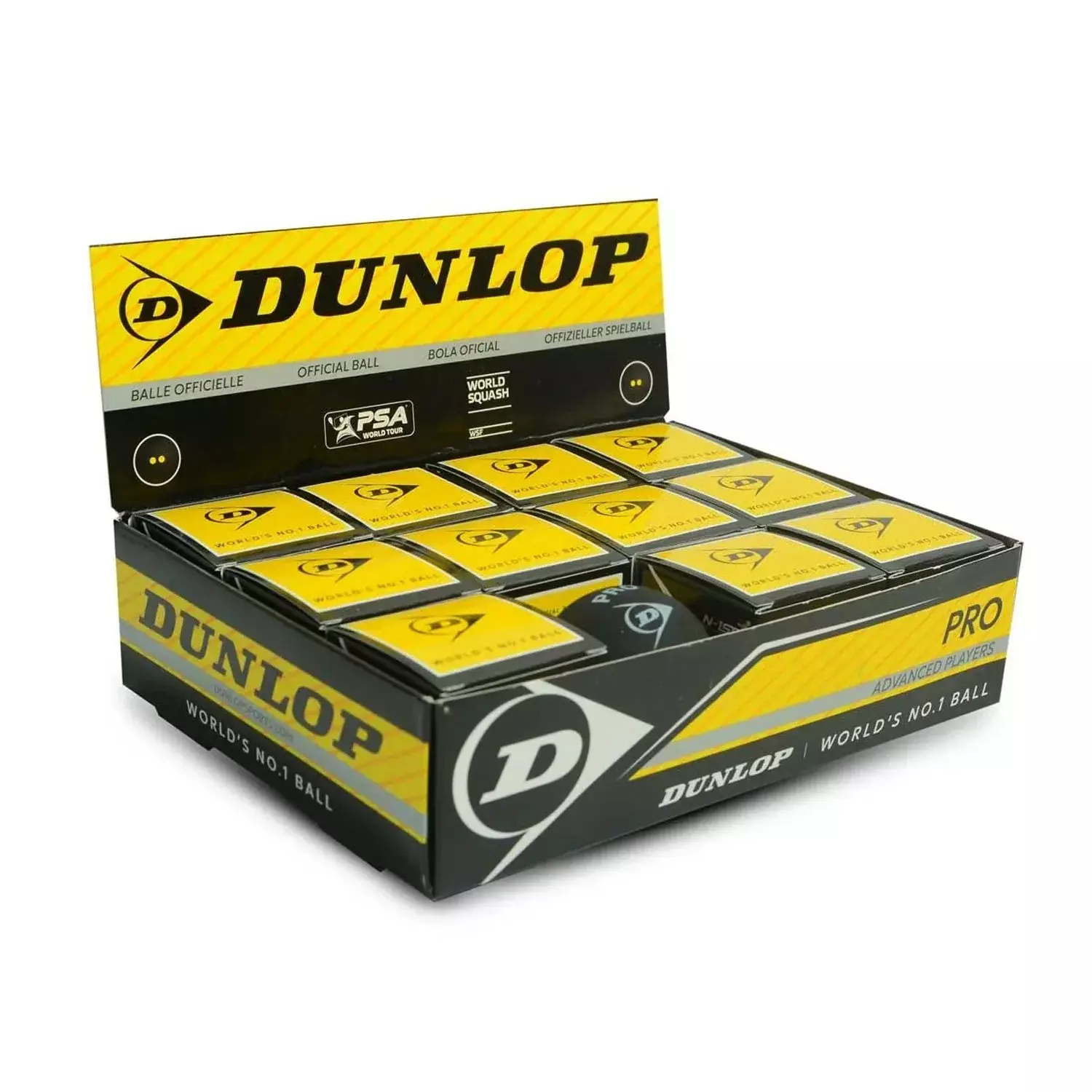
Dunlop Pro Double Dot Squash Balls (12 Pcs)

Who it suits:

  • Tournament players, serious club competitors.

  • Players who can generate pace and maintain long rallies even with minimal bounce.

  • Courts in warm environments where ball heating is reliable.

Why it stands out:

  • The benchmark standard for competitive play—used in pro tournaments.

  • Made from advanced rubber compounds (e.g. N-1SR³ tech) for durability and consistent performance.

  • Recognized worldwide—players moving between clubs, countries, or tournaments won’t struggle with compatibility.

Setup / usage tip:

  • Aggressively warm up before match: many advanced players do > 50 hard drives just to “wake the ball up.”
  • In colder courts, this ball might feel “dead”—if so, use a single condition ball for warm up or earlier sets.
  • Monitor wear: once the surface dulls or loses bounce, retire it for practice use.

Buy Now

Top 5 Squash Eyewear You Should Buy in 2025

1) HEAD Pro Elite Squash Eyewear

HEAD’s premium protective eyewear — a pro-grade goggle likely with robust lens material, wraparound design, and comfort features.

A top-tier squash goggle built for serious players who demand both clarity and protection. With its sturdy frame and likely advanced lens tech, the HEAD Pro Elite is designed to keep your vision sharp in fast rallies without compromising safety.
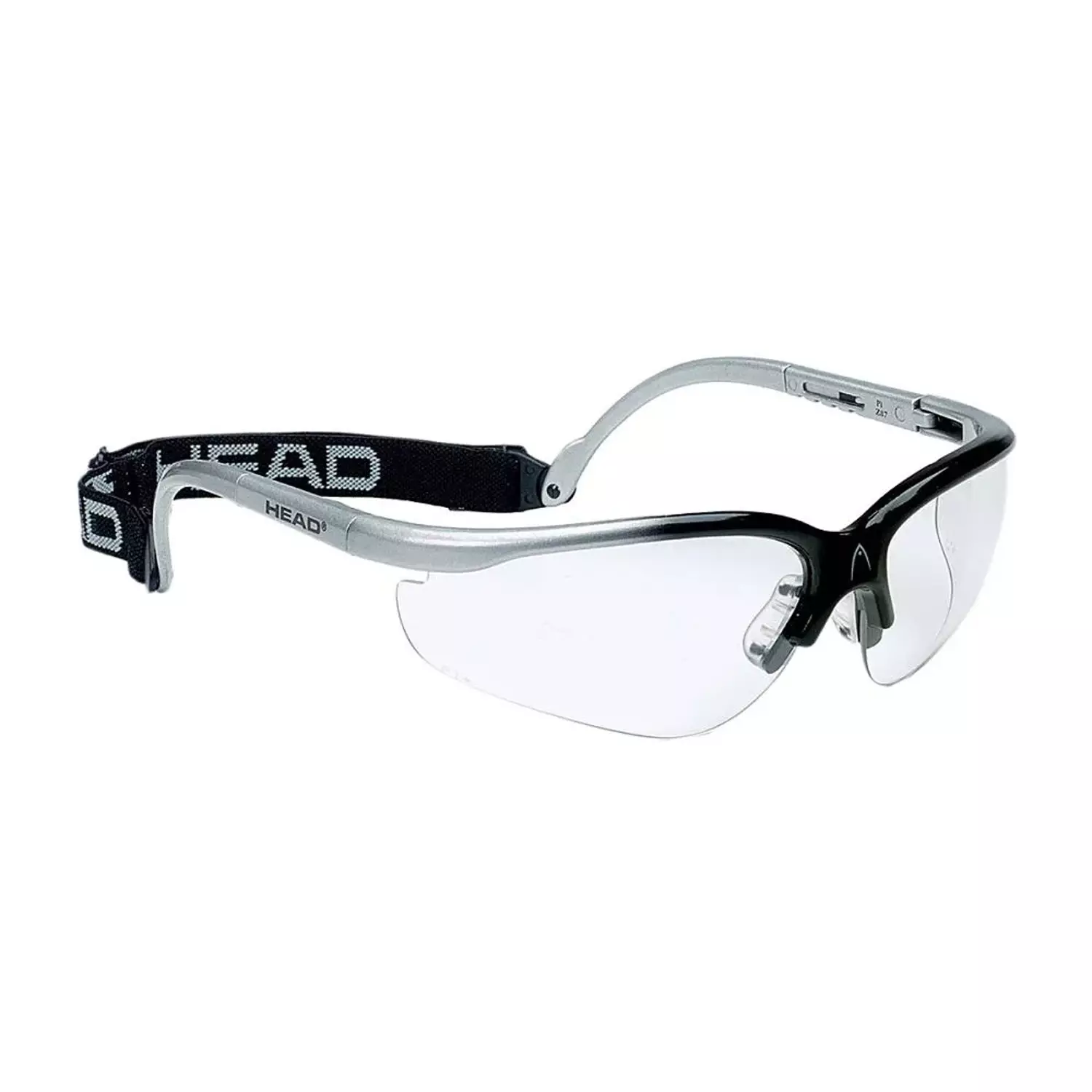
Who it suits:

  • Club and competitive players who require maximum eye protection.

  • Players who sweat heavily or train intensely and need anti-fog, scratch-resistant features.

  • Anyone switching from basic eyewear to a “heavy-duty” model for added confidence in match play.

Why it stands out:

  • Elite build quality—likely thicker polycarbonate lenses or coatings for durability.

  • Designed by HEAD, which is already a trusted name in racquets and balls — compatibility in brand DNA.

  • Expect better field-of-view & stability under pressure (less slipping or shifting) compared to entry models.

Usage tip:

  • Ensure the frame fits snugly but not too tightly—adjust nose pads or padding if necessary.

  • Keep anti-fog coatings maintained (use mild soap & air dry).

  • During training or multisession digs, rotate between this and a backup pair to reduce scratch wear.

Buy Now

2) Tecnifibre Lunettes Squash Eyewear — White/Green

Tecnifibre’s squash-specific goggle in a clean White/Green colorway, built with lens protection and comfort in mind for match play or practice.

A stylish yet functional goggle, combining Tecnifibre’s design sensibility with protective features needed on court. The White/Green finish gives it a sharp, modern look while maintaining performance.
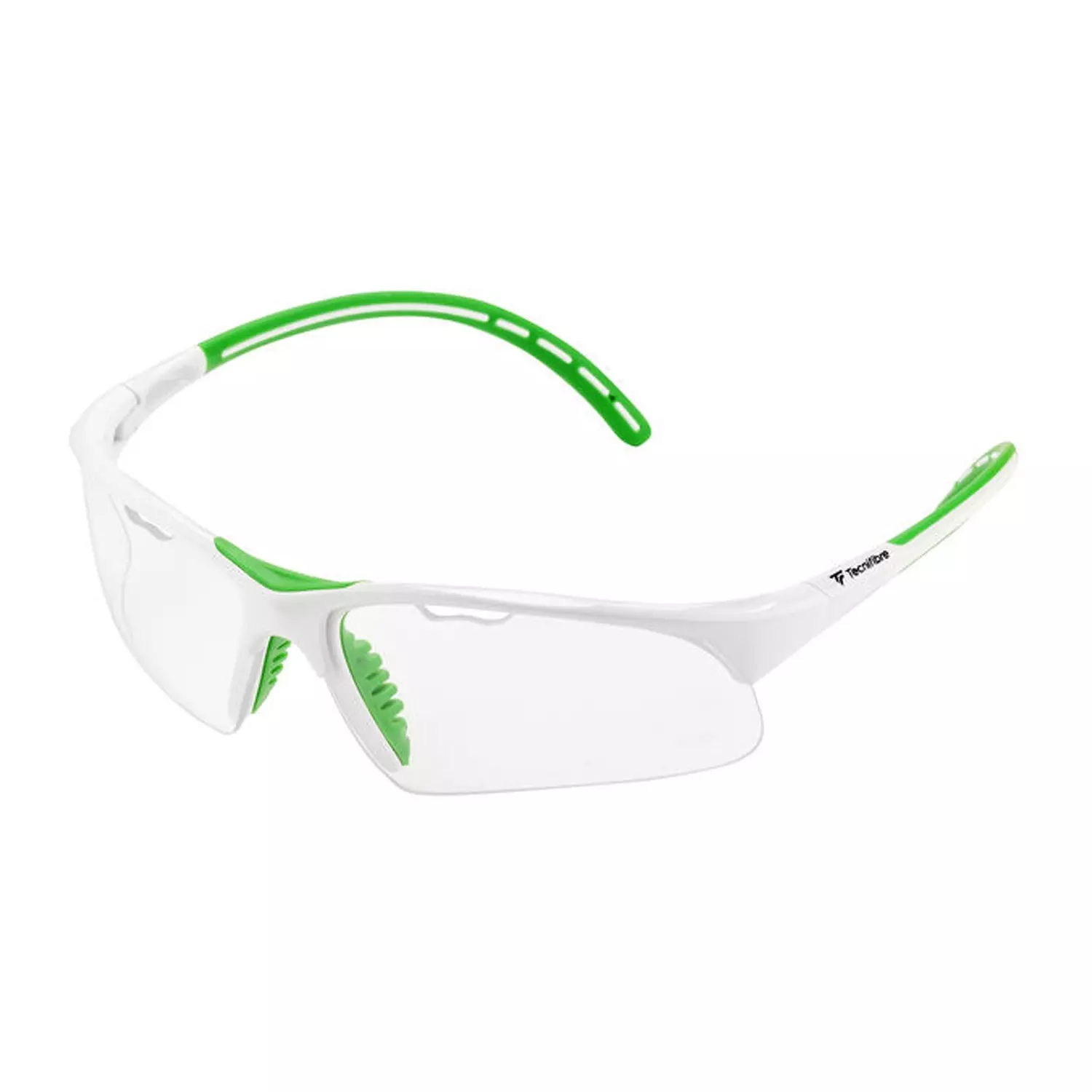
Tecnifibre Lunettes Squash Eyewear (White/Green)

Who it suits:

  • Players wanting a balance of style and safety.

  • Juniors or club players who must comply with mandatory eyewear rules.

  • People who prefer lighter, less obtrusive goggles that still hold up through rallies.

Why it stands out:

  • Brand synergy: pairs well with Tecnifibre racquets for consistent family branding.

  • Likely lighter than bulkier options—easier for longer rallies and reduced fatigue.

  • Good optics and field of view—less lens distortion, better peripheral awareness.

Usage tip:

  • Clean lenses after every session with a microfiber cloth — grit is eyewear’s enemy.

  • Check the strap/temple fit before the match starts — sometimes the frame loosens with sweat.

  • If side vents or holes exist, keep those clear (dust, sweat residue) to prevent fogging.

Buy Now

3) Tecnifibre Lunettes Squash Eyewear — Black/Orange

The same Tecnifibre Lunettes model in a contrasting Black/Orange color scheme.

This is essentially the same protective frame as the White/Green version, but with a bolder Black/Orange aesthetic. Same protective specifications, just a different look.
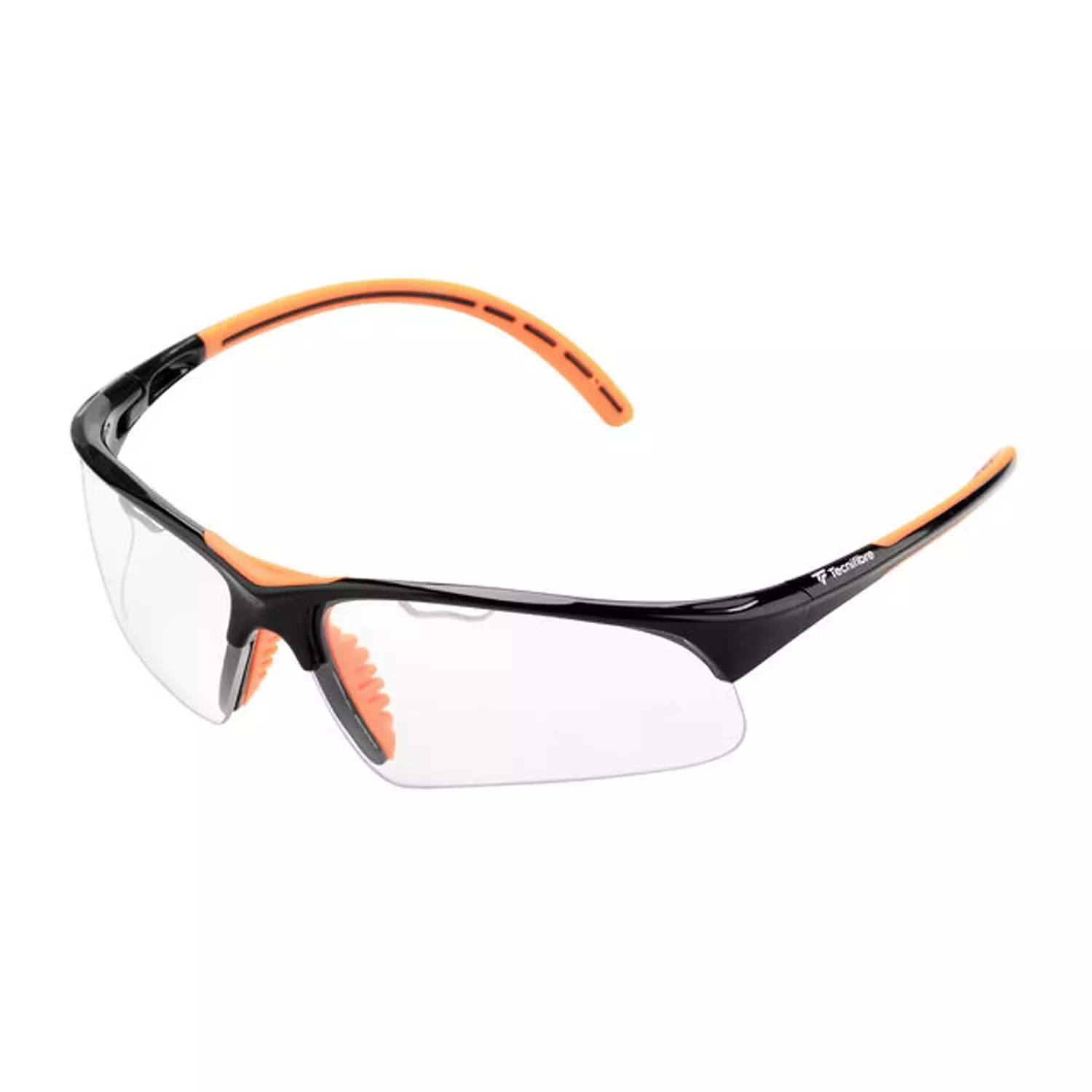
Tecnifibre Lunettes Squash Eyewear (Black/Orange)

Who it suits:

  • Players who prefer darker frames or match their gear/kit color scheme.

  • Those who like the Lunettes design but want a more aggressive, contrasting appearance.

  • Anyone replacing a scratched frame but staying with a model they like.

Why it stands out:

  • Same trusted performance as the Lunettes family—comfort, vision, coverage.

  • Easier to mask wear and dirt (black frame hides scuffs).

  • Visually striking for those who like standout gear on court.

Usage tip:

  • Use a UV-safe lens cleaner to preserve the coating and color vibrancy.

  • Store in a hard case so that orange accents don’t fade or scratch against rough surfaces.

  • Keep the strap tight at the start of play—straps may stretch during long sessions.

Buy Now

4) Prince Pro Lite Squash Goggles

Prince’s lightweight yet protective goggle (Pro Lite)—a minimal, streamlined design aiming to give protection without bulk.

True to its name, Pro Lite is built for players who favour a “bare-feel” approach to eyewear—providing essential protection while minimizing intrusion and weight. Great for players who are sensitive to heavy frames or prefer less weight at the temples.
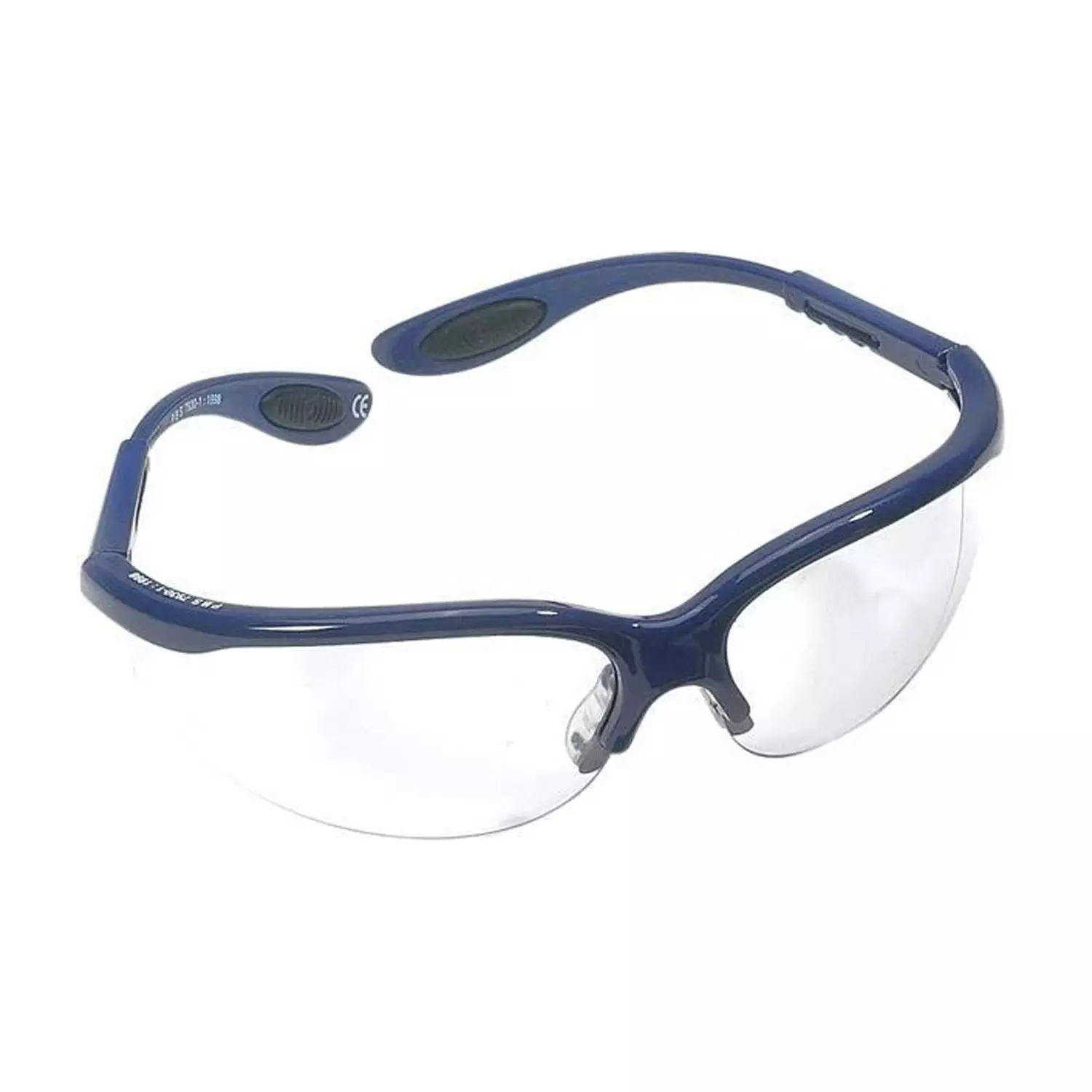
Prince Pro Lite Squash Goggles

Who it suits:

  • Players who dislike bulky goggles and want near “invisible” protection.

  • Teenagers or lightweight players who get annoyed by heavy goggles.

  • Competitive club players who value comfort across multi-match sessions.

Why it stands out:

  • Slimline profile reduces fatigue, especially on long days.

  • Likely good for pairing with hats/visors (less interference).

  • Combines protection with minimalism: ideal when you want just the essential coverage without extra mass.

Usage tip:

  • Ensure a snug fit around the orbital bones to prevent lens-frame bounce, especially when stretching.

  • Because frames are lighter, inspect for flex or micro-cracks periodically.

  • Make sure lens ventilation is effective—light frames tend to fog more easily under heavy sweat.

Buy Now

Tips to Improve Your Squash Gameplay

Technical Tips

  1. Master the T: Always recover to center court.
  2. Length First: Tight rails and deep drives are foundations of pressure.
  3. Volley Early: Take balls before they drop to reduce the opponent’s reaction time.
  4. Mix Heights: Use lobs to reset rallies.

Tactical Insights

  • Disguise Shots: Same swing, multiple outcomes (drop, drive, boast).
  • Change Tempo: Alternate between fast drives and soft touch to disrupt rhythm.
  • Anticipation: Read your opponent’s body position—pros like Nicol David were masters at this.

Fitness & Conditioning (Pro Routines)

  • Ghosting Drills: Sprint to corners without the ball. Example: 30s on / 30s off × 8 sets.
  • Court Sprints: From T to each corner × 10 reps.
  • Strength Training: Squats, lunges, and planks for explosive leg power and core stability.
  • Endurance: Interval running or rowing builds squash-specific stamina.

Mental Game

  • Stay Calm Under Pressure: Champions like Ramy Ashour thrived by keeping composure during tight games.
  • Visualization: Picture your shots before stepping on court.
  • Short Memory: Forget mistakes quickly; focus on the next rally.

Commonly Asked Questions about Squash

Q1: How long does a squash game last?
Anywhere from 20 minutes (club match) to 60 minutes (pro-level).

Q2: Do I need special shoes?
Yes. Indoor court shoes with gum soles are non-negotiable for grip and safety.

Q3: Which squash ball is right for me?

  • Beginners: Blue/Red.
  • Club/intermediate: Single Yellow.
  • Advanced: Double Yellow.

Q4: How dangerous is squash?
With protective eyewear, risk is minimal. Without it, eye injuries can be serious.

Q5: Who are the best players to watch for inspiration?

  • Ali Farag (tactical genius).
  • Nour El Sherbini (women’s powerhouse).
  • Mohamed ElShorbagy (explosive style).
  • Nicol David (legend, 8× World Champion).

Conclusion

Squash is a rare blend of athleticism, mental strength, and tactical mastery. With the right equipment, knowledge of rules and court, and a commitment to training, anyone can elevate their game.

From controlling the T-position to disguising shots, from choosing the right ball to wearing proper eyewear, success in squash comes down to preparation and consistency.

So, the next time you step into the box, remember—you’re not just playing a game, you’re stepping into one of the most challenging and rewarding sports ever created. Control the walls, command the T, and let your squash journey begin.

Best Padel Rackets for Spin in 2025 – Our Top Picks

Padel is evolving fast. Once seen as a social sport, it has now exploded into a high-speed, tactical game played by millions worldwide. At the top level, rallies are longer, defenses are stronger, and simply hitting harder is no longer enough to win points. What separates good players from great ones in 2025? Spin.

Spin changes the geometry of the game. A sliced volley that stays low forces opponents to lift the ball. A topspin lob climbs higher and pushes rivals off the net. A sidespin víbora bends away at the last second, opening angles they can’t cover. In modern padel, mastering spin is just as important as controlling the net.

The good news: racket technology has caught up with this shift. Brands like Babolat, Adidas, Bullpadel, NOX, HEAD, and Siux are releasing rackets designed specifically to maximize friction, dwell time, and control—giving players easier access to topspin, slice, and sidespin than ever before. From 3D textured faces to sandpaper-like finishes, from smart hole patterns to torsion-resistant frames, the 2025 generation of rackets isn’t just about power; it’s about precision and spin dominance.

In this guide, we break down the best padel rackets for spin in 2025, analyzing their tech, strengths, and who they’re best suited for. Whether you’re a defensive counter-spinner, an all-court tactician, or an attacking finisher who lives on the víbora, you’ll find the right weapon to bend the ball—and the match—to your style.

The 2025 spin short-list (and who each is for)

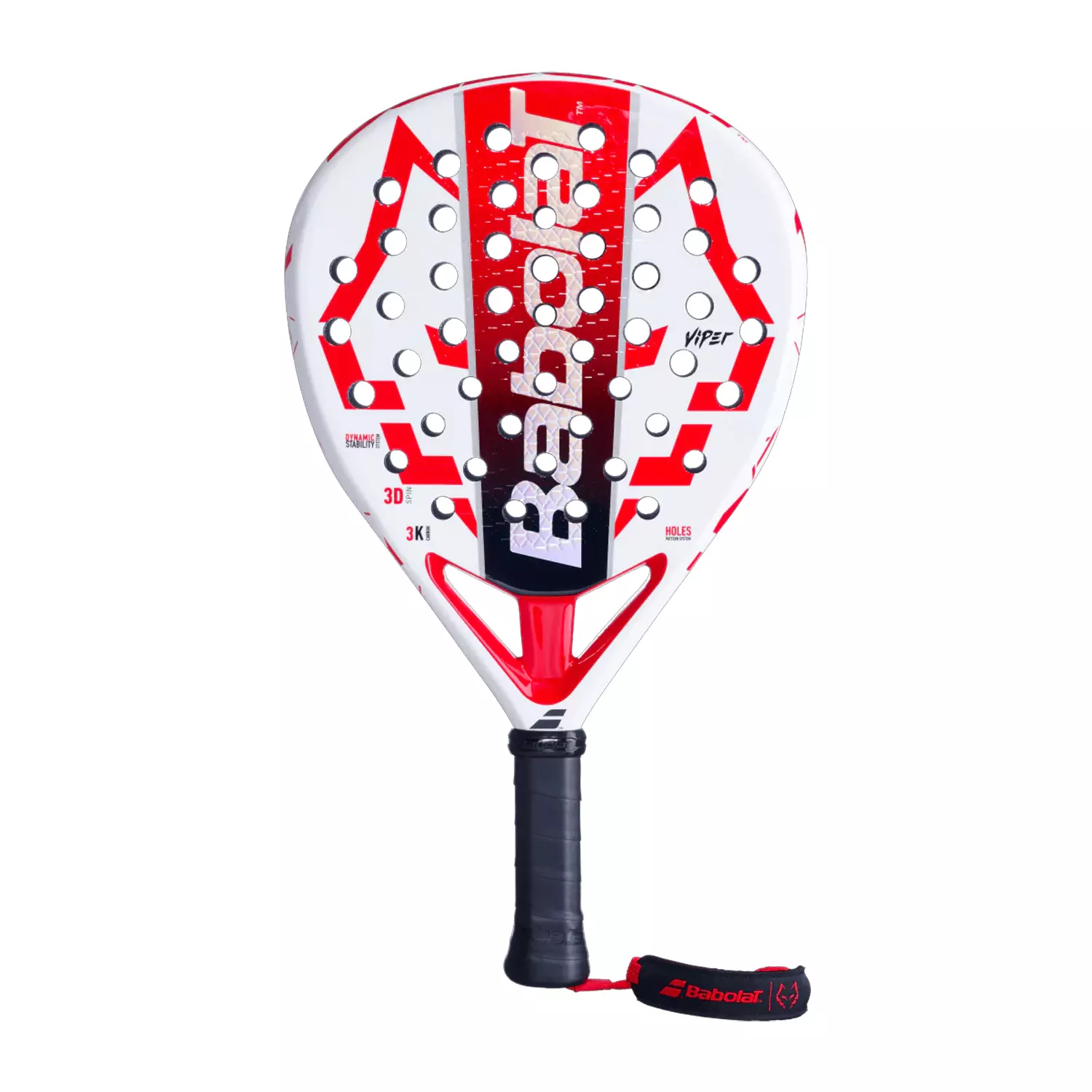
1) Babolat Technical Viper Juan Lebron 2.5 (2025)Spin + Finishing Power

Why it spins: Babolat’s pro-level technical frame is built for heavy brush on víboras, bajadas, and kick smashes; the face/layup is tuned for a crisp, high-friction strike that rewards aggressive angles.

Best for: Advanced attackers who finish points above the net.

Buy Now

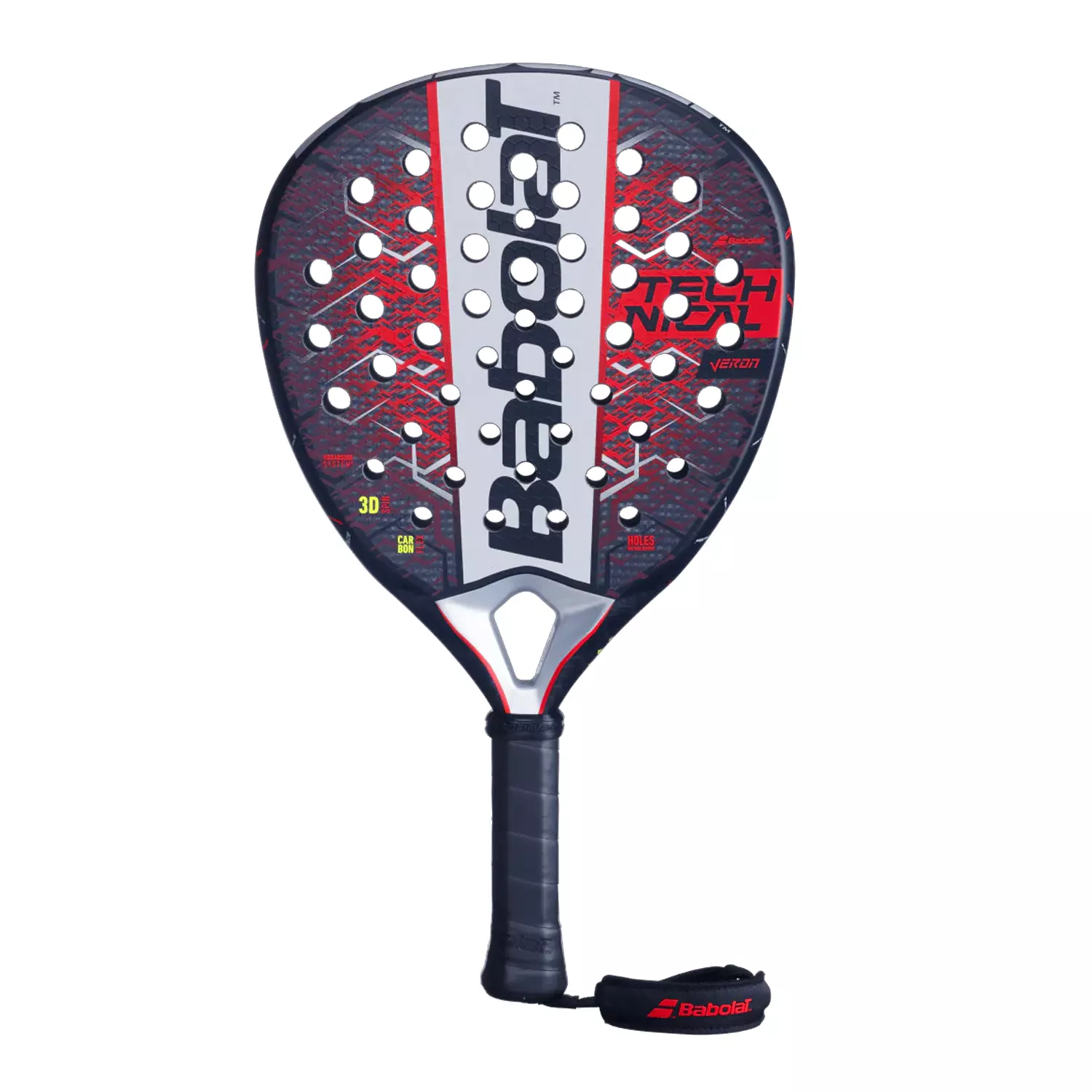
2) Babolat Technical Veron 2025Grippy Face, Easier Access to Spin

Why it spins: The “Veron” recipe blends bite with a slightly more accessible feel than Viper, helping you shape topspin lobs and dipping passes without over-penalizing mishits.

Best for: Intermediates moving into an attacking, spin-led game.

Buy Now

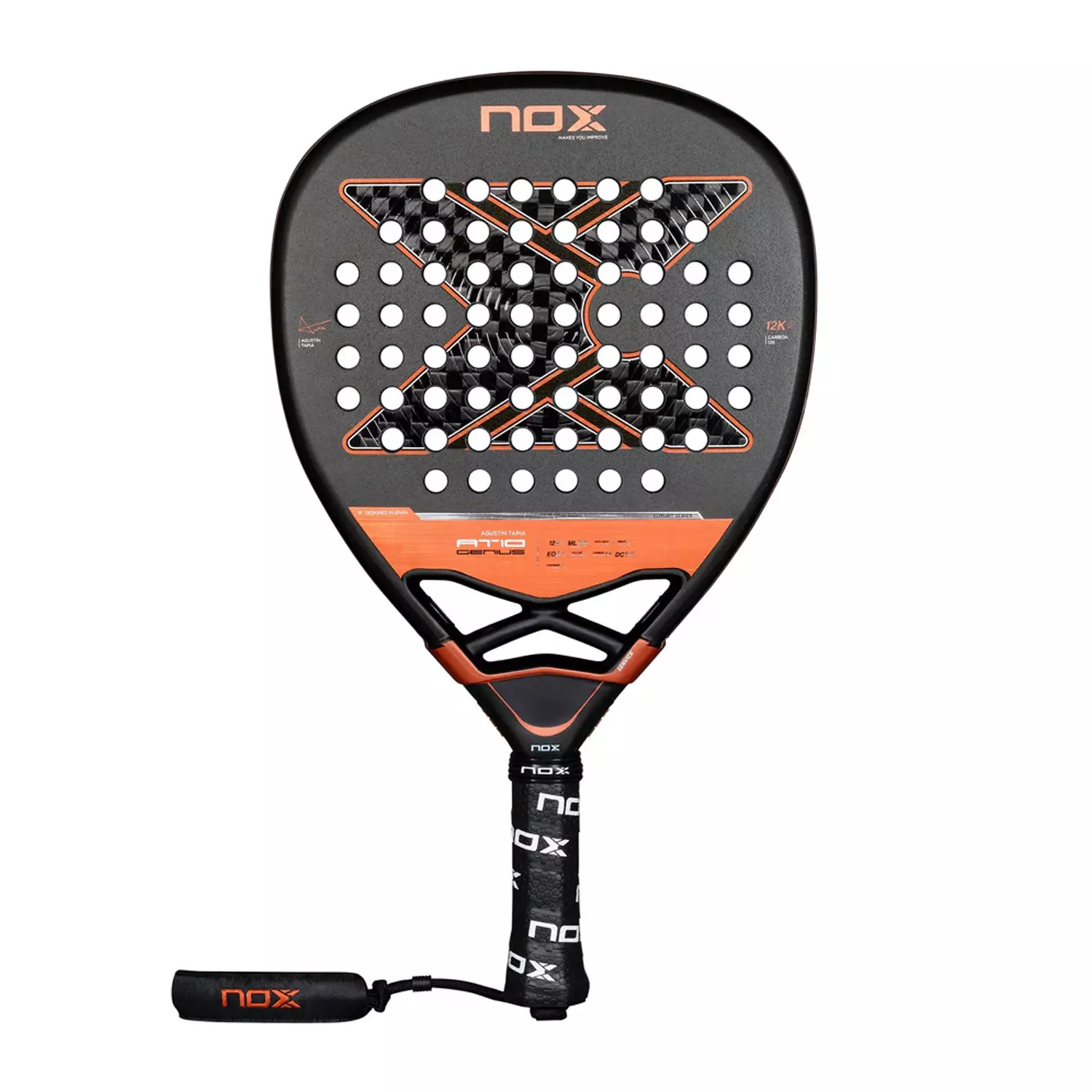
3) NOX AT10 Genius Attack 12K (2025)Tapia DNA for Side/Topspin

Why it spins: NOX’s AT10 “Attack” spec pairs a firm carbon face with a spin-friendly finish so your wristy víbora and cross-court carves bite reliably.

Best for: Offense-first players who still want placement control.

Buy Now

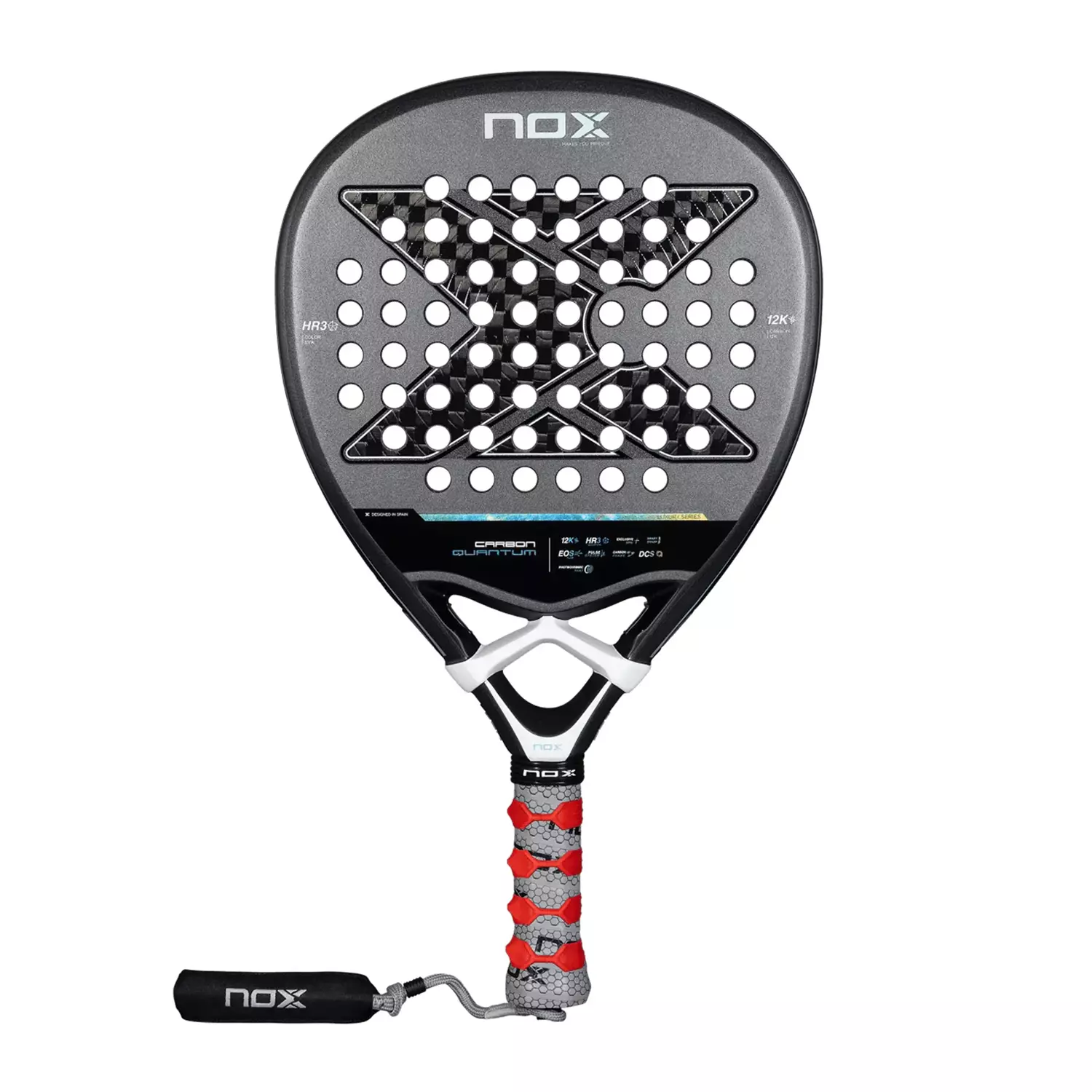
4) NOX Quantum 12K Carbon (2025)High-Tech Mold with “Grabby” Response

NOX Quantum 12K Carbon 2025 Padel Racquet

Why it spins: The new Quantum mold + 12K carbon provide a stable, torsion-resistant contact so your face angle stays true on heavy brush; ideal for shaped lobs and skidding slices.

Best for: All-court spinners who value precision as much as pace.

Buy Now

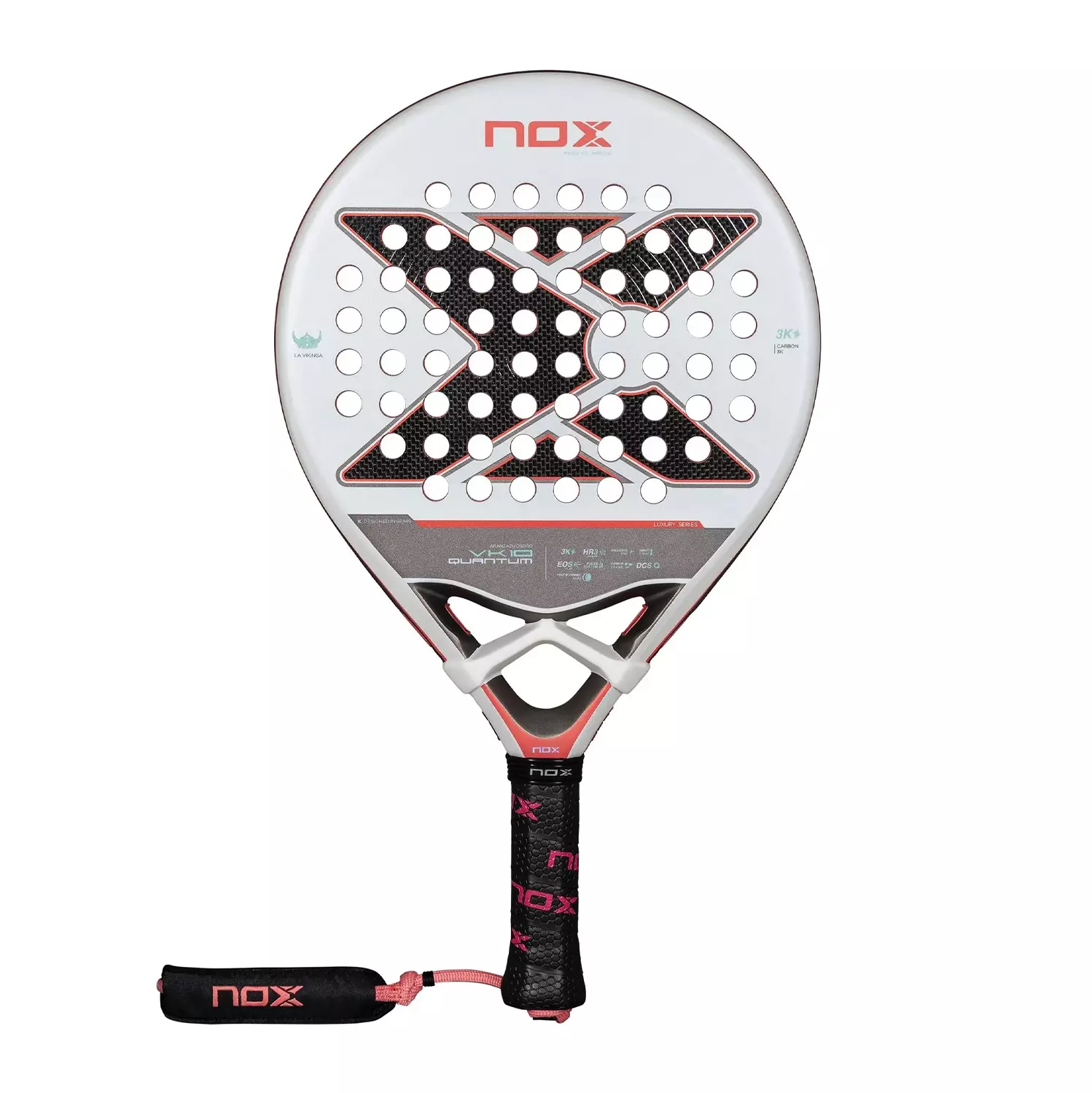
5) NOX VK10 Quantum 3K (2025)Lighter, Whippy Spin

NOX VK10 Quantum 3K 2025 Padel Racquet (Aranzazu Osoro)

Why it spins: A lighter build makes it easier to accelerate the tip through contact and brush the outside of the ball; great for rolling chiquitas and quick counters off the glass.

Best for: Players who prefer maneuverability and late wrist action.

Buy Now

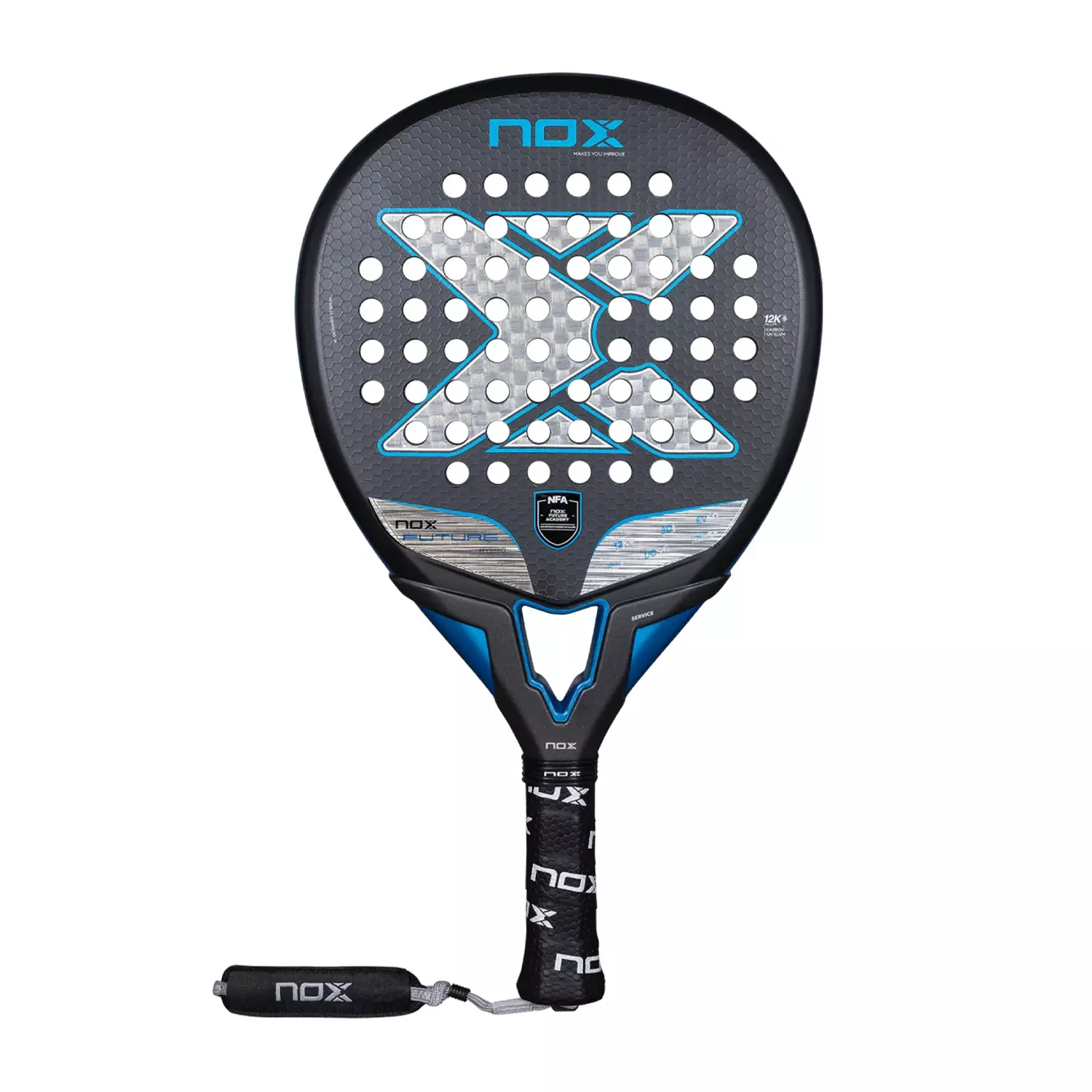
6) NOX Future Hybrid 12KBalanced Shape with Reliable Bite

NOX Future Hybrid 12K Padel Racquet

Why it spins: Hybrid head + 12K carbon = a forgiving sweet spot that still “grabs”; a nice platform for repeatable slice volleys and controlled kick on overheads.

Best for: Intermediates who mix defense with counter-attack spin.

Buy Now

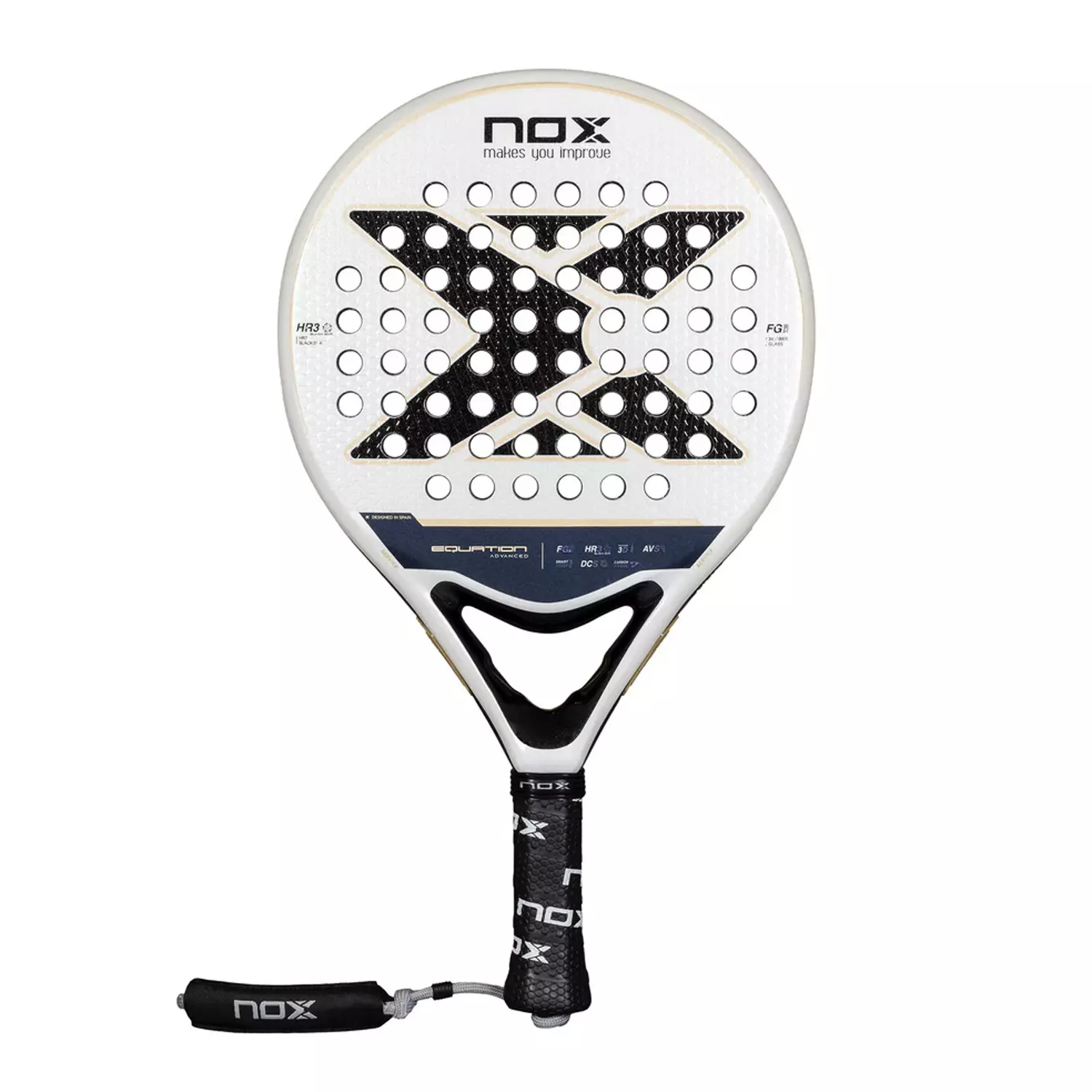
7) NOX Equation Advanced 2025Control First, Spin on Demand

Why it spins: Big sweet spot and a precise layup help you aim your spin—useful for dipping passes and low cross-court angles without overcooking the ball.

Best for: Control players stepping up their spin game.

Buy Now

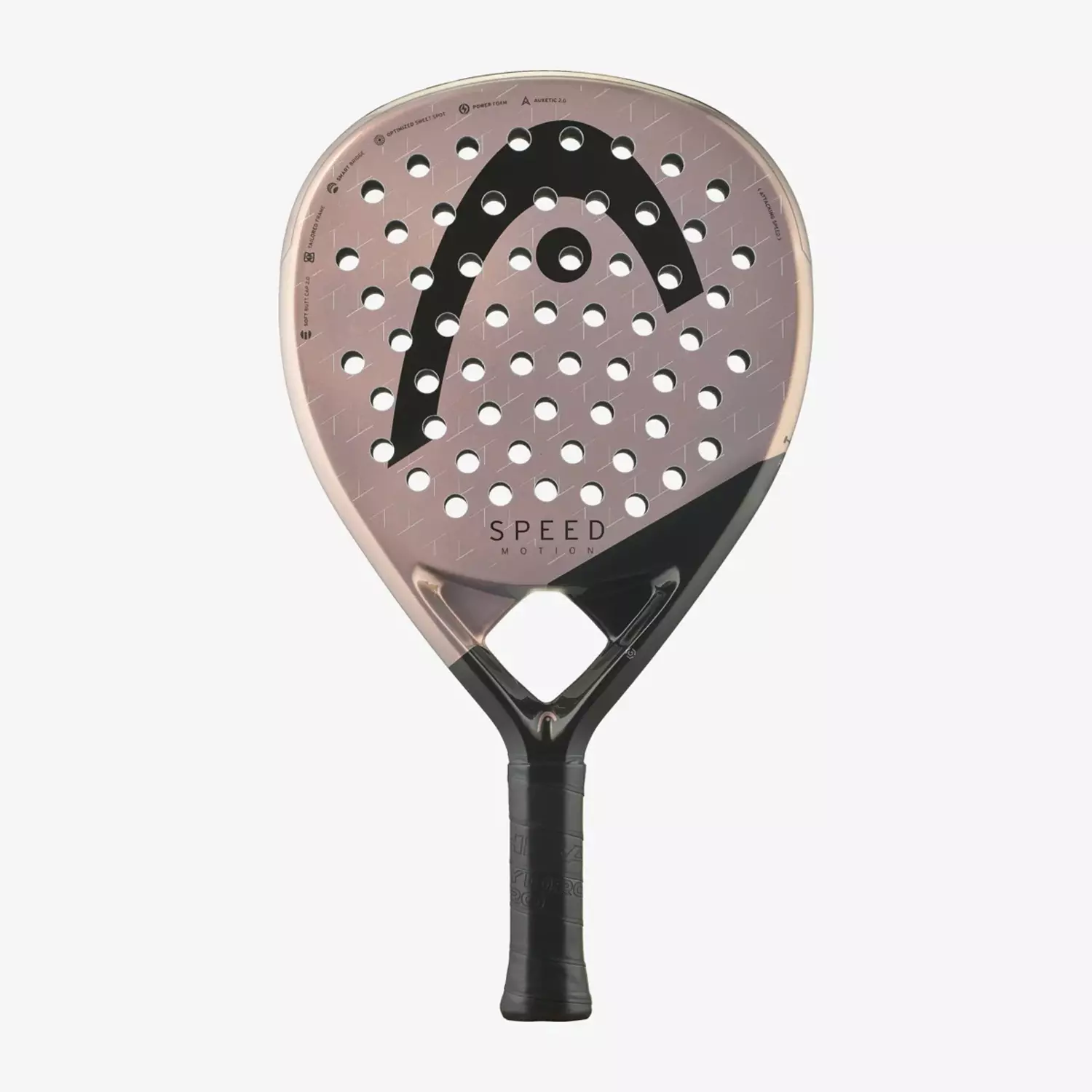
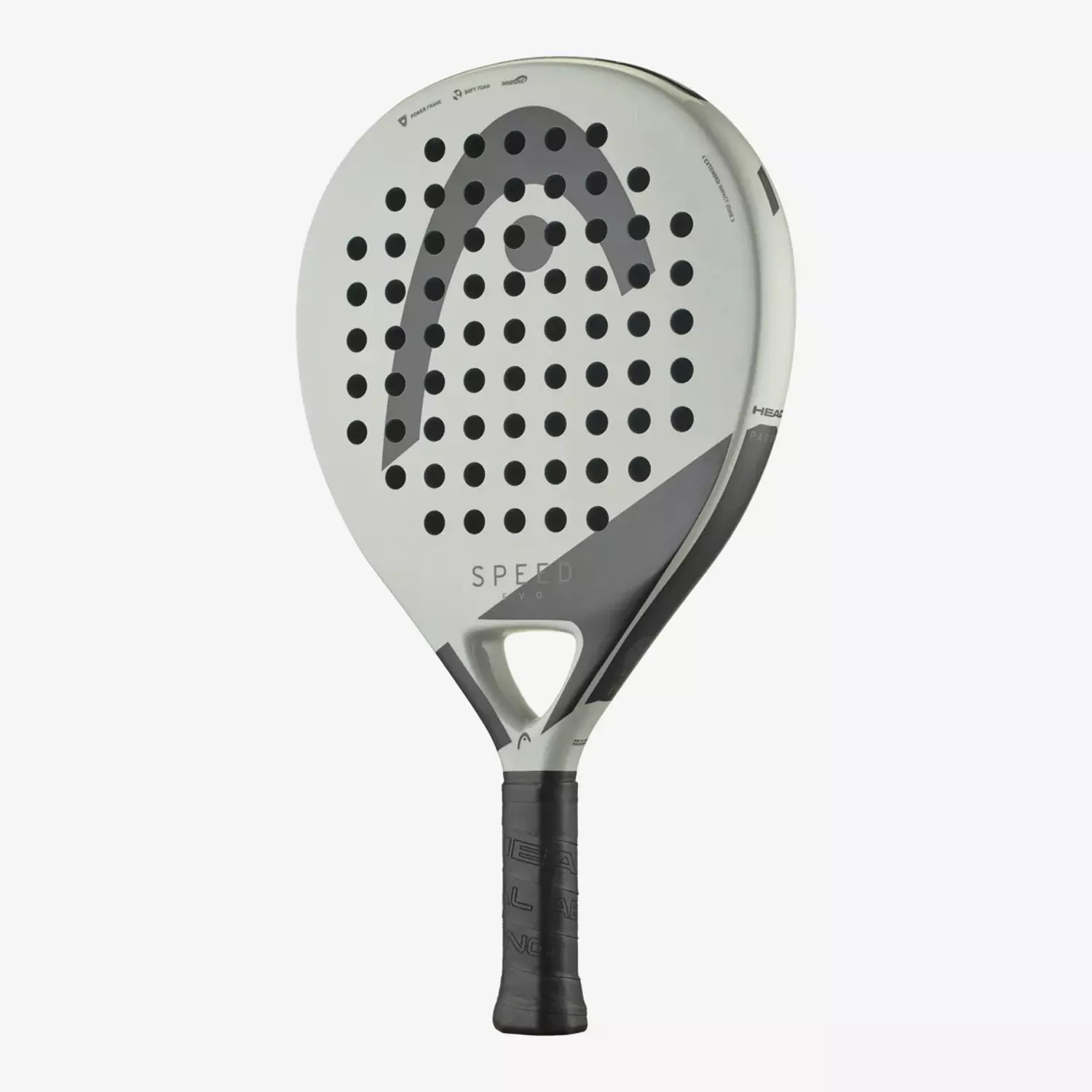
8) HEAD Speed Motion 2025Fast Through the Air, Easy to Brush

Why it spins: A modern head with a grippy strike feel and fast handling lets you shape the ball late—great for bajadas into the feet and curling cross-court replies.

Best for: Advanced/tournament players who favor speed + spin.

Buy Now

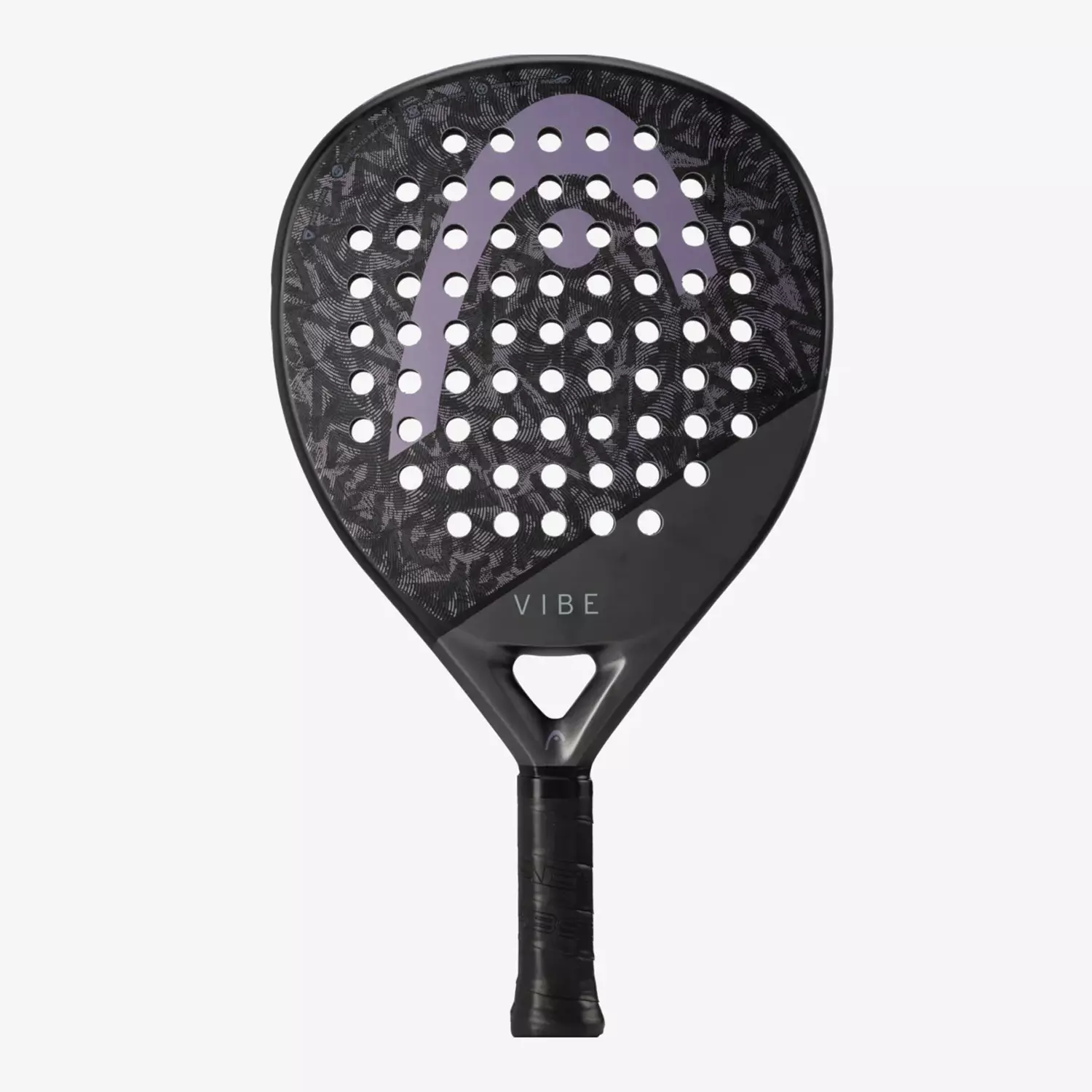
9) HEAD Vibe 2025Comfortable Grip on the Ball

Why it spins: A soft, confidence-building response that still offers a textured “hold,” helping newer competitors produce real slice/topspin without shock.

Best for: Casual-to-competitive players who want comfort with spin.

Buy Now

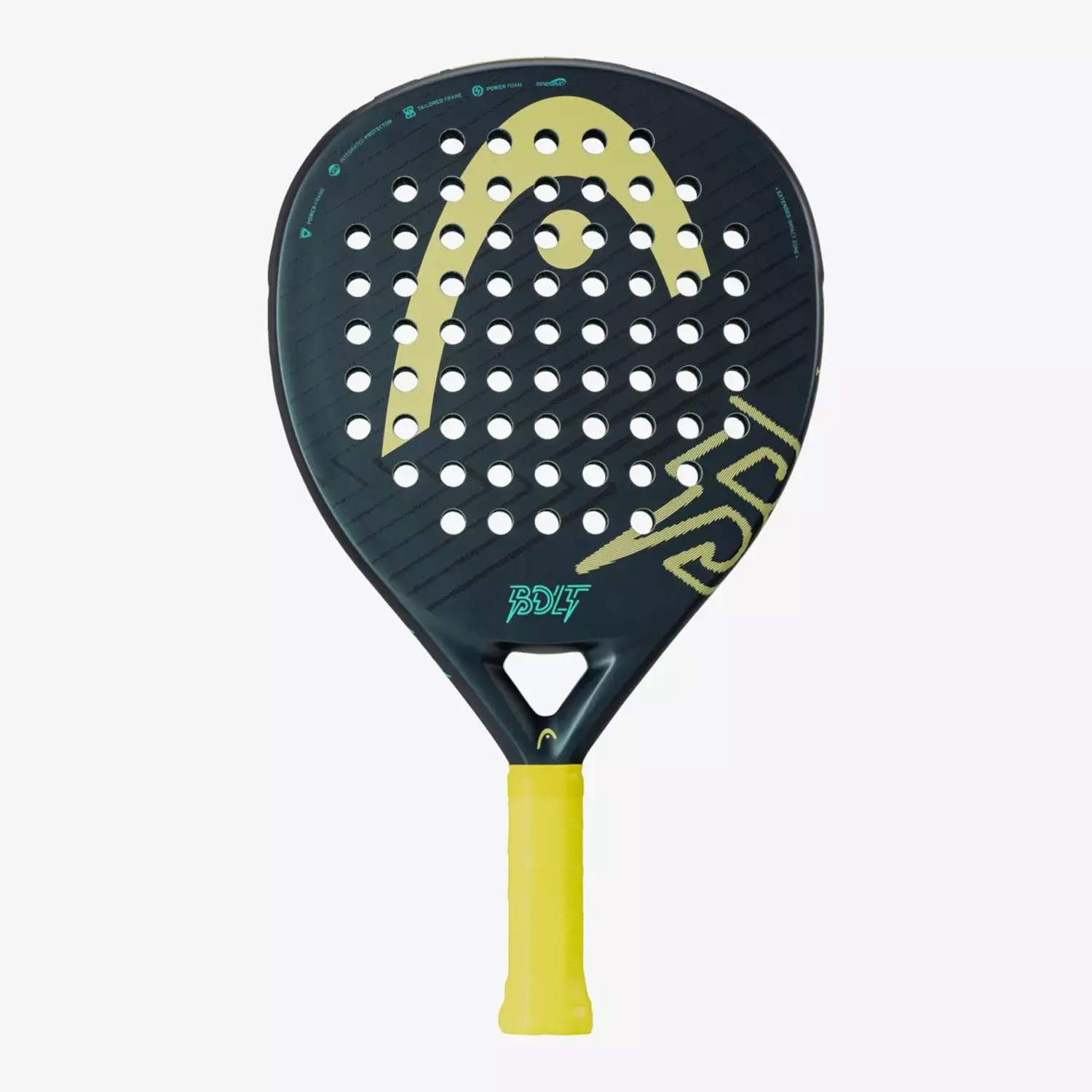
10) HEAD Bolt 2025Forgiving Sweet Spot, Learnable Spin

Why it spins: Oversized/forgiving face helps you meet more balls “on-the-strings” (well—on the face), so learning brush mechanics feels natural and consistent.

Best for: Improvers who want dependable contact while adding spin.

Buy Now

Match the spin racket to your style

  • The Attacking Finisher (loves víbora, bajada, kick smash):
    Choose diamond or firm teardrop with aggressive grit: Technical Viper 2.5, Vertex 04. You’ll get the highest spin ceiling—if your timing is there.
  • The All-Court Controller (angles, dips, change-ups):
    A teardrop with rough decal and smarter holes—Metalbone 3.3 / HRD+ or NOX AT10 18K—lets you mix low, skidding slices with surprise topspin lobs without losing maneuverability.
  • The Defensive Counter-Spinner (lives at the glass, steals time):
    Consider HEAD Extreme/Speed with Extreme Spin or Siux Diablo Rev II. You’ll keep control at the back wall but still have bite for dipping passers and rolling chiquitas.

Buying tips (so your “spin upgrade” actually works)

  1. Feel the face: If the surface doesn’t feel gritty to the touch or show a 3D decal, you’re probably not getting maximum friction. (Some finishes wear; look for durable, embedded textures.)
  2. Don’t overdial stiffness: A super-stiff diamond with coarse grit is magical for experts but can spray for newer players. If you’re climbing levels, pick a teardrop with rough skin first.
  3. Mind your balls and court: On slower, sandier courts, gritty faces shine; on faster courts or with lively balls, prioritize stability to keep your brush on target.
  4. Technique is still king: Equipment helps, but consistent spin mostly comes from stroke path and contact height. The right racket makes that work repeatable under pressure. (Even player forums agree: roughness helps, but mechanics drive the result.)

Final word

Spin is no longer just a trick shot in padel—it’s a game-changer. The right racket can turn a defensive lob into an attacking weapon, a slice into a point-winner, and a víbora into an unreturnable shot. The 2025 lineup from brands like Babolat, NOX, and HEAD shows just how far racket design has come, with textured faces, hybrid shapes, and advanced carbon layouts all built to maximize bite on the ball. But while choosing the right racket is crucial, finding a trusted place to buy it matters just as much.

That’s where God of Sports makes the difference. They bring together the latest 2025 models at affordable prices, ensuring players in India can access genuine, high-quality padel gear without overpaying. With a wide range of options, expert guidance, and exclusive deals, God of Sports is the ideal partner for players who want to level up their spin game. Whether you’re a beginner learning control or an advanced player chasing professional precision, the perfect spin-friendly racket is waiting for you at God of Sports.

How To Use Walls in Padel

How to Use the Walls in Padel: Beginner to Advanced Tactics

When most beginners step onto a padel court for the first time, the walls feel like enemies. A ball ricochets off the glass, and instinct tells you to swing too early—or not at all. You miss, feel rushed, and wonder how the pros make it look effortless. But here’s the truth: the walls are not obstacles—they’re allies.

Padel legend Fernando Belasteguín often says that what separates good players from great ones is not just technique at the net, but how confidently they use the glass under pressure. Unlike tennis, where one bounce means the end of the rally, padel gives you a second chance through the back and side walls. That extra rebound is what turns defense into offense, resets rallies, and frustrates opponents who expect an easy winner.

Think about it:

  • A ball that looks unreturnable suddenly comes alive after the back wall.
  • A slow chiquita (soft ball) played after a rebound can force even the strongest volleyer to cough up an easy ball.
  • And advanced players use the glass to build smashes that either bounce twice on the court or fly out over the side wall entirely.

From beginners learning the “salida de pared” to advanced players mastering the bajada or por tres, wall play is the backbone of modern padel. If you want to climb levels, you must learn not just to survive the glass, but to exploit it.

In this guide, we’ll move step by step—beginner to advanced tactics—so you can transform the walls from intimidating barriers into your most reliable partner on court.

The non-negotiable basics (rules & surfaces)

  • Glass = legal; mesh = not for returns. During rallies, shots are valid off your back/side glass after the bounce. The mesh/fence is different—if the ball hits the mesh first, it’s a fault. On serves, the ball may touch the glass after landing in the correct service box, but never the mesh.
  • Uniform, predictable rebound. Regulation courts use glass/solid wall materials that must give a regular bounce; learning that bounce is step one to reading the wall.

PART 1 — Beginner: make the wall your safety net

1) The Salida de Pared (off-the-back-wall drive)

Your bread-and-butter when a deep ball pins you at the baseline. Let the ball pass, rebound off your back glass, step forward into contact, and push a controlled drive cross-court or middle. It buys time, centers you, and stops rushed mishits off the first bounce.

Keys

  • Give yourself space from the wall—don’t hit jammed.
  • Meet the ball slightly in front of your body after the rebound.
  • Aim deep middle to avoid side-glass giveaways.

2) The Double Glass (doble pared) in the corner

When a ball clips back-then-side wall (or vice-versa), many beginners panic, stay patient: open the racket face, turn your shoulders, and let the ball complete its path before stepping into a compact swing.

Keys

  • Watch the first rebound to predict the second.
  • Small backswing; finish balanced.
  • Play higher over the net until your feel improves.

3) The Chiquita (soft ball to the feet) after a wall

Once you’re controlling off-the-glass drives, add the chiquita: a gentle, low ball to the volleyer’s shoelaces. Hit it after a comfortable rebound to force a pop-up and let your team advance.

Drill: Coach feeds deep; you play salida de pared → chiquita to feet, then take two steps forward together.

PART 2 — Intermediate: turn defense into pressure

4) The Bajada de Pared (off-the-wall attack)

When a lob or drive pushes you back, you can attack off the wall by waiting for the rebound and hitting down through the ball into the opponent’s feet or open middle.

Keys

  • Contact slightly later than a normal drive, body weight moving forward.
  • Targets: volleyer’s feet, body, or the gap between players.

5) Side-glass angles that break patterns

From the backhand corner, a controlled drive that clips your side glass before crossing the net can create wicked angles and pull opponents off the middle.

6) The Reset Lob vs. the Attacking Lob

After a good salida, lift a reset lob high and deep to reclaim time and force rivals off the net. When their contact is low or they’re crowded, throw an attacking lob that lands short-deep to the corner to provoke a bad glass read, then advance.

7) Defending the Corner Trap

Good opponents will hammer the seam where the back- and side-glass meet. Read the height of the first bounce:

  • Low, skidding → get behind it and use the wall; drive higher cross-court.
  • Medium → favor double-glass with compact swing.
  • High → step in and take it before the wall to change pace.

PART 3 — Advanced: walls as weapons

8) The Víbora & Bandeja to keep the net

Advanced pairs win by keeping the net. Your overheads after lobs—bandeja (controlled, slicing overhead) and víbora (faster, wristier sidespin)—aim deep into corners/side-glass to rebound low and stop rivals from counter-attacking off their own wall.

Pattern: Bandeja deep → read their wall exit → close the middle and volley to feet.

9) The Por Tres (kick smash out over side wall)

When a lob sits up and you’re balanced, a topspin smash that kicks high after the bounce and leaves over the 3-meter side-wall ends the point—or lets you finish outside the court.

Keys

  • Timing > brute force.
  • Brush up the back, contact slightly behind the top of the ball.
  • Aim for the glass-to-fence seam.

10) Your Glass as a Set-Up Tool (Contrapared)

Under pressure, use your own back glass deliberately to bend the rally back in your favour: bump a soft ball into your glass to change pace, or throw a high, slow arc off your glass to reset formation.

11) Doble Pared Que Cierra (two-wall “closing” shot)

A purposeful two-glass pattern (back, then side) that “closes” angles on the opponent by making the ball die near the fence. Use this when the middle is crowded but the corner is exposed.

Positioning & footwork: a mini-framework

At the back

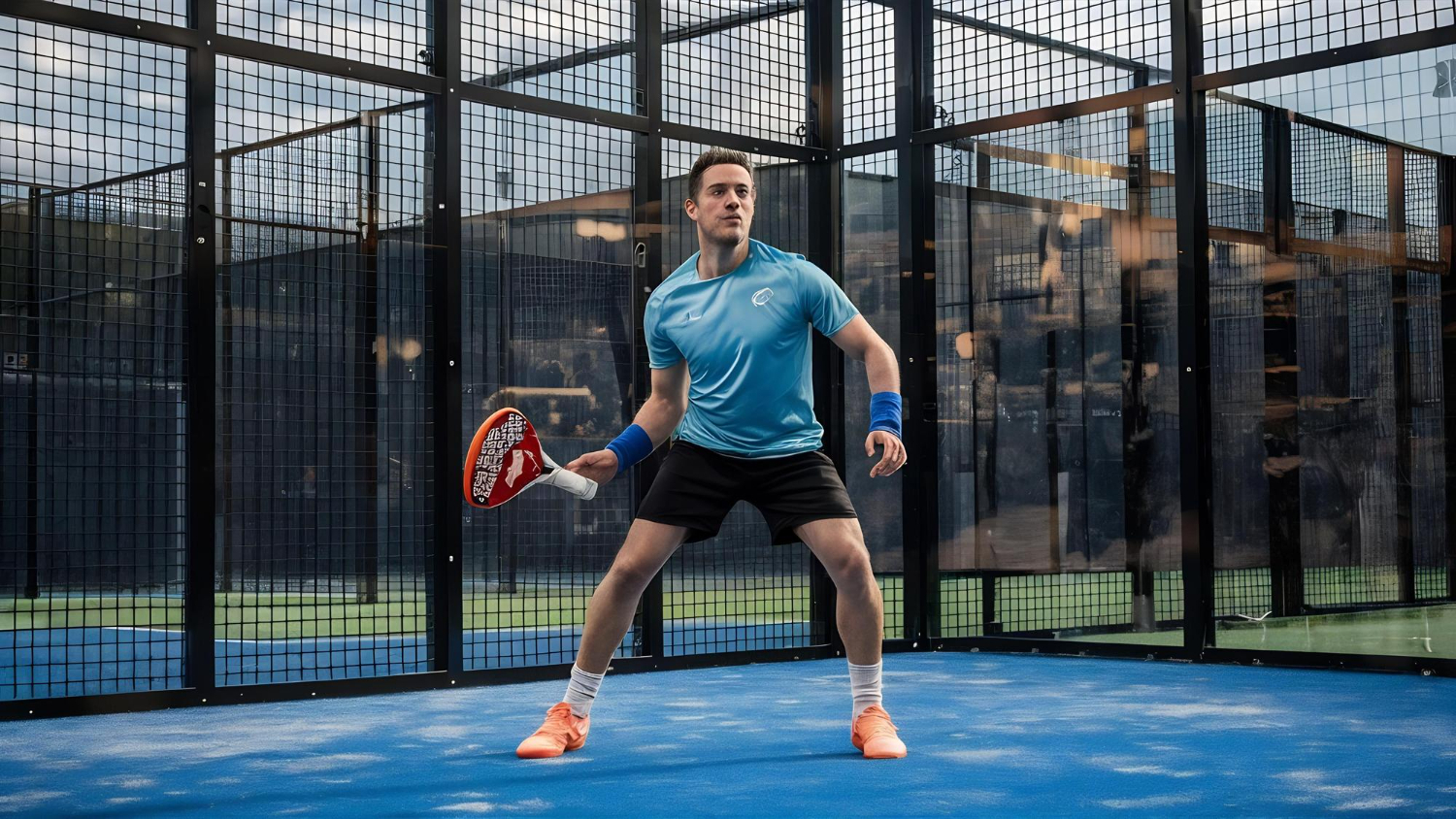
  • Stand one step behind the service line, weight forward, racket up.
  • When deep balls land on/behind the line, let them hit the glass—don’t fight the first bounce.
  • After a salida or chiquita, move as a pair—either both hold or both advance.

At the net

  • Expect lobs; turn early for bandeja/víbora.
  • After your overhead, recover two short steps to re-close the middle.

In the corner

  • Hips/shoulders side-on; small split-steps to buy time.
  • Compact swing for double-glass; avoid big backswings that collide with the side wall.

Progressive Drills (Solo & With a Partner)

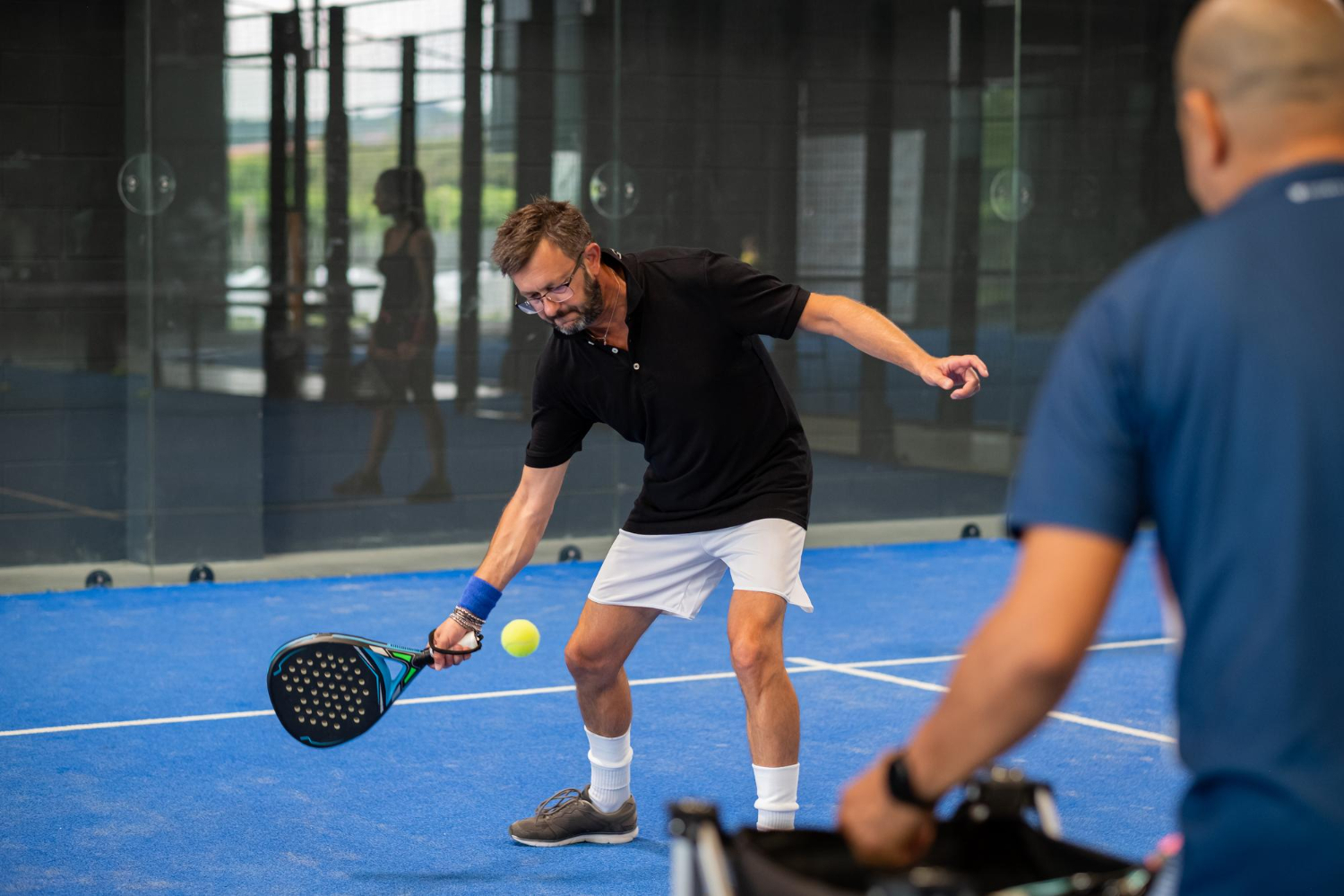
1. Solo Wall Feel (10 minutes daily)

  • Stand a racket length away from the back glass.
  • Drop-feed, let it bounce and rebound, then step forward and drive it cross-court.
  • Do 20 forehands + 20 backhands.
  • Progression: Add targets (cones/zones) to train accuracy.

2. Corner Ladder Drill (Partner Feed)

  • Partner feeds balls to the backside seam.
  • Sequence: (1) single glass, (2) double glass, (3) take before the wall.
  • Repeat 5 reps each.
  • Key: Short swings, compact control.

3. Salida → Chiquita → Close Drill

  • From baseline, hit a salida de pared.
  • Follow with a chiquita to the opponent’s feet.
  • Both players step forward together to close the net.
  • Volleyers respond with a lift → defenders win the net.

4. Bandeja / Víbora Sequences

  • Partner lobs alternately to corners.
  • Hit bandeja (deep slice) or víbora (fast sidespin).
  • After each, recover two steps back to close middle.
  • Pro-level target: Deep corner bounce that dies low.

5. Bajada Targets Drill

  • Partner feeds deep lob into the corner.
  • Play bajada (downward attack) after rebound.
  • Aim for: feet, body, or middle gap.
  • 10 reps each.
  • Key: Let the ball rise slightly post-rebound before striking.

6. Por Tres Build-Up Drill

  • Start inside service line: hit topspin smash, aiming for height + spin.
  • Step back gradually until baseline.
  • Advance to hitting toward the side glass seam for controlled exits.
  • Tip: Focus on brushing up the ball, not just power.

Common Mistakes (And How to Fix Them)

1. Standing Too Close to the Glass

  • Mistake: Crowding the wall, no room for rebound.
  • Fix: Stand 1–1.5m away to step forward into contact.

2. Rushing the Swing

  • Mistake: Hitting before the rebound completes.
  • Fix: Wait for the ball to come forward; use a compact stroke.

3. Over-Swinging on Double Glass

  • Mistake: Forcing winners from tricky rebounds.
  • Fix: Play with margin, lift over net, reset rally.

4. Poor Footwork / Reaching

  • Mistake: Leaning instead of moving feet.
  • Fix: Split-step before bounce; use sidesteps to adjust.

5. Panicking Against Lobs

  • Mistake: Wild smashes → errors or counters.
  • Fix: Develop the bandeja—controlled, deep placement.

6. Misusing the Mesh/Fence

  • Mistake: Treating mesh like glass.
  • Fix: Remember: glass is playable, mesh isn’t (especially on serve).

7. Playing Too Short in Defense

  • Mistake: Wall exits land mid-court, inviting attack.
  • Fix: Focus on depth beyond the service line with salida/chiquita.

8. Forgetting Team Movement

  • Mistake: One player advances, partner stays back.
  • Fix: Always move as a pair—either both defend or both close the net.

Conclusion – From Fear to Flow: Making the Walls Your Ally

Every padel player remembers the first time the ball came flying off the glass—it felt chaotic, unpredictable, even a little unfair. But as you’ve seen, the walls are not meant to confuse you; they’re designed to add depth, creativity, and strategy to the game.

For beginners, learning the salida de pared turns panic into calm. For intermediates, tools like the bajada and the reset lob change defense into attack. And for advanced players, smashes like the víbora and por tres prove that the glass isn’t just for survival—it’s for domination.

The key is patience. Don’t rush the rebound. Give yourself space, trust the wall, and let the game slow down. Once you embrace that rhythm, you’ll stop dreading the glass and start using it to control rallies, outsmart opponents, and dictate the pace of play.

Padel’s magic lies in these walls. They turn every rally into a puzzle of timing, angles, and tactics. Master them, and you’ll unlock the essence of what makes padel not just another racket sport, but one of the fastest-growing games in the world.

So next time the ball hits the back wall, don’t panic—smile. That’s your cue to play padel the way it’s meant to be played.

Round vs Teardrop vs Diamond: Which racquet suits your style?

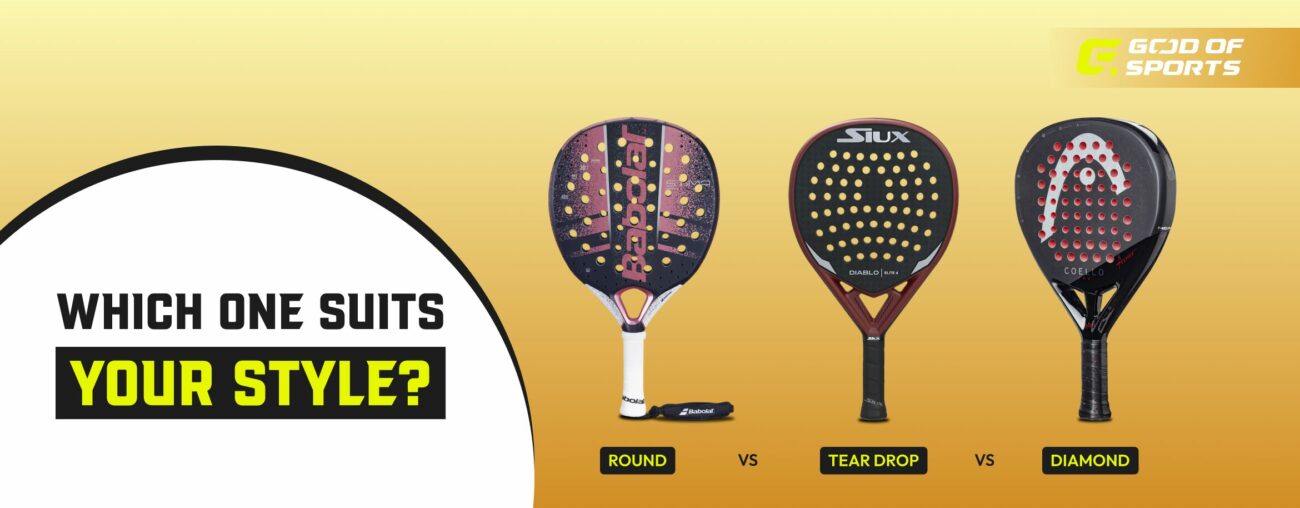
Round vs Teardrop vs Diamond Rackets: Which One Suits Your Style?

Padel may look simple—ball, court, and racket—but anyone who has stepped onto the court knows that equipment can make or break your game. Unlike tennis, padel rackets come in distinct shapes that dramatically affect performance. The three main types—round, teardrop, and diamond—are more than just cosmetic differences. Each shape influences your control, power, sweet spot, and overall playing style.

Whether you’re a beginner looking for forgiveness, an intermediate player chasing balance, or an advanced hitter hungry for power, understanding racket shapes is the first step toward finding your perfect match.

1. Round Rackets – Built for Control

Key Features

  • Sweet Spot: Large and centered.
  • Balance: Low (towards the handle).
  • Power vs Control: Prioritizes control over raw power.
  • Weight Distribution: Even, forgiving on mishits.

Who Should Use It?

Round rackets are the go-to choice for beginners or defensive-style players. With a big sweet spot and low balance, they reduce the number of errors and make it easier to return balls consistently.

If you’re new to padel, a round racket helps you build confidence by giving you more time to react and minimizing mistakes.

Pros

  • Large sweet spot makes shots forgiving.
  • Easier to maneuver, great for rallies.
  • Reduces strain on the wrist and elbow.

Cons

  • Limited power for smashes and aggressive shots.
  • May feel too “safe” for advanced players.

Popular Models (2025)

2. Teardrop Rackets – The All-Rounder

Key Features

  • Sweet Spot: Mid-to-high, slightly smaller than round.
  • Balance: Medium.
  • Power vs Control: Balanced mix of both.
  • Weight Distribution: Hybrid between control and attack.

Who Should Use It?

The teardrop racket is the Swiss army knife of padel gear. It’s best for intermediate players who want both control in defense and enough punch to attack when opportunities arise.

If you’ve played for a while and want a racket that grows with you, teardrop is the most versatile shape.

Pros

  • Balanced performance for both power and control.
  • More versatility than round rackets.
  • Great for all-court players who switch between offense and defense.

Cons

  • Doesn’t excel as much in control as round rackets or in power as diamond rackets.
  • Requires more precision than round shapes.

Popular Models (2025)

3. Diamond Rackets – The Powerhouses

Key Features

  • Sweet Spot: Small, located at the top.
  • Balance: High (towards the head).
  • Power vs Control: Maximizes power at the expense of forgiveness.
  • Weight Distribution: Head-heavy, built for aggressive shots.

Who Should Use It?

Diamond rackets are made for advanced and attacking players who thrive on smashes, volleys, and finishing points quickly. If you’re confident in your technique and have the strength to control a head-heavy racket, the diamond shape will reward you with explosive power.

Pros

  • Unmatched power for smashes and offensive play.
  • Ideal for aggressive strategies.
  • Provides professional-level performance.

Cons

  • Small sweet spot punishes mishits.
  • Less maneuverable, harder for beginners.
  • Can cause fatigue during long games.

Popular Models (2025)

4. Side-by-Side Comparison

Feature Round Rackets Teardrop Rackets Diamond Rackets
Sweet Spot Large & centered Mid-high, medium size Small, at top
Balance Low (handle-heavy) Medium High (head-heavy)
Best For Control, defense, beginners Balanced all-round play Power, attack, advanced
Forgiveness High Medium Low
Power Low Medium High
Control High Medium Low

5. How to Choose the Right Shape for Your Style

Your ideal racket shape depends on your level, goals, and playing style:

  • Beginner / Defensive Player → Go for Round. You’ll enjoy more rallies and fewer errors.
  • Intermediate / Balanced Player → Choose Teardrop. It adapts to both control and power.
  • Advanced / Aggressive Player → Pick Diamond. Perfect for finishing points with smashes.

Pro Tip: Don’t just follow trends. Test rackets if possible—feel, weight, and grip size also play a huge role alongside shape.

6. Additional Factors Beyond Shape

While shape is key, also consider:

  • Weight: Light rackets (340–360g) for quick reactions, heavy rackets (370g+) for stability.
  • Core Hardness: Softer cores for control and comfort, harder cores for power.
  • Grip Size: Affects maneuverability and wrist comfort.
  • Material: Carbon fiber for durability and power; fiberglass for comfort and affordability.

Conclusion – Find Your Perfect Fit

Choosing between round, teardrop, and diamond padel rackets isn’t just about shape—it’s about how you want to play the game.

  • If you’re starting out, the round racket will guide you safely into padel.
  • If you want an adaptable tool, the teardrop racket is your best bet.
  • And if you’re a power-hungry smasher, the diamond racket will become your weapon of choice.

Remember, no racket is inherently better—it’s about matching your style and skill level. With the right choice, your racket won’t just be equipment; it’ll be an extension of your game.

Top 8 Padel Shoes in 2025 that offer Maximum Grip & Comfort

If your racket is your shot-maker, your shoes are your insurance policy—against slips on synthetic turf, sore knees from hard stop-starts, and rolled ankles after a late lunge off the back glass. Padel shoes are not just re-badged tennis shoes; they’re built for 360° movement, multi-directional grip, and rebound cushioning suited to sand-dressed turf.

In 2025, two brands dominate the specialist offerings on India’s God of Sports: Babolat (Jet Premura & Movea lines) and NOX (AT10). Below, you’ll find the ten best pairs you can actually buy there right now, plus a quick buyer’s checklist to pick the right fit for your game and your joints.

Top 8 Padel Shoes (2025) that offer Maximum Grip & Comfort

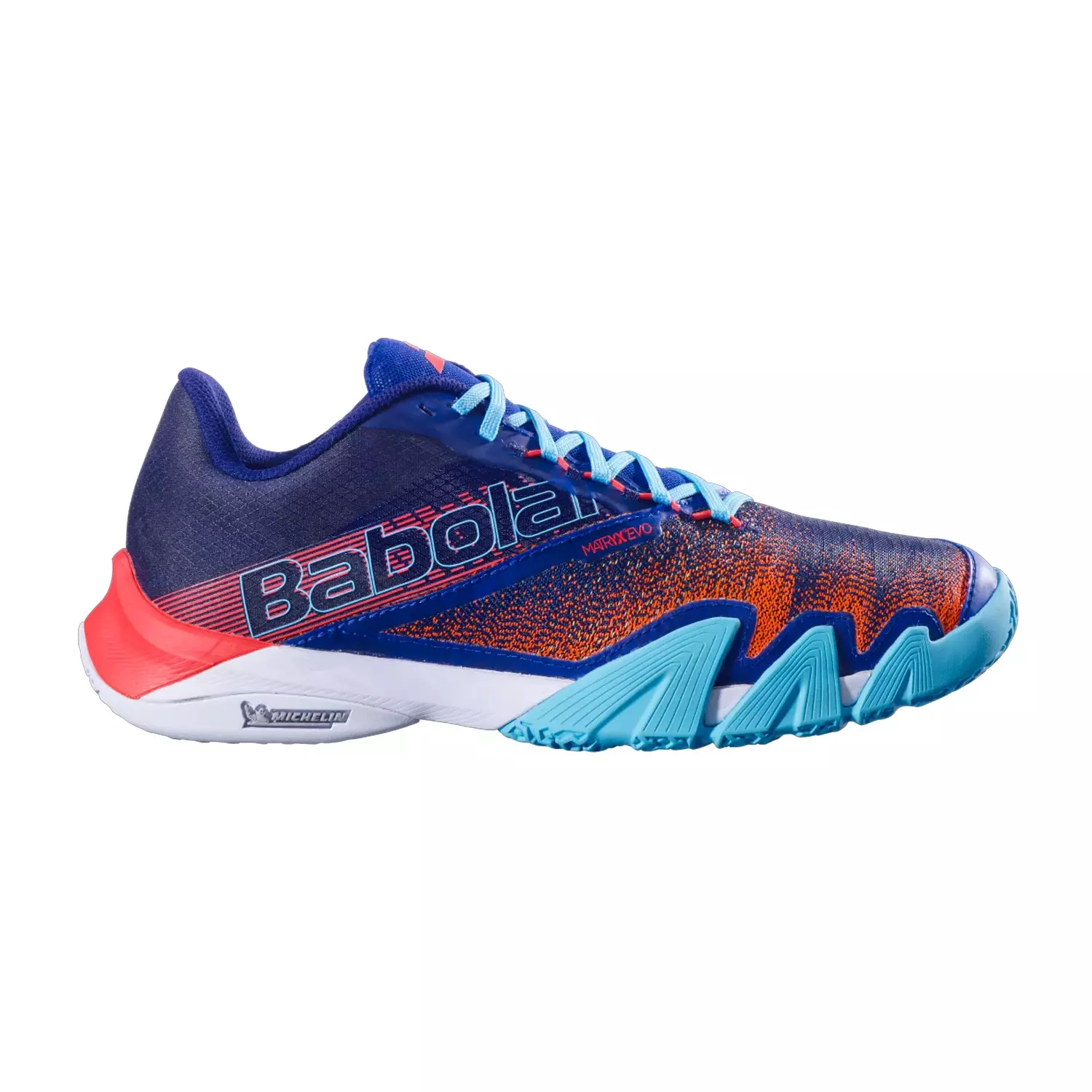
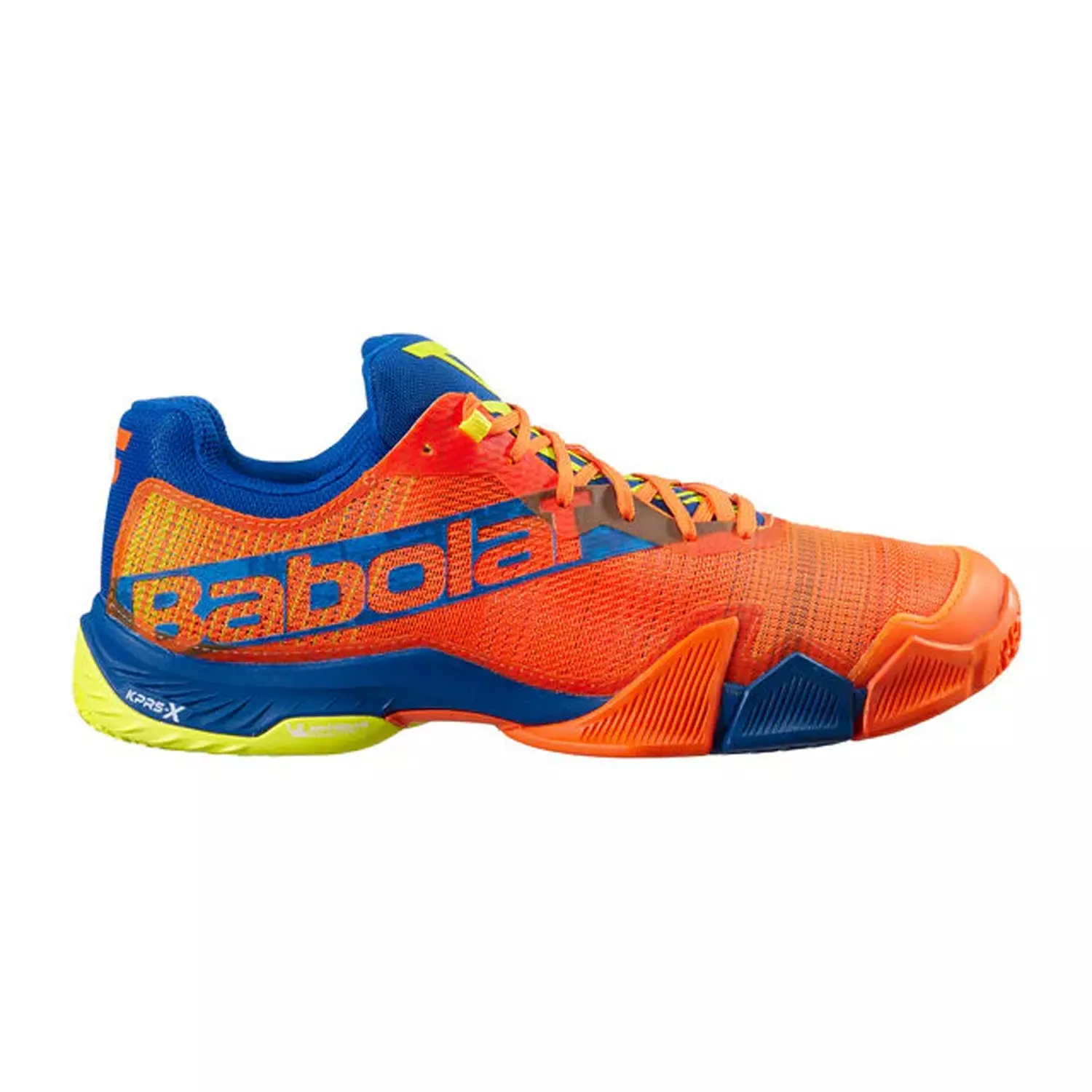
1) Babolat Jet Premura 2 Padel Shoes – Blue/Poppy Red)

Babolat Jet Premura 2 Padel Shoes (Blue/Poppy Red)
Identical to the Electric Green model, this colorway offers the same performance benefits in a more understated palette. Its Matryx woven upper provides durability while maintaining lightness, and the outsole is optimized for sand-dressed turf. Players who prefer a sleek look with all the bells and whistles of Babolat’s flagship should pick this.

Best for: Competitive beginners to intermediates seeking a tour-grade shoe with comfort.

Buy Now

2) Babolat Jet Premura 2 Padel Shoes – Electric Green/Mandarin

Babolat Jet Premura 2 Padel Shoes (Electric Green/Mandarin)

This is Babolat’s flagship padel shoe and one of the most advanced models you can buy. It’s designed with 360° flex grooves on the sole for explosive movements in any direction and reinforced sidewalls to support aggressive slides. The standout feature is its ventilated upper, which keeps your feet cooler during long matches in warm conditions. At ~30% off on The God of Sports, it’s a premium but accessible option for players who want top-end performance.

Best for: Players who want lightweight agility without sacrificing stability.

Buy Now

3) Babolat Jet Premura Padel Shoes – Orange/Dark Blue

Babolat Jet Premura Padel Shoes (Orange/Dark Blue)Even though it’s a generation older, the original Premura is still a powerhouse. It features durable woven uppers, excellent lateral stability, and a firmer, more locked-in ride compared to the Premura 2. Many players actually prefer the older version if they like a snug, performance-focused fit. Plus, it’s heavily discounted compared to the newer release, making it great value.
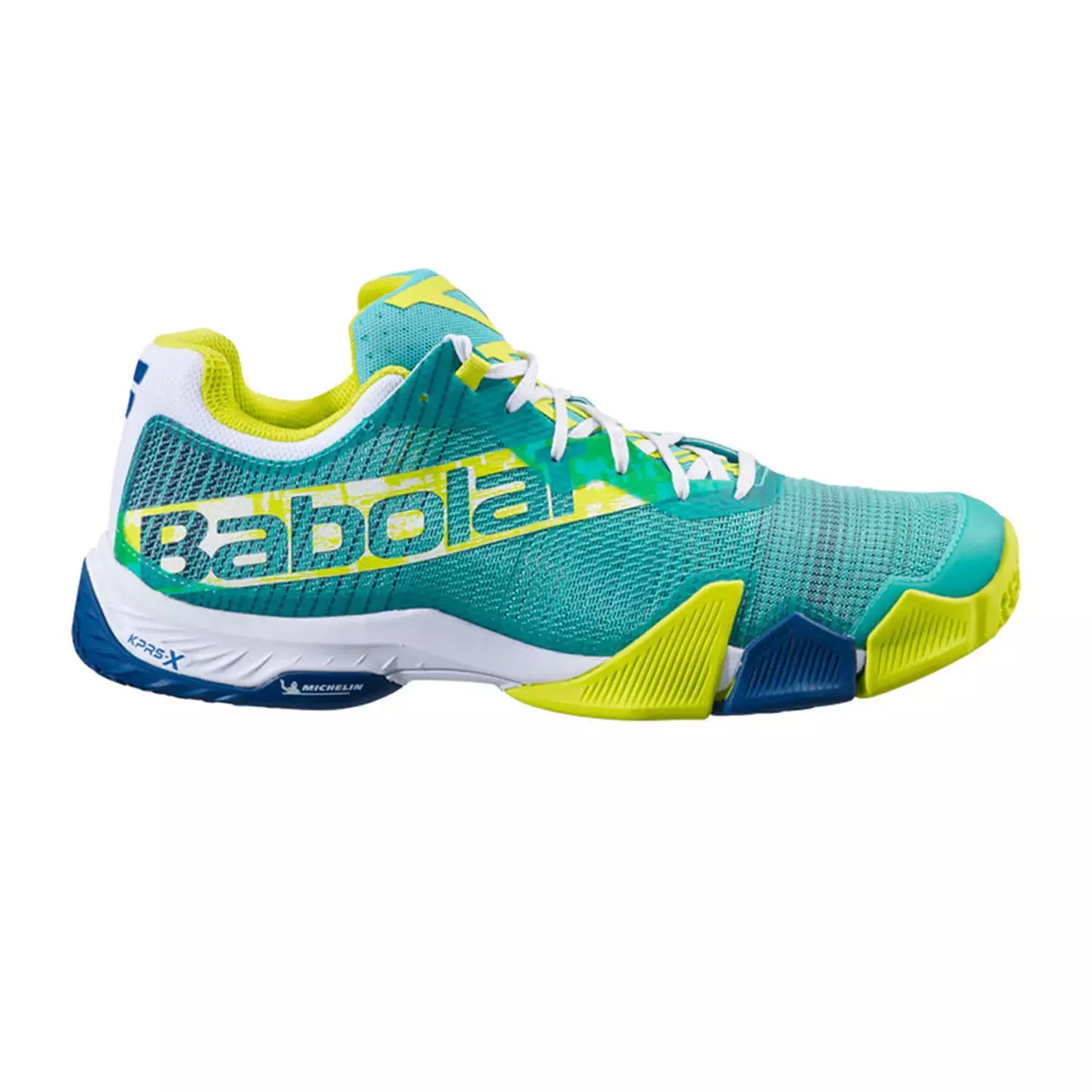
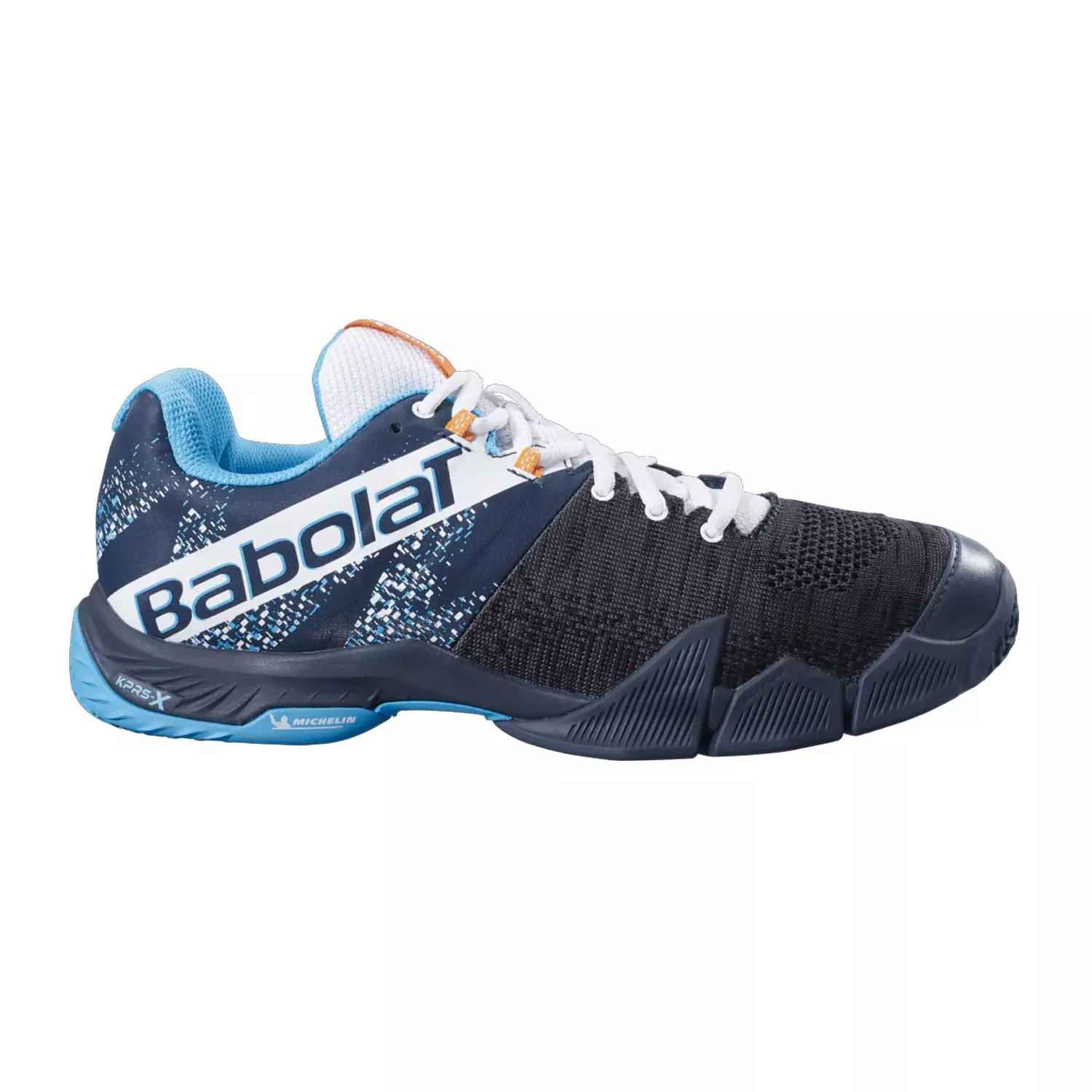
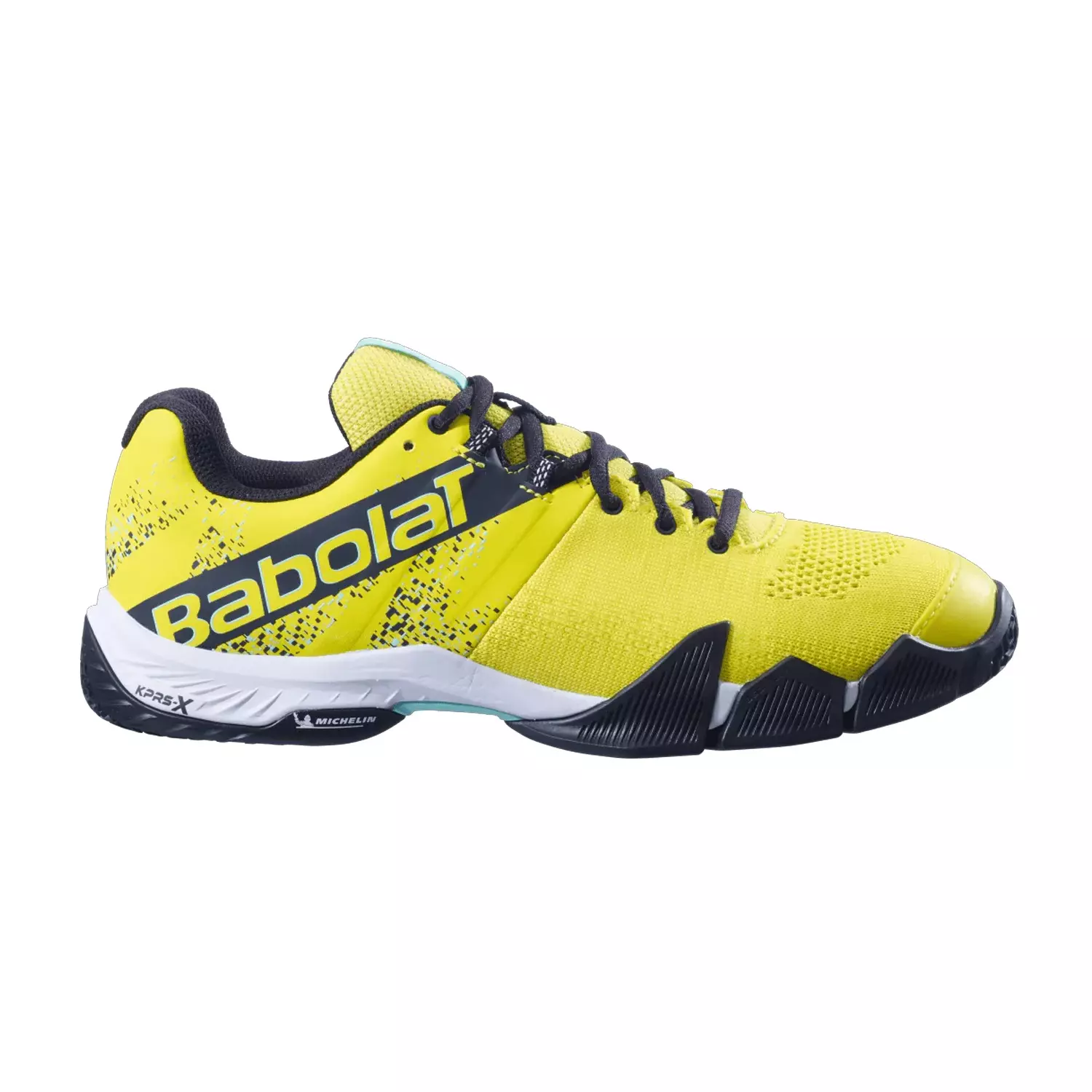
Best for: Players who like a tight fit and strong support, especially on defense.

Buy Now

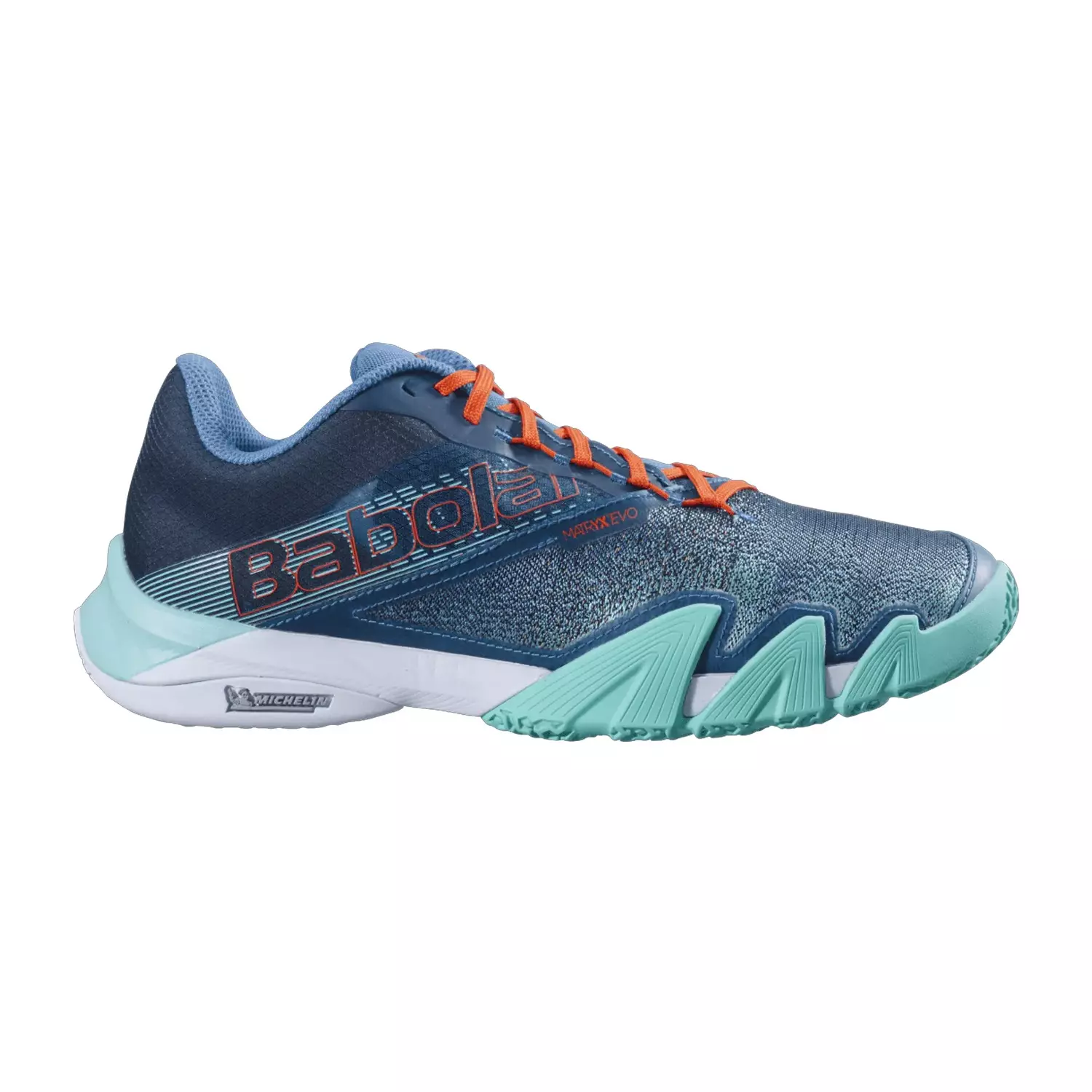
4) Babolat Jet Premura Padel Shoes – Green Sulphur/Spring

Babolat Jet Premura Padel Shoes (Green Sulphur/Spring)

Same tech package as the Orange/Dark Blue version, but with a brighter aesthetic. It retains the same traction-heavy sole pattern and firm ride, but availability depends on sizes in stock. If you want a fresh colorway while saving money, this is the one to watch.

Best for: Players looking for pro-level traction at a reduced price point.

Buy Now

5) Babolat Movea Padel Shoes – Grey/Scuba Blue

Babolat Movea Padel Shoes (Grey/Scuba Blue)

The Movea is Babolat’s support-oriented model. Its biggest selling point is the dual Power Straps across the midfoot, which lock your foot in during side shuffles and sudden stops. Combined with KPRS-X cushioning, it feels plush on hard landings but doesn’t compromise stability. The outsole is slightly broader, giving you a more “planted” ride. It’s ideal if you prefer stability over featherlight speed.

Best for: Recreational players who value comfort, stability, and ankle protection during long sessions.

Buy Now

6) Babolat Movea Padel Shoes – Acacia/Blue Curacao

Babolat Movea Padel Shoes (Acacia/Blue Curacao)

The Movea in a vibrant colorway, perfect for players who want performance with personality. Same Power Strap lockdown and shock-absorbing midsole as the Grey/Scuba Blue model, but often limited in stock. Its stylish look makes it popular with younger club players.

Best for: Players who want structured stability with a bit of flair.

Buy Now

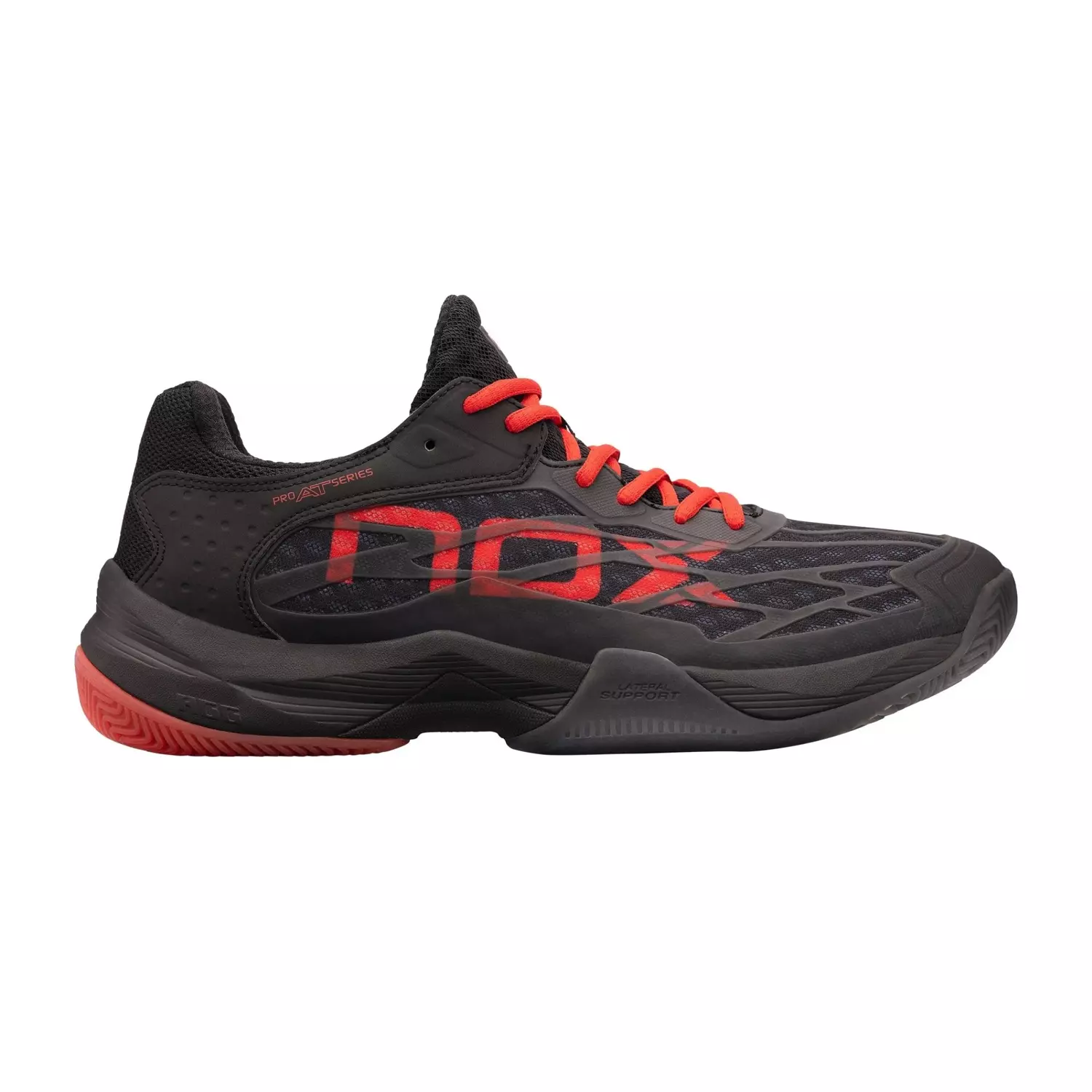
7) NOX AT10 Limited Edition Padel Shoes – Black/Red

NOX AT10 Limited Edition Padel Shoes (Black/Red)

Built with padel in mind, featuring reinforced side support for fast lateral moves, premium cushioning for all-day comfort, and durable outsole traction for synthetic turf. The black/red combo adds a professional edge to its performance build.

Best for: Players seeking a stable, cushioned ride in a bold colorway.

Buy Now

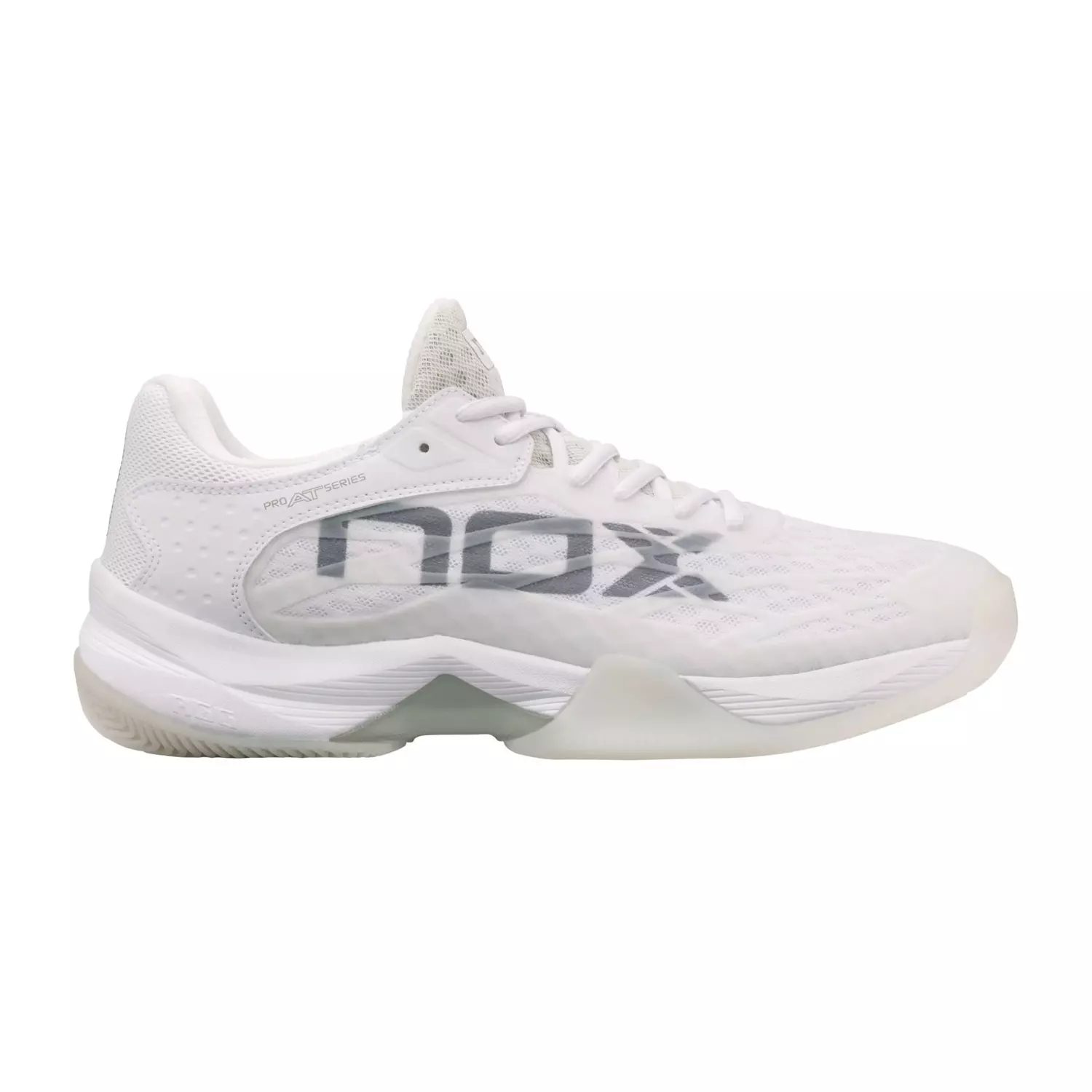
8) NOX AT10 Limited Edition Padel Shoes – White/Grey

NOX AT10 Limited Edition Padel Shoes (White/Grey)

Same AT10 platform in a lighter, cleaner look. Offers responsive cushioning, breathable uppers, and all-court grip for padel-specific movements. A great option for players who want both performance and style versatility.

Best for: Players who prioritize comfort + aesthetics with a reliable grip.

Buy Now

What to Look For in a Padel Shoe (Grip & Comfort Checklist)

1) Outsole pattern built for padel turf
Look for hybrid herringbone / omni nubs or flex-grooved designs that bite into sand-dressed synthetic grass without clogging. Babolat’s Premura/Movea outsoles are tailor-made for this surface, hence their popularity with frequent players.

2) Cushioned midsole that doesn’t feel wobbly
You want impact protection (long sessions; repeated lunges) but also a low-delay court feel for quick split-steps off glass. Babolat’s KPRS-X package (Movea) and the Premura line’s tuned cushioning are proven options.

3) Lateral support & lockdown
Padel is full of side-to-side shuffles. Stabilizing features—e.g., Power Straps (Movea) or a structured midfoot cage (Premura)—help prevent ankle rolls when a rally turns chaotic. If your ankles pronate, bias toward the more supportive Movea vs. a super-minimal speed shoe.

4) Breathability
On humid nights, heat buildup kills comfort. The Jet Premura 2 is explicitly engineered with large air vents in the upper for airflow—a rare, noticeable advantage in real play.

5) Upper durability (Matryx/technical mesh vs. basic mesh)
Matryx-type woven uppers (Premura) balance lightness with abrasion resistance—key when you drag the forefoot or clip the turf grains during slides. If you burn through toeboxes, prioritize these tech uppers.

6) Fit profile & weight
If you prefer a “locked-in” race fit, look at Jet Premura / Premura 2; if you want slightly roomier, supportive stability with straps, go Movea. Try evening practices in your socks (thickness matters) and remember many padel shoes run true-to-size but feel more secure than lifestyle trainers. Use GoS size filters to find stock across colorways.

7) Value & availability
Because padel shoes sell in cycles, one colorway may be heavily discounted while another isn’t. Check the Babolat brand pages and collection listings for current pricing before you decide.

Conclusion

The right padel shoe keeps you upright, confident, and fresh—especially on slick, sand-dressed courts where one bad plant can end a rally (or a week). If you want breathable, agile performance with tour DNA, start with the Babolat Jet Premura 2. If you prefer a more stable, supportive platform for long club nights, the Babolat Movea is a joy underfoot. And if you’re curious to try a non-Babolat specialist, NOX AT10 Limited Edition brings premium comfort and a padel-first build.

Because stock and discounts rotate quickly, keep an eye on the Babolat Padel Shoes collection and individual product pages at God of Sports to secure your size at the best price. Then lace up, trust your grip, and go win the kitchen—err—the net.

Best Padel Rackets for Beginners in 2025 [Complete Buying Guide]

Padel is no longer a niche pastime—it’s one of the fastest-growing sports in the world, with more than 50,000 courts globally. Its mix of tennis, squash, and social play makes it addictive, but for beginners, the right gear is crucial. The most important piece of equipment you’ll buy is your first racket. A beginner-friendly racket can make rallies easier, reduce arm strain, and speed up learning, while the wrong one can lead to frustration and poor technique.

In this guide, we’ve compiled the Top 10 beginner-level padel rackets to buy in 2025, along with practical advice on what to look for before purchasing. Whether you’re playing your first social match or signing up for regular training, this article will help you find the perfect starting racket.

Top 10 Beginner-Level Padel Rackets to Buy in 2025

1. HEAD Evo Speed 2025 Padel Racquet

  • Why it’s great: Lightweight, forgiving, and designed with comfort foam, it provides “easy power” and quick handling.
  • Best for: Absolute beginners who want a soft, arm-friendly feel.
  • Price range: ₹8,000–₹9,000).
  • Buy Now

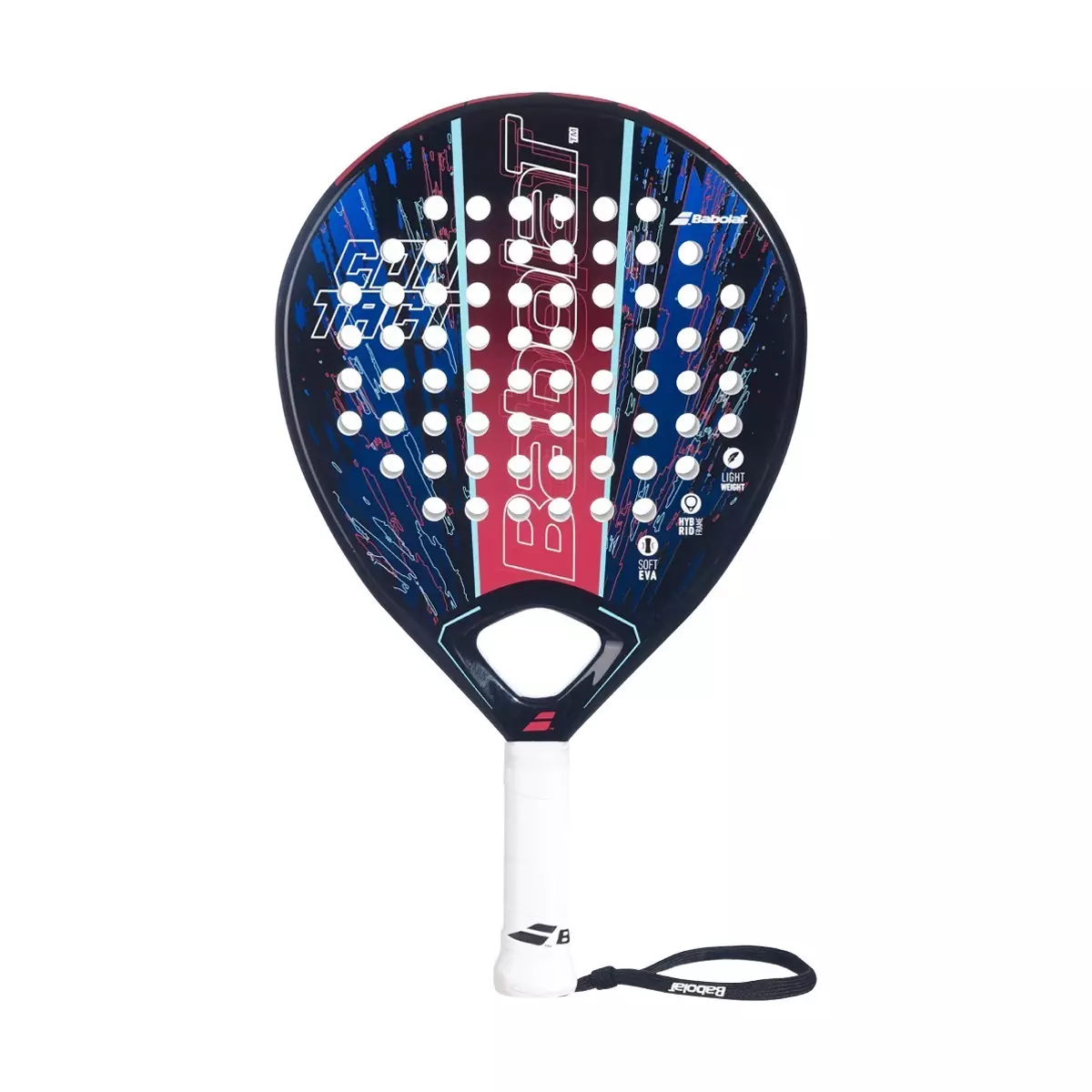
2. Babolat Contact Padel Racquet

Babolat Contact Padel Racquet

  • Why it’s great: Extremely maneuverable with a large sweet spot, this racket is designed for beginners who want confidence from the first hit.

  • Best for: Casual players and those just entering the sport.

  • Price range: ~₹6,000–₹8,000.

  • Buy Now

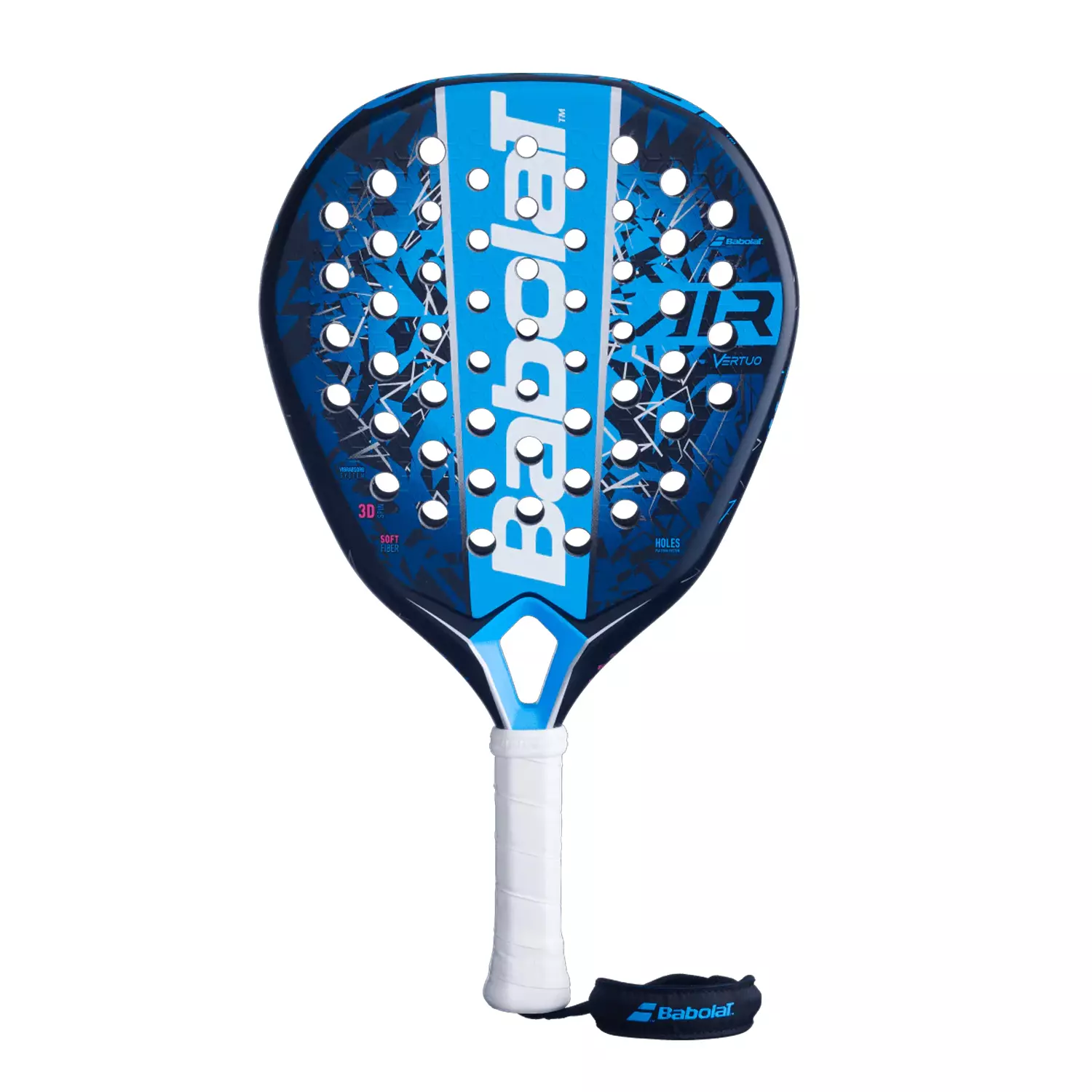
3. Babolat Air Vertuo 2025 Padel Racquet

  • Why it’s great: Lightweight with a hybrid round/teardrop shape, offering easy maneuverability plus a little extra “pop.”
  • Best for: Players who want comfort but don’t want to sacrifice all power.
  • Price range: ~₹12,000–₹14,000.
  • Buy Now

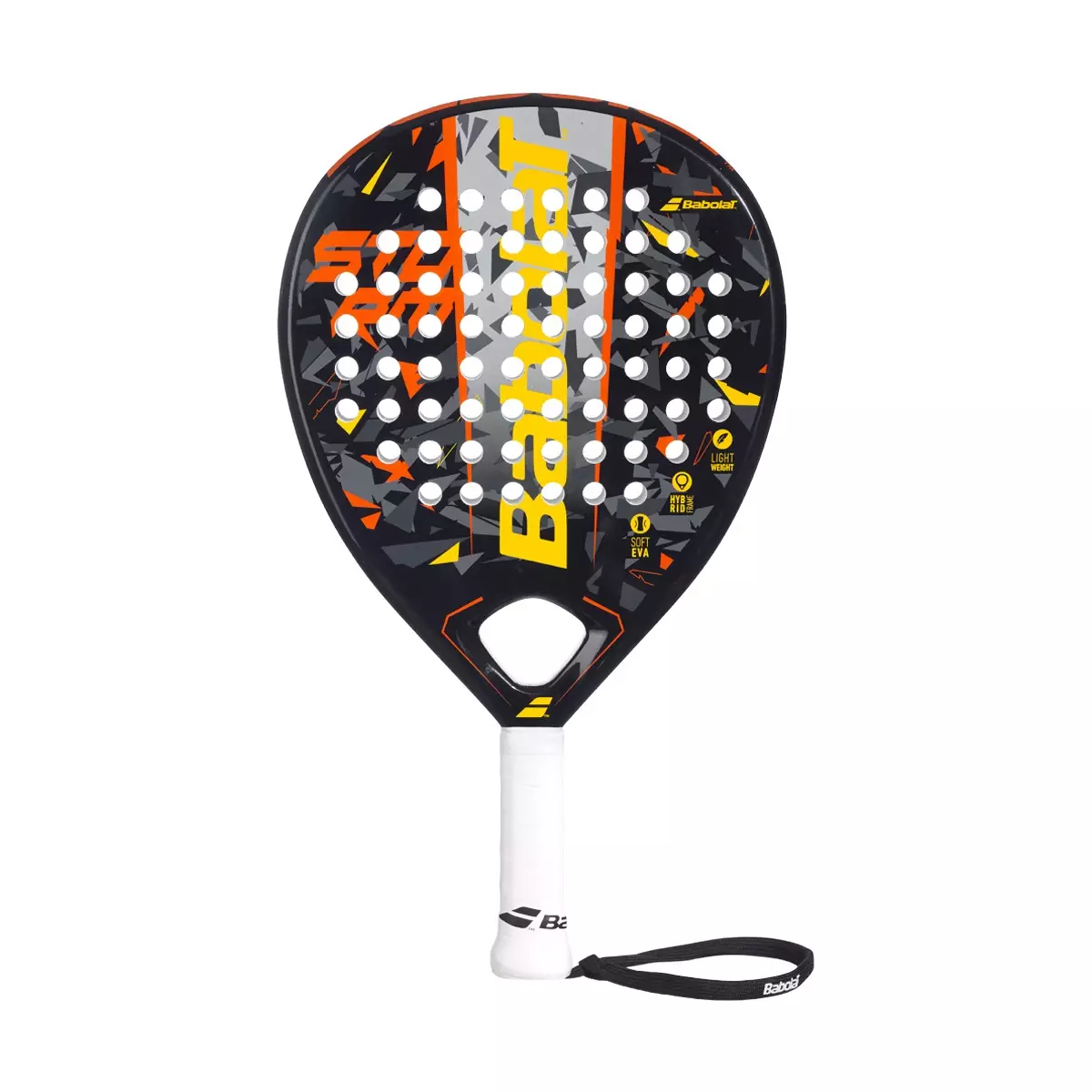
4. Babolat Storm Padel Racquet

Babolat Storm Padel Racquet

  • Why it’s great: Slightly more advanced than the Contact, the Storm adds a bit of power while retaining comfort and control.

  • Best for: Beginners ready to improve and progress quickly.

  • Price range: ~₹8,000–₹10,000.

  • Buy Now

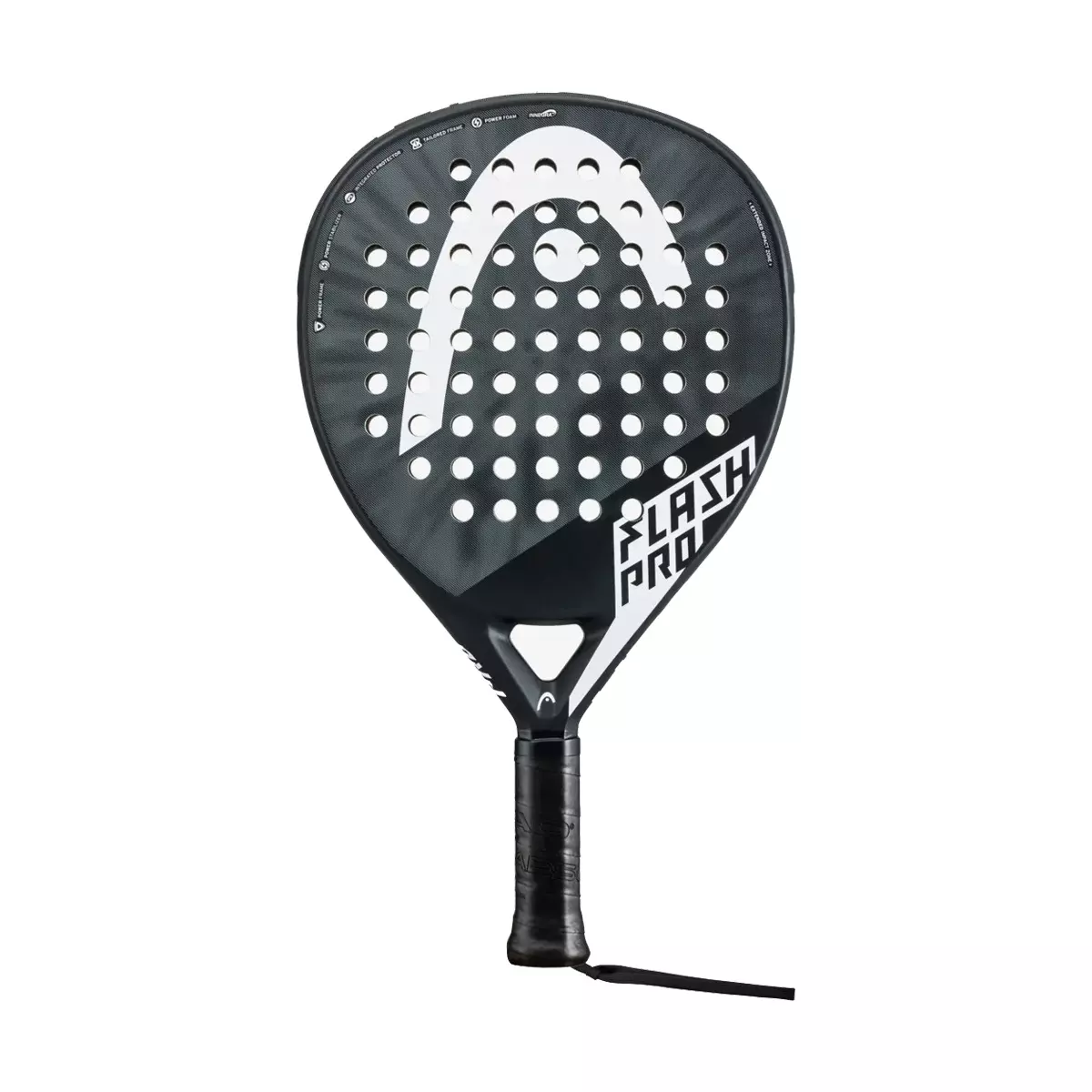
5. HEAD Flash Pro 2023 Padel Racquet

  • Why it’s great: A step up in stability compared to basic entry rackets, yet still beginner-friendly with a forgiving core.

  • Best for: Beginners who plan to play regularly and want durability.

  • Price range: ~₹8,000–₹10,000.

  • Buy Now

6. HEAD Bolt 2025 Padel Racquet

  • Why it’s great: Designed with lightweight materials and a big sweet spot, the Bolt is all about control and comfort.

  • Best for: New players who want an easy-to-swing racket with dependable consistency.

  • Price range: ~₹9,000–₹10,000.

  • Buy Now

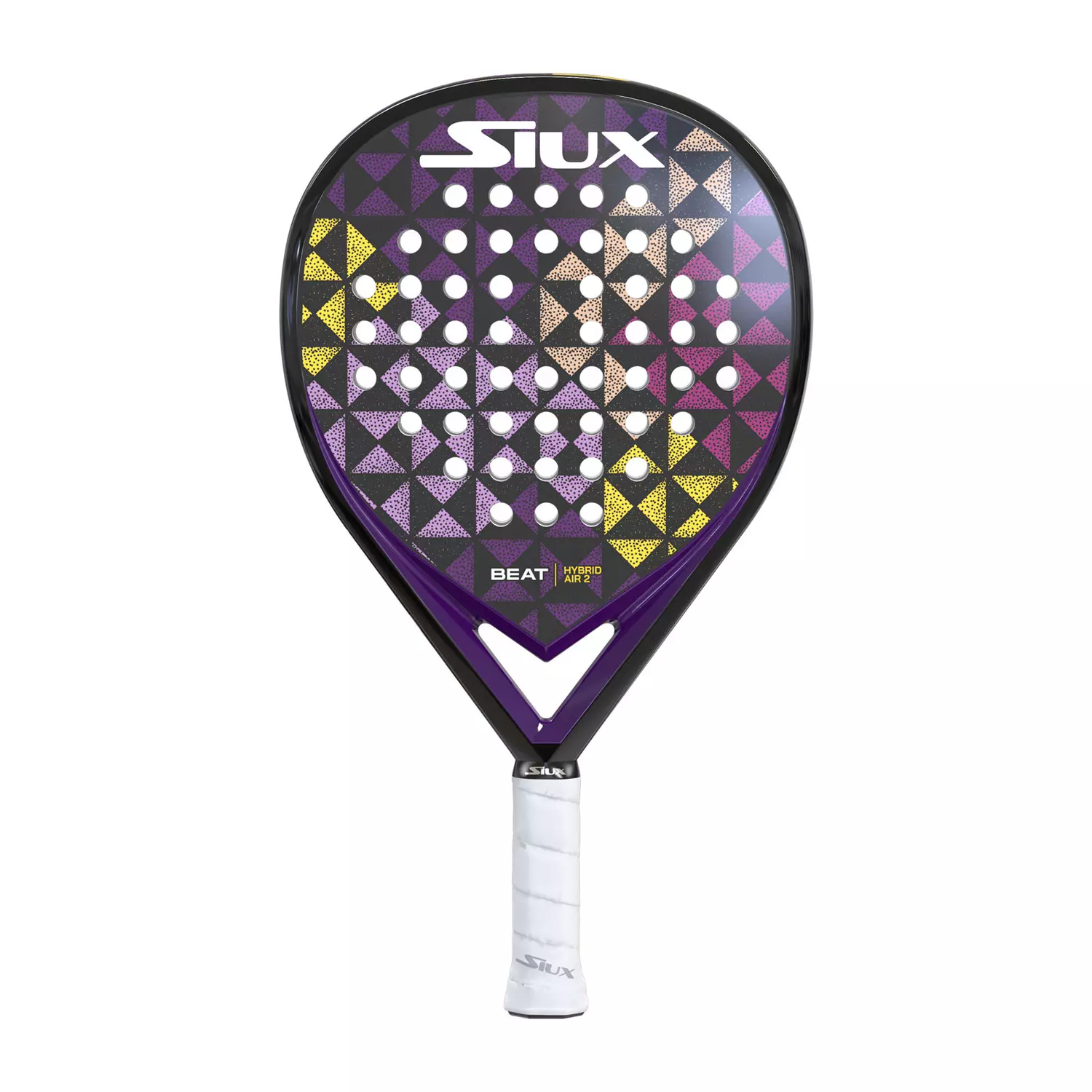
7. SIUX Beat Hybrid Air 2 Padel Racquet

SIUX Hybrid Air 2 Padel Racquet

  • Why it’s great: Blends a hybrid shape with soft materials, offering beginners a mix of forgiveness and gradual power.

  • Best for: New players who want a racket that grows with their skills.

  • Price range: ~₹7,000–₹9,000.

  • Buy Now

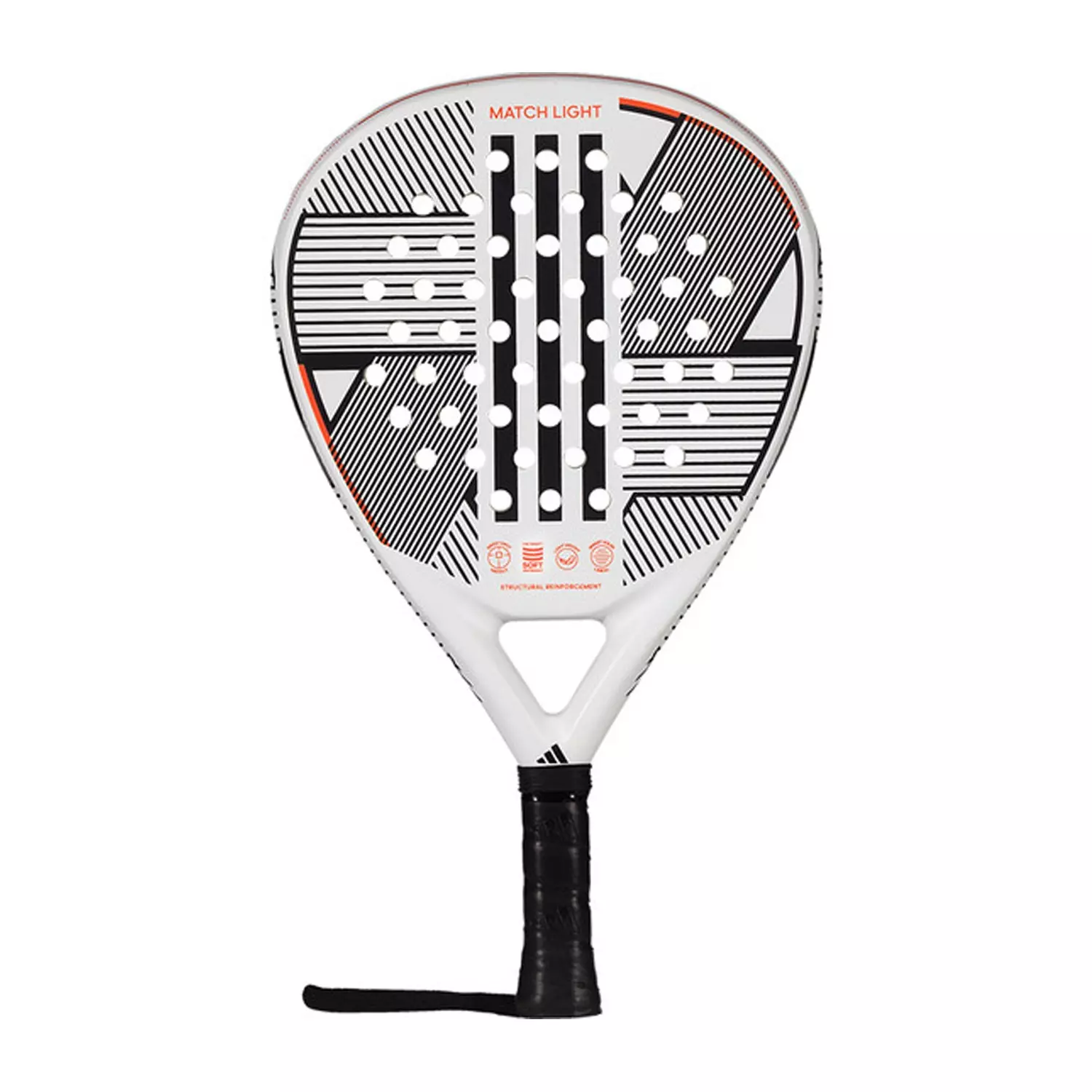
8. Adidas Match Light 3.3

  • Why it’s great: One of Adidas’s lightest rackets, round shape, and soft materials. Perfect for players worried about arm fatigue.
  • Best for: Beginners prone to wrist or elbow strain.
  • Price range: ~₹7,000–₹9,000.
  • Buy Now

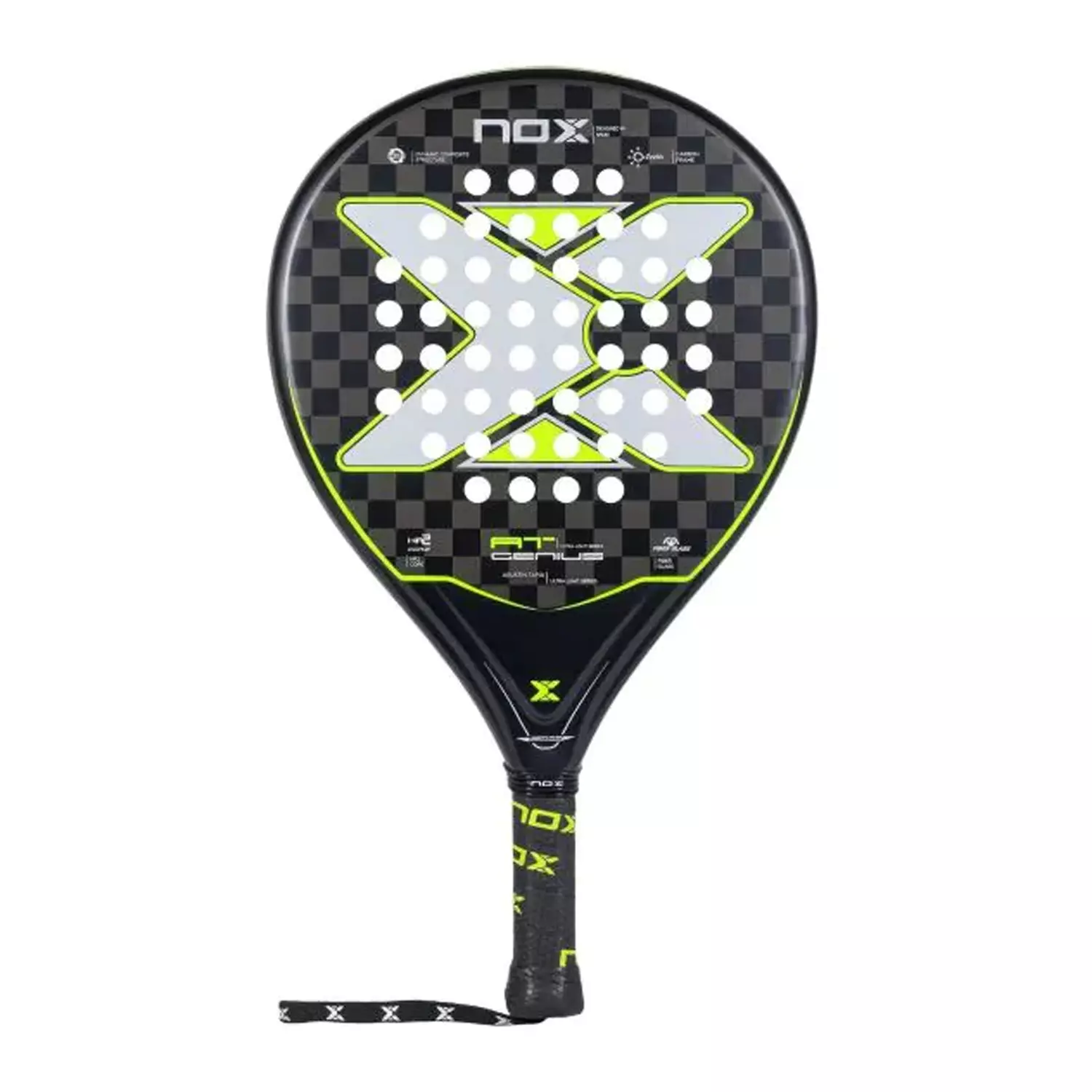
9. NOX AT Genius Ultralight Padel Racquet

  • Why it’s great: Very lightweight with excellent control features; perfect for juniors, smaller players, or anyone worried about arm strain.

  • Best for: Beginners who want ultimate maneuverability without losing stability.

  • Price range: ~₹9,000–₹11,000.

  • Buy Now

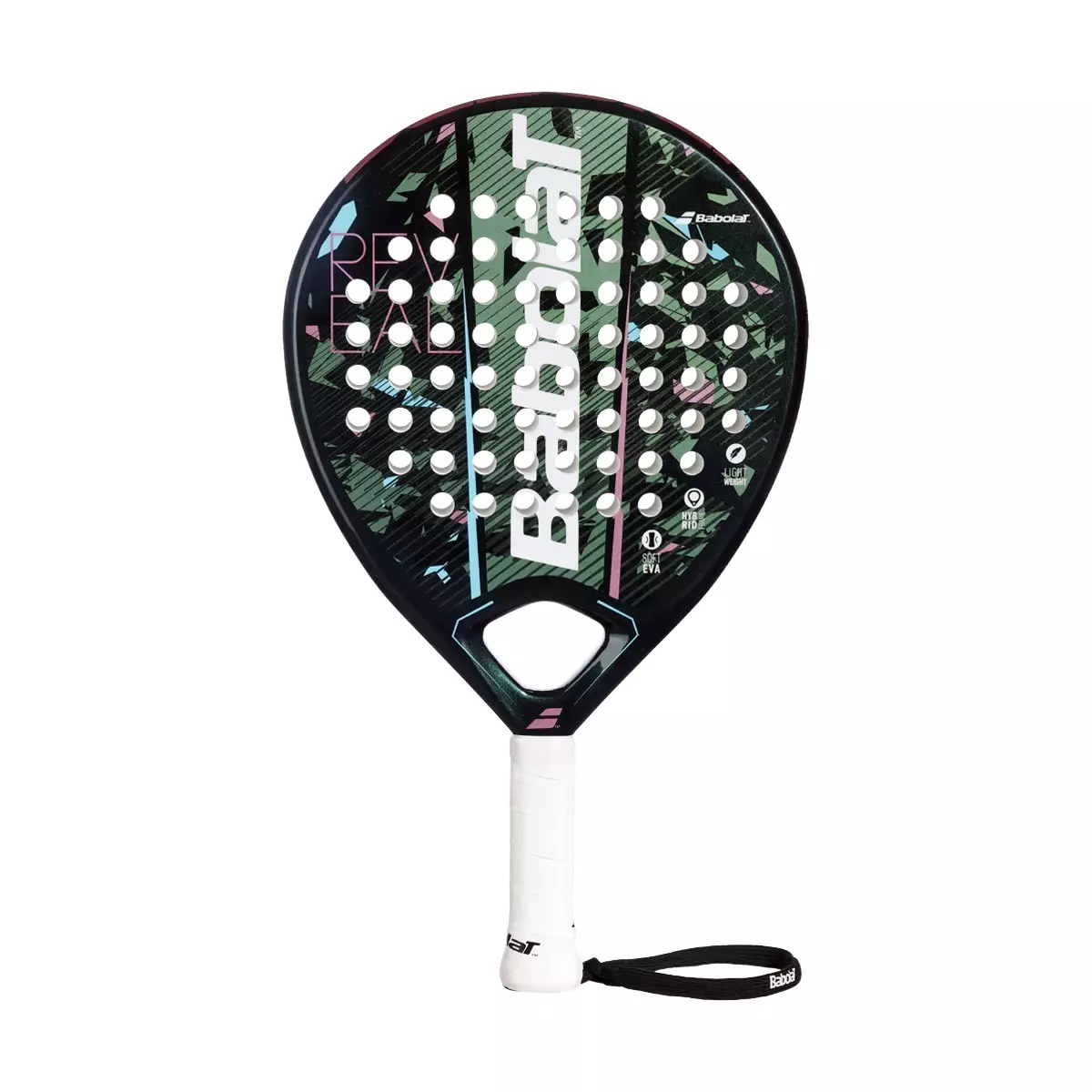
10. Babolat Reveal Padel Racquet

Babolat Reveal Padel Racquet

  • Why it’s great: The Babolat Reveal offers a smooth entry into the sport with specs tailored to comfort—expected round or soft-hybrid face, forgiving rebound, and manageable weight. Even though it’s a newer model, its build suggests it will follow Babolat’s values of playability and beginner-friendly performance.

  • Best for: Beginners who want a trusted brand, balanced features (control + some pop), and something that still feels good when rallies get longer.

  • Price range: ~ ₹7,000–₹9,000.

  • Buy Now

What Should You Keep in Mind While Selecting a Padel Racket?

Buying your first padel racket is more than just picking a brand name. Here are the specs that matter most for beginners:

1. Shape

  • Round → Best for beginners. Large sweet spot, forgiving on mishits.
  • Teardrop → Balanced option for players progressing quickly.
  • Diamond → Power-oriented, less forgiving—avoid until advanced.

2. Weight

  • Light (340–360 g): Easy to maneuver, arm-friendly.
  • Medium (360–370 g): Balanced, good once you have a consistent technique.
  • Heavy (370+ g): Powerful but hard to control—skip as a beginner.

3. Balance

  • Low balance: Easier to swing, ideal for new players.
  • High balance: Generates power but strains wrists. Stick to low or even balance initially.

4. Core Material

  • Soft EVA/Foam: Absorbs impact, expands sweet spot, beginner-friendly.
  • Hard EVA/Carbon Mix: Power-focused, better for advanced players.

5. Surface Material

  • Fiberglass: Softer, flexible, and more forgiving → perfect for starters.
  • Carbon Fiber: Stiffer, more powerful, but requires better technique.

6. Grip Size & Comfort

Your racket should feel comfortable in your hand. Add an overgrip if it feels slippery or too small. Comfort = confidence.

7. Price Range

Don’t overspend on your first racket. Beginners do best in the ₹4,000–₹12,000 range. Invest more once you play regularly and refine your style.

Conclusion

Padel is about enjoyment, community, and gradual skill-building. Choosing the right beginner racket will make your first rallies smoother, help you master wall rebounds, and reduce injury risk.

If you’re just starting out, round-shaped, lightweight, fiberglass rackets with soft EVA cores are your safest bet. Options like the HEAD Evo Speed 2025, Adidas Drive 3.4, and NOX X-One Evo deliver exactly what beginners need: forgiveness, comfort, and control.

Remember: your first racket isn’t about power or status—it’s about learning the sport with the right partner in hand. Start simple, play often, and as your technique improves, you can upgrade to rackets that add power and spin. And if you are looking for the best padel rackets in an affordable budget, visit God of Sports and get the best padel gear at an unbelievable price.

Essential Padel Terminology – 25 Words Every Player Must Know

Padel isn’t just a sport—it’s a phenomenon that has grown from a quirky backyard invention into one of the world’s fastest-growing games. The story begins in 1969, when Mexican businessman Enrique Corcuera built a walled court at his home in Acapulco. He wanted a game that blended tennis, squash, and social play. What started as a creative experiment quickly spread to Spain and Argentina, where padel exploded in popularity. Today, with over 50,000 courts worldwide, it’s played everywhere from Europe to the Middle East to India.

But to truly play padel, you need to speak its language. Step onto a court and you’ll hear words like bandeja, víbora, chiquita, and por tres. At first, it may sound like code, but these terms capture the unique tactics and artistry that make padel different from tennis or pickleball.

This guide will walk you through 25 essential padel terms every player must know—so you can not only follow the game but play it with confidence and flair.

A) Overheads & Finishing Shots

  1. Bandeja
    The signature padel overhead: a controlled, sliced “defensive smash” you play against lobs to keep the net. Contact is high but relaxed; aim deep to corners so the ball stays low after the glass.

  2. Víbora (Viper)
    Looks like a bandeja but faster with more side-spin and a later, wristier contact. Used to pressure feet or side glass and create ugly rebounds—an attacking cousin of the bandeja.

  3. Remate (Smash)
    The power overhead to finish points. In padel, you choose flat, topspin (kick), or even angle into glass—always considering court position and wall rebounds.

  4. Kick Smash
    A topspin smash that kicks violently after the bounce. Done right, it can jump back to your side or set up an “out of court” finish.

  5. Por Tres / X3
    A smash that leaves the court over the 3-meter side wall (often after the back glass). The classic crowd-pleaser.

  6. Por Cuatro / X4
    A flat, close-to-net smash that exits over the 4-meter back glass. Think “drill it down, send it out.”

  7. Gancho (Hook)
    High contact overhead (often when the lob floats over your shoulder). Compact swing, direct line—great to hold the net without giving time to opponents.

B) Soft-Touch & Setup Shots

  1. Chiquita
    The little one: a soft, low ball from the back aimed at the volleyer’s feet to force a weak lift and let you move in. It’s a momentum shifter.

  2. Dejada (Drop Shot)
    A gentle touch that dies short, best used when rivals are deep or leaning back. Use sparingly: disguise matters.

  3. Globo (Lob)
    Padel’s safety valve. High and deep to reset, buy time, and take the net on the next ball. It’s the shot most beginners underuse.

C) Walls & Rebounds (Your Best Friend)

  1. Salida de Pared (Wall Exit)
    Your bread-and-butter rebound after the back or side glass. Let the ball come off the wall, step forward, and strike from a comfortable height.

  2. Bajada de Pared (Wall Descent)
    An attacking wall shot: let the ball drop off the glass and drive it low and hard through the middle or to feet—often used to counter a smash.

  3. Doble Pared (Double Wall)
    Playing the ball after two glasses (side+back or back+side). It buys time, changes angles, and is a key defensive skill under pressure.

  4. Contrapared (Against-the-Wall Boast)
    Intentionally using your own back glass to send the ball back over the net—especially when the ball is already behind you.

D) Volleys, Grips & Formations

  1. Block Volley (Bloqueo)
    Minimal swing, firm face, absorb pace. The go-to answer when rivals fire from the back—reset the rally and hold your ground at the net.

  2. Continental Grip
    The universal padel grip (like holding a hammer). It lets you volley, bandeja, and smash without grip changes—a non-negotiable habit for consistency.

  3. Australian Formation
    Server and partner start on the same side to keep preferred forehand/backhand matchups. Popular among pros; requires a quick first step after serve.

  4. The Fridge (Nevera)
    Tactic of freezing one player by sending almost every ball to their partner. Emotionally tough, tactically effective—agree ground rules in friendlies!

E) Scoring & Match Terms

  1. Deuce (40–40)
    Tie at 40. Traditionally, you must win two in a row (advantage, then game).

  2. Advantage
    The point after deuce. Lose it and you’re back to deuce; win it and you take the game.

  3. Golden Point (Punto de Oro)
    Used in many events: at 40–40, one point decides the game; the receivers choose which side to take the return. Popularised by the World Padel Tour in 2020.

  4. Tiebreak
    At 6–6 in games, play a breaker to 7 points, win by 2; then record the set as 7–6.

  5. Let (on Serve)
    Serve touches the net and lands correctly—replay the serve.

  6. Double Fault
    Miss both serve into the box—point to receivers. (Also watch foot faults.)

  7. Foot Fault
    Stepping on/over the line before contact on serve—counts as a fault.

Quick Usage Guide (90-second refresher)

  • Holding the net? Expect lobs; answer with bandeja, víbora, or gancho to keep pressure.

  • Pinned deep? Use salida de pared to reset, chiquita to their feet to take the net, or globo to recover.

  • Finishing a sitter? Choose kick smash (jumping bounce) or go big with por tres/por cuatro when the setup is perfect.

  • Under attack at the net? Stay compact with a block volley—absorb pace, aim deep middle, and re-establish formation.

  • Serving plan? Try the Australian formation to protect strengths; just be ready for the first ball.

How to Learn These Fast (Mini-Drills)

  • Wall warm-up: 10 × salida de pared on each side; focus on footwork and contact height.

  • Soft-touch ladder: Alternate chiquita → volley block exchanges with partners at half pace, aiming at feet.

  • Overhead circuit: 5 bandejas to deep corner → 3 víboras to feet → 2 controlled smashes. (Quality of placement > power.)

Final Word – From 1969 to Today

When Enrique Corcuera set up the first walled court in Acapulco back in 1969, he probably didn’t imagine millions of people would one day be shouting bandeja or por tres on glass courts across the globe. Yet that’s exactly what happened. Padel has grown from a backyard idea into a global movement—and with it, its own rich vocabulary.

Learning these 25 essential terms isn’t just about sounding like a pro. It’s about understanding the culture and strategy of the game. Every time you play a globo, set up a chiquita, or finish with a víbora, you’re connecting with decades of padel evolution.

So the next time you step onto court, remember: you’re not just hitting a ball—you’re carrying forward the language, history, and spirit of a sport that has united communities around the world.

Padel Scoring Explained

Padel Scoring Explained: A Simple Guide for New Players

Padel may be the fastest-growing racket sport in the world, but for beginners, one part can be confusing: the scoring system. The rallies are fun, the walls are exciting, but when someone shouts “15–30” or “deuce,” many new players pause and wonder what’s going on.

Don’t worry—you’re not alone. Padel borrows its scoring rules from tennis, but with its own unique flow. Once you learn the basics, you’ll see how simple and fun padel scoring really is.

This guide breaks down padel scoring step by step, so you’ll never feel lost on the court again.

1. The Basics of Padel Scoring

Padel uses the same point system as tennis:

  • 0 points = “Love”

  • 1 point = 15

  • 2 points = 30

  • 3 points = 40

  • 4 points = Game (if leading by 2)

👉 Example: If your team wins the first point of a game, the score becomes 15–0. Win the next point, it’s 30–0.

A team must win by 2 points to close out a game. If the score is tied at 40–40, that’s called deuce. From there, you need to win two points in a row:

  • Win one point = “Advantage”

  • Win the next = Game

If the opponents win the next point, it goes back to deuce.

2. How Many Games Make a Set?

  • A set is won by the first team to reach 6 games, with at least a 2-game lead.

    • Example: 6–4 = Set won.

    • If it’s 5–5, play continues until one team reaches 7–5.

  • If the score reaches 6–6, a tiebreak is played.

3. The Tiebreak Rule

Tiebreakers can seem complicated, but they’re actually straightforward:

  • Tiebreaks are played to 7 points, win by 2.

  • Scoring is simple numbers (1, 2, 3…) instead of 15–30–40.

  • Teams switch sides after every 6 points.

👉 Example: If your team wins 7–5 in the tiebreak, the set score becomes 7–6.

4. Winning the Match

Most padel matches are played as best of 3 sets. That means the first team to win 2 sets wins the match.

👉 Example final score: 6–3, 4–6, 6–2.

5. Serving & Rotation Rules

Scoring is tied directly to serving, so here’s what you need to know:

  • One player serves for the entire game.

  • The serve must always be diagonal into the opponent’s box.

  • After each game, the serve rotates to the next player (like in tennis doubles).

  • Each team alternates who serves first in their rotation.

👉 Beginner Tip: Keep track of who served last—it’s part of knowing the score.

6. Unique Situations in Padel Scoring

  • Golden Point Rule (Optional): In some tournaments, instead of playing “advantage,” the next point after deuce decides the game.

  • Let on Serve: If the serve clips the net but lands correctly in the box, it’s replayed (like tennis).

  • Faults: Two serving faults = losing the point.

7. A Real-Life Example of Scoring

Let’s say you’re playing with friends. Here’s how a game might unfold:

  • First rally: Your team wins → Score: 15–0.

  • Second rally: Opponents win → Score: 15–15.

  • Third rally: You win → 30–15.

  • Fourth rally: You win → 40–15.

  • Fifth rally: You win → Game!

Congrats. You just won your first game of padel. 🎉

8. Common Beginner Mistakes with Scoring

  1. Forgetting to Call Out the Score – Always announce it before serving.

  2. Mixing Up Tennis & Padel Rotations – In padel doubles, serving rotates more strictly.

  3. Not Knowing When a Set Ends – Remember: 6 games with a 2-game lead (or tiebreak at 6–6).

  4. Confusing Advantage & Deuce – Two consecutive points are needed to win from deuce.

9. Why Padel Scoring Works So Well

Padel’s scoring system may seem quirky, but it has advantages:

  • Familiarity: Tennis players feel at home.

  • Drama: Deuce and tiebreaks make matches exciting.

  • Fairness: Needing a 2-point lead ensures balanced competition.

10. Quick Reference Table

Points Won Score Name
0 Love
1 15
2 30
3 40
4+ (with 2-point lead) Game

FAQs – Padel Scoring for Beginners

Q: Is padel scoring the same as tennis?
Yes, the point system and games/sets structure are identical.

Q: How long does a padel match last?
Usually 45–90 minutes, depending on sets played.

Q: Do you always play best of 3 sets?
Recreational matches can be shorter, but official matches are played as best-of-3.

Q: What’s the golden point rule?
At deuce, instead of advantage, the next point wins the game.

Final Thoughts

Padel scoring may seem tricky at first, but once you play a few games, it becomes second nature. Just remember:

  • Points: 15, 30, 40, game.

  • Games: First to 6, win by 2.

  • Sets: Best of 3 to win the match.

The next time you step onto a court, you’ll know exactly when to shout “Game, set, match!”—and celebrate like a pro.

Top 10 Beginner Mistakes in Padel & how to avoid them

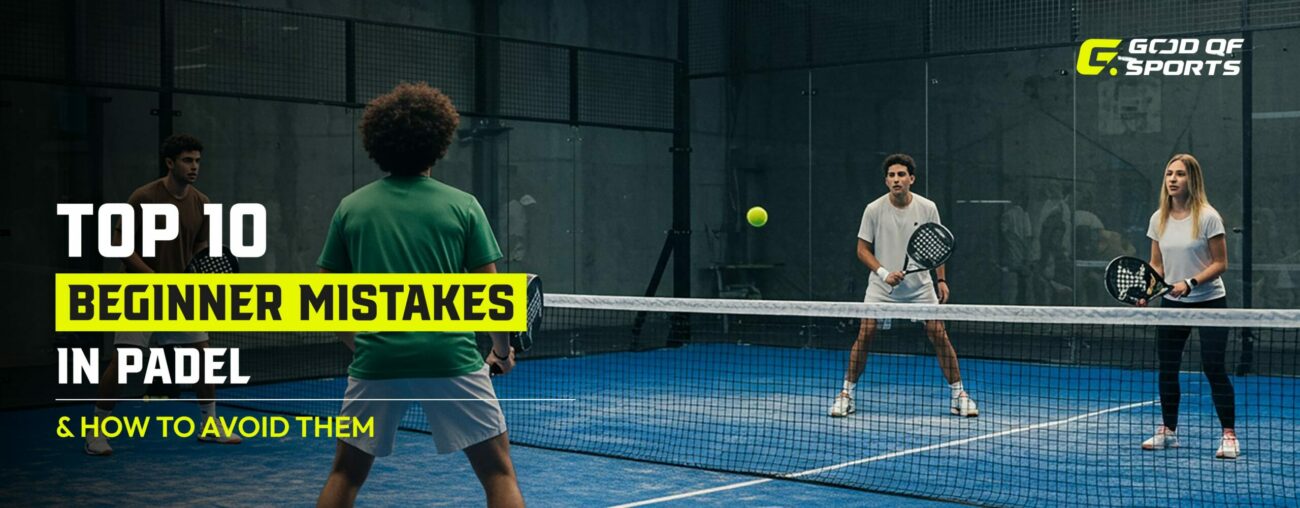
Top 10 Beginner Mistakes in Padel and How to Avoid Them

Padel is one of the fastest-growing sports in the world, and for good reason. It’s fun, social, and easy to pick up—even if you’ve never played tennis or squash before. But like any new sport, beginners often fall into common traps that make the game harder than it should be.

The good news? Most of these mistakes are easy to fix once you know about them. In this guide, we’ll cover the top 10 beginner mistakes in padel—and more importantly, how to avoid them so you can improve quickly and enjoy the game from day one.

1. Standing in the Wrong Position

Many beginners stand too close to the net or too deep at the back, leaving themselves exposed.

  • The Mistake: Hugging the baseline like in tennis or rushing to the net without control.
  • The Fix: Stand about halfway between the service line and the baseline when rallying. Move forward to control the net, but only after a strong lob or push.

👉 Positioning is everything in padel. A good position gives you time, balance, and control.

2. Avoiding the Walls

The glass walls are unique to padel, but beginners often avoid them out of fear or confusion.

  • The Mistake: Trying to hit every ball before it touches the wall, often leading to errors.
  • The Fix: Use the wall to your advantage. Let the ball bounce off your back wall when it’s too fast to control. Practice calmly returning rebounds—it’s a skill that transforms your defense.

👉 The wall isn’t your enemy—it’s your best friend in defense.

3. Overhitting the Ball

Beginners often think more power equals better shots. In padel, that’s rarely true.

  • The Mistake: Smashing every ball with maximum force, sending it out of bounds.
  • The Fix: Focus on control and placement over power. Aim for consistency. Remember, padel points are usually won through patience and precision, not brute strength.

👉 Padel is about making the ball difficult for your opponent, not difficult for yourself.

4. Poor Communication with Partner

Since padel is almost always played in doubles, teamwork matters.

  • The Mistake: Not calling “mine” or “yours,” leading to confusion and missed balls.
  • The Fix: Talk constantly with your partner. Even a simple “sí” or “no” keeps coordination smooth. Decide who covers lobs, smashes, and middle balls before the game.

👉 Good communication turns two average players into a strong team.

5. Ignoring the Lob

The lob is one of the most important shots in padel—but beginners rarely use it.

  • The Mistake: Trying only smashes or groundstrokes, never lifting the ball.
  • The Fix: Learn to lob high and deep. It pushes opponents off the net and gives you time to regain control.

👉 A smart lob is worth more than a rushed smash.

6. Forgetting the Ready Position

Padel is fast, and standing flat-footed is a recipe for disaster.

  • The Mistake: Holding the racket low, standing stiff, and reacting too late.
  • The Fix: Always stay on the balls of your feet, racket up in front of you, ready to block or volley.

👉 Your best defense is being ready before the ball comes your way.

7. Using the Wrong Racket Grip

A bad grip can ruin your control and cause wrist pain.

  • The Mistake: Holding the racket too tightly or with a tennis-style forehand grip.
  • The Fix: Use the continental grip (like holding a hammer). Keep your hold firm but relaxed. This grip works for volleys, smashes, and defensive shots alike.

👉 The right grip makes your shots smoother and reduces injuries.

8. Chasing Every Ball Alone

Beginners often forget padel is a doubles game and try to cover too much ground.

  • The Mistake: Running across the court, leaving your partner stranded.
  • The Fix: Trust your partner. Cover your half, move together, and avoid crossing unnecessarily.

👉 Think of padel doubles as a dance—move in sync, not solo.

9. Not Controlling the Net

The net is where games are won and lost in padel.

  • The Mistake: Staying at the back too long, giving opponents control of the net.
  • The Fix: Look for chances to approach the net after a lob or deep shot. Once there, stay aggressive with volleys and smashes.

👉 The team that dominates the net usually dominates the match.

10. Getting Frustrated Too Quickly

Perhaps the biggest beginner mistake isn’t technical—it’s mental.

  • The Mistake: Expecting instant success, getting frustrated at mistakes, and losing confidence.
  • The Fix: Remember, padel is meant to be fun. Every pro player made errors when they started. Laugh off mistakes, learn from them, and keep enjoying the game.

👉 Progress in padel is measured in enjoyment as much as in points.

Bonus Tip – Invest in the Right Gear

Beginners often grab any racket or ball they find, but using proper gear makes a big difference.

  • Rackets: Start with a round-shaped control racket—lightweight and forgiving.
  • Balls: Use padel balls (slightly less pressurized than tennis balls).
  • Shoes: Court shoes with good grip to prevent slipping.

👉 Where to Buy: Trusted sports retailers like GodOfSports offer beginner-friendly rackets from HEAD, Bullpadel, and Babolat.

Final Thoughts

Padel is an addictive mix of strategy, teamwork, and fun—but small mistakes can hold you back. By avoiding these 10 beginner errors—poor positioning, ignoring the walls, overhitting, bad communication, neglecting lobs, wrong grip, or frustration—you’ll improve much faster and enjoy the game even more.

Remember, padel isn’t about perfection—it’s about playing smarter, working with your partner, and learning as you go. Fix these mistakes early, and you’ll be rallying like a pro in no time.

So grab your racket, step on the court, and play with confidence—because now you know what not to do.

Home
Shop
Wishlist0
Back to Top

Search For Products

Product has been added to your cart
Compare (0)