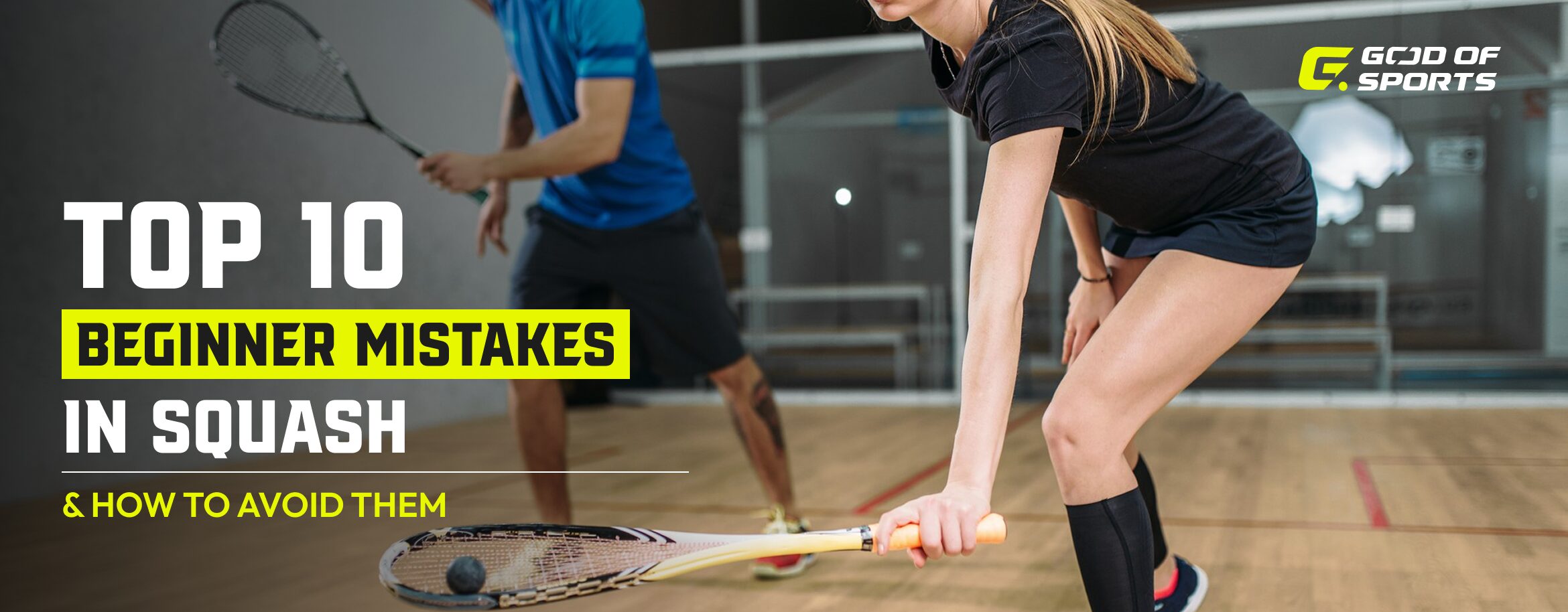
Squash is fast, intense, and endlessly rewarding—but it can also feel overwhelming when you’re new. Many beginners jump on the court full of energy but quickly find themselves chasing the ball, hitting wildly, or losing points to simple errors. The good news? Most of these struggles come from a few common mistakes that can be fixed with awareness and practice.
Here are the top 10 beginner mistakes in squash—and how you can avoid them.
1) Standing in the Wrong Position
The mistake: Beginners often hang out at the back of the court or drift too close to the front wall, leaving huge gaps for opponents to exploit.
How to avoid it:
- Always recover to the T-position (the middle where the lines meet).
- From the T, you can reach any corner quickly.
- Think: hit → recover → split-step → move.
2) Hitting Too Hard
The mistake: Many beginners swing with maximum power, thinking harder shots equal more points. Instead, the ball often rebounds into the middle, giving opponents easy chances.
How to avoid it:
- Prioritize accuracy and length over power.
- Use a smooth swing and aim for tight rails along the wall.
- Remember: tight, controlled shots win rallies—not reckless power.
3) Ignoring the Side Walls
The mistake: New players avoid using the side walls, trying only to hit directly to the front wall. This makes their game predictable.
How to avoid it:
- Practice cross-court drives that clip the side wall before reaching the front.
- Use boasts (side wall → front wall shots) to drag opponents forward.
- Side walls add variety and disrupt your opponent’s rhythm.
4) Poor Grip Technique
The mistake: Holding the racket like a tennis racquet—flat and tight—limits wrist movement and control.
How to avoid it:
- Use the handshake grip, placing the “V” of your thumb and index along the racket’s edge.
- Keep the grip relaxed; tighten only at impact.
- A proper grip allows cleaner shots and smoother switches between forehand and backhand.
5) Not Clearing After Shots
The mistake: Beginners often admire their shot or freeze after hitting, blocking their opponent’s path. This causes interference and easy point losses.
How to avoid it:
- After every shot, move back to the T.
- Clear space quickly so your opponent has access to the ball.
- If you’re in the way, call for a “let”—but aim to avoid these situations.

6) Neglecting Footwork
The mistake: Standing flat-footed or lunging late leads to rushed, off-balance shots.
How to avoid it:
- Stay light on your toes and use a split-step as your opponent strikes.
- Lunge with your leading leg, keeping your body balanced.
- Practice “ghosting” drills—moving to corners without the ball—to build muscle memory.
7) Serving Without Purpose
The mistake: Beginners often just tap the ball in to start the rally, giving away the advantage of the serve.
How to avoid it:
- Use a high lob serve that lands deep in the opposite back corner.
- Occasionally, mix in body serves to jam your opponent.
- Treat every serve as a chance to seize control of the rally.
8) Not Watching the Opponent
The mistake: Beginners follow only the ball, ignoring where their opponent is standing. This leads to poor shot choices.
How to avoid it:
- After hitting, glance at your opponent’s position.
- If they’re deep, try a drop; if they’re forward, drive it past them.
- Awareness turns defense into attack.
9) Skipping Warm-Up and Cool-Down
The mistake: Rushing into play cold often results in poor timing—or worse, injuries. Beginners also neglect stretching afterwards.
How to avoid it:
- Warm up with 5 minutes of solo drives and dynamic stretches.
- After the game, stretch calves, hamstrings, quads, and shoulders.
- A small habit that protects your body and improves performance.
10) Fearing the Drop Shot
The mistake: Many beginners avoid drops, thinking they’re too risky, or they play them poorly—too high, too hard, or from bad positions.
How to avoid it:
- Use drops when you’re balanced and in front of your opponent.
- Keep the swing compact, guiding the ball softly just above the tin.
- Mix drops with deep drives to keep opponents guessing.
Bonus Mistake: Not Choosing the Right Ball
Squash balls come in different speeds:
- Blue dot: Beginner, very bouncy.
- Single yellow dot: Intermediate, standard club play.
- Double yellow dot: Advanced, slower.
Using the wrong ball (too slow) makes rallies frustrating and short. Start with blue or single yellow until your rallies are consistent.
Final Rally
Squash is one of the most exciting sports you’ll ever play—but only if you avoid the traps that trip up beginners. Standing in the wrong spot, swinging too hard, ignoring the side walls, or skipping footwork will hold you back. The fix? Keep it simple: recover to the T, control your length, watch your opponent, and stay patient.
Every rally is a lesson, and every mistake is a chance to improve. With the right mindset, you’ll soon find yourself moving smarter, hitting cleaner, and—most importantly—winning more rallies.
So next time you step onto the court, remember: squash isn’t about hitting the hardest shot. It’s about controlling space, anticipating your opponent, and keeping your cool under pressure. Play smart, and the game will reward you.