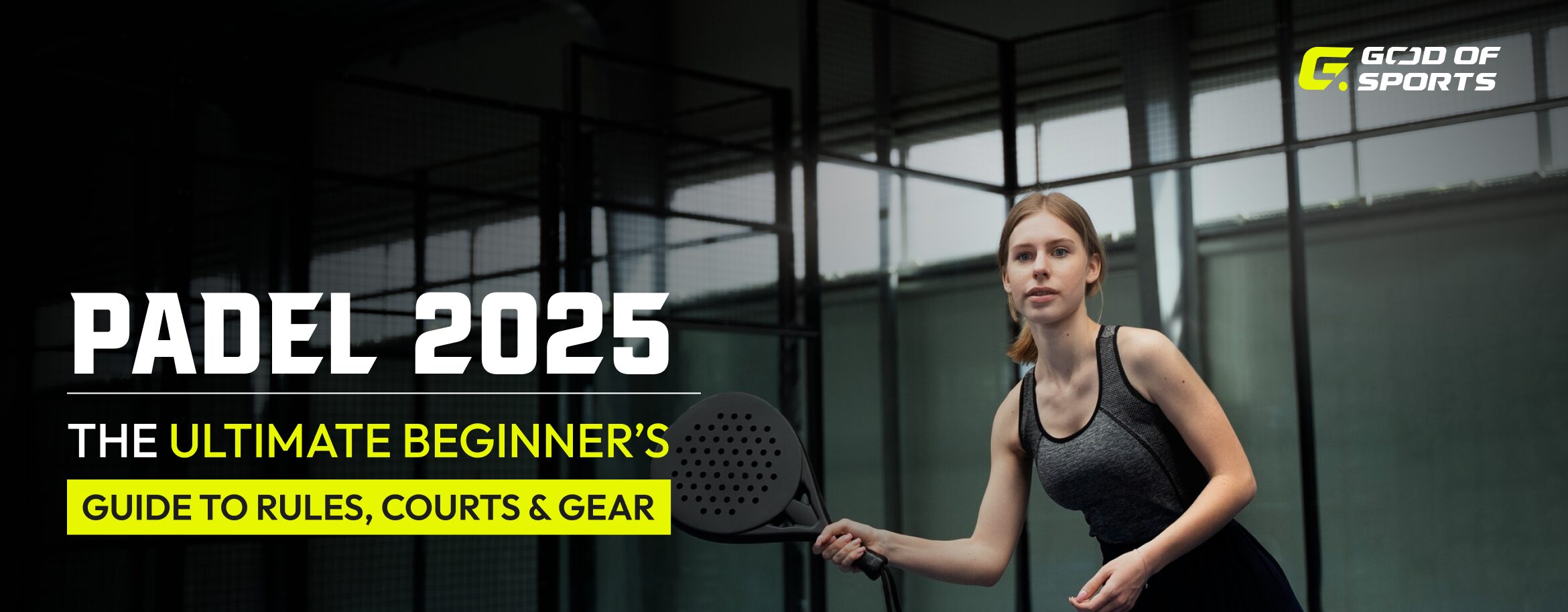
Rohan still remembers stepping onto a padel court for the very first time.
The setting was unlike any other racket sport he’d played before. A smaller court than tennis, surrounded by tall glass and mesh walls. Players laughed, strategized, and rallied with quick bursts of speed. The sound of the ball bouncing off glass was both strange and thrilling.
Rohan picked up his rented racket, gripped it nervously, and waited for the serve. When the ball came, he swung hard, only to watch it ricochet off the back wall and drop neatly into play. He thought he’d messed up—but his partner Aisha shouted,
“Keep playing! The walls are part of the game!”
That moment changed everything. Within minutes, he realized this was not tennis, not squash, and definitely not pickleball. It was padel—the world’s fastest-growing sport. By the end of his first match, he was hooked.
And he wasn’t alone. All over the world, newcomers are falling in love with padel’s mix of accessibility, strategy, and social fun.
Why Padel is Taking Over the World
Padel is not new—it was invented in Mexico in 1969 by Enrique Corcuera. But in recent years, it has exploded globally, becoming the fastest-growing racket sport in the world.
- 50,000+ courts exist worldwide today
- By 2026, this number is expected to cross 70,000
- In Spain, there are already more padel courts than tennis courts
- Middle Eastern cities like Dubai and Riyadh are building luxury padel clubs
- Celebrities, from footballers to actors, are backing padel teams and clubs
So, why is padel booming everywhere?
- It’s Social
Unlike tennis or badminton, padel is always played in doubles. That means every match is interactive, social, and built on teamwork. - It’s Accessible
Serves are underhand, the court is smaller, and the rackets are lightweight. Even beginners can enjoy long rallies from day one. - It’s Strategic, Not Just Physical
Because the walls keep the ball in play, power alone won’t win you matches. Instead, smart lobs, angled volleys, and positioning are what make the difference. - It’s Urban-Friendly
Padel courts require less space than tennis, making them easy to build in cities. - It’s Spectator-Friendly
With long rallies, trick shots, and team dynamics, watching padel is as fun as playing it.
Professional circuits like Premier Padel and innovative formats like the Hexagon Cup are making padel a serious contender on the world stage. In 2023, padel made its debut at the European Games, fueling speculation that it could one day appear at the Olympics.
But at its heart, padel’s rise isn’t about fame or tournaments—it’s about the millions of everyday players who pick up a racket, step onto the glass court, and don’t want to leave.
The Challenge for Beginners
If you’re stepping into padel for the first time, you’ll probably have questions:
- What are the basic rules?
- How does the court work with the walls?
- Which racket should I buy?
- Do I need padel shoes or can I wear tennis ones?
When you start looking online, the confusion deepens. Brands like Bullpadel, Adidas, HEAD, Babolat, Nox and Siux all market their rackets as “the best.” You’ll see terms like round head, diamond racket, EVA foam, and power frame. Without guidance, it feels overwhelming.
That’s why this guide exists. Think of it as your Padel Starter Kit for 2025. A complete breakdown of:
- Rules, simplified
- Court layout and how it changes the game
- Rackets—types, shapes, and which one you should buy
- Playing styles and strategies for every level
- Accessories you’ll need
- FAQs every beginner has
By the end, you’ll know exactly how to start your padel journey with confidence.
Padel Rules – Simple & Accessible
Padel may look complicated at first, but its rules are straightforward.
Scoring
- Same as tennis: 15, 30, 40, game.
- Matches are usually best of three sets.
Serve
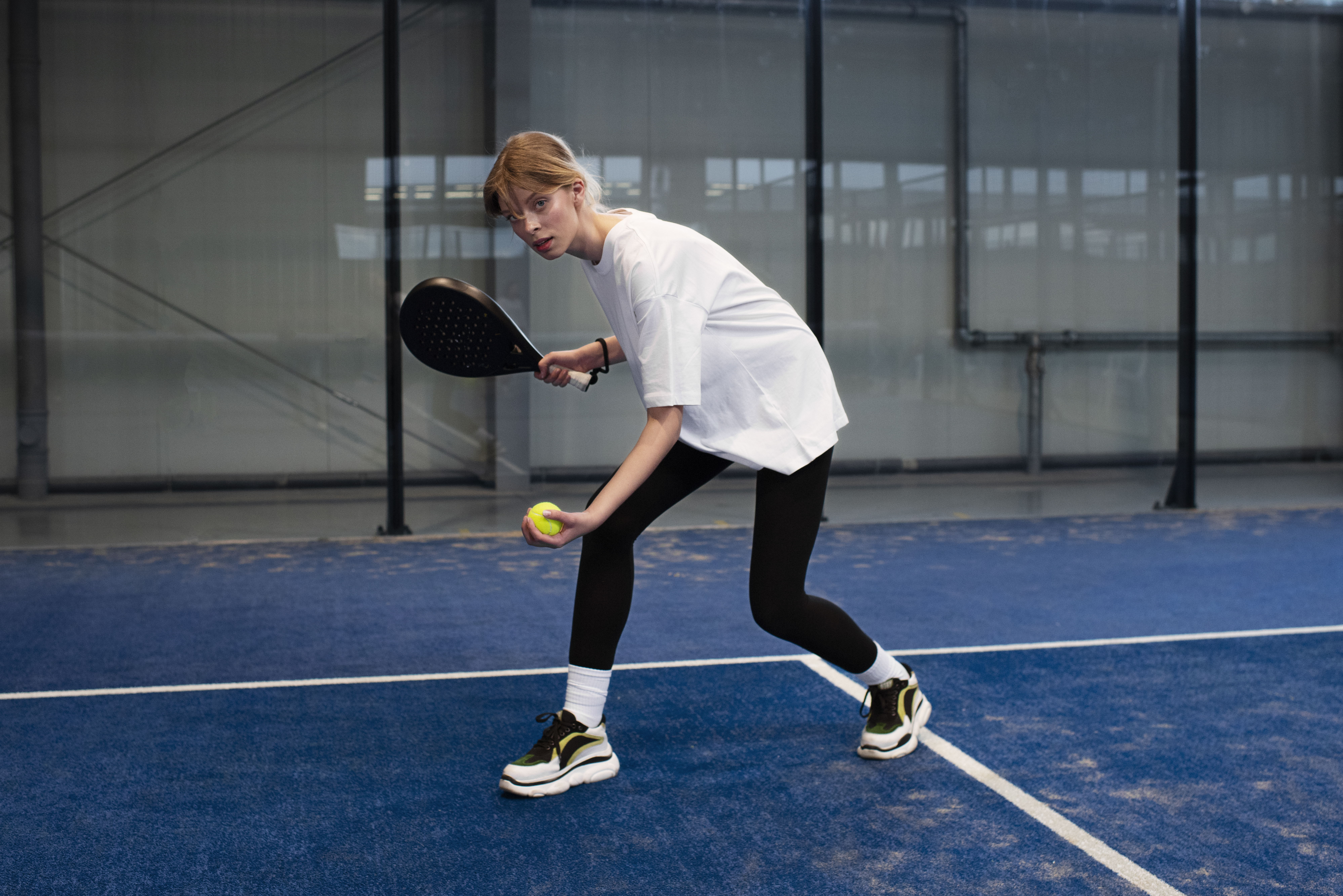
- Always underhand.
- The ball must bounce once before crossing the net.
- Must be hit diagonally into the opposite service box.
Walls in Play
- The ball can bounce once on the ground and then off the glass or mesh.
- Players can use the walls to their advantage, making angles and rebounds.
Double Format Only
- Unlike tennis or badminton, padel is always 2 vs 2.
Key Rule for Beginners
- The ball must always bounce once before hitting the back wall on your side. Directly hitting the back wall counts as out.
👉 Takeaway: Padel’s rules mirror tennis but with walls in play. Easy to learn, endlessly fun to master.
The Court – Compact & Social
One look at a padel court, and you’ll understand why the game feels different.
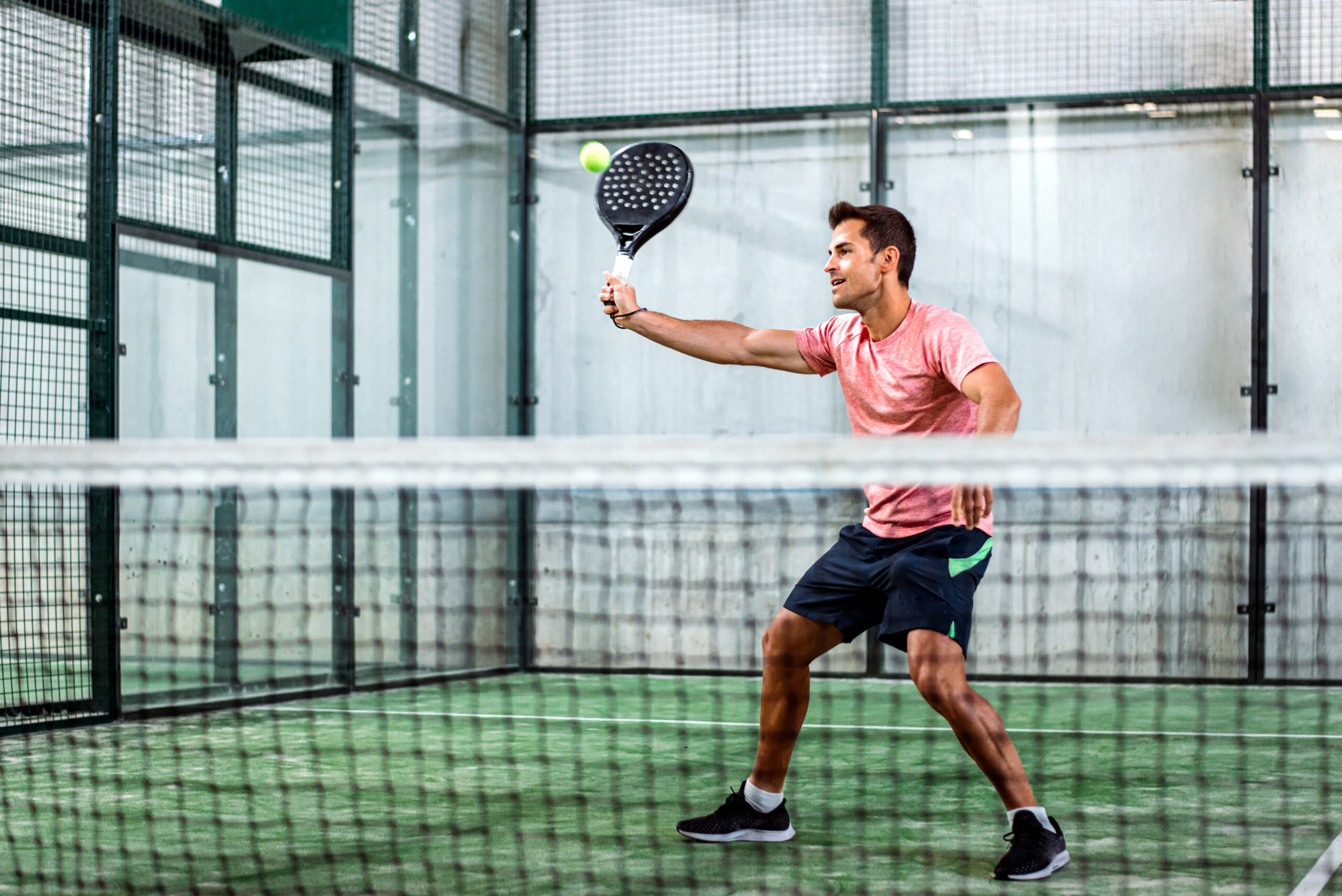
- Size: 20 meters x 10 meters (about one-third the size of a tennis court).
- Surroundings: Enclosed by glass and mesh walls, 3–4 meters high.
- Net: Divides the court in the middle, just like tennis.
- Service Boxes: Similar to tennis but smaller.
How the Court Affects Play
- Faster Rallies: The smaller court keeps action intense.
- Wall Play: Like squash, you can use walls to your advantage.
- Less Physical Strain: Shorter distances mean less running compared to tennis.
- Team-Oriented: The compact space emphasizes communication and coordination.
👉 In short: the court creates longer rallies, more strategy, and less downtime.
Padel Equipment – Your Starter Kit
1. The Racket
Unlike tennis rackets, padel rackets have no strings. They are made from composite materials with perforated surfaces.
- Round Rackets: Best for beginners. Focus on control, lighter, forgiving.
- Teardrop Rackets: Balanced between power and control. Great for intermediates.
- Diamond Rackets: Heavy and powerful. For advanced players.
💡 Tip: If you’re new, choose a round racket under 360 grams to prevent wrist strain.
2. The Ball
Padel balls look similar to tennis balls but are slightly less pressurized. This keeps rallies controlled and less bouncy.
3. Shoes
- You can wear tennis shoes, but padel shoes are designed for lateral movement and grip on artificial turf.
- A must if you plan to play regularly.
4. Accessories
- Overgrips (for sweat absorption).
- Padel bags (racket protection).
- Wristbands and gloves (for control and comfort).
Padel Racket Buying Guide – 2025
Choosing your first racket is like choosing your playing style.
Round Head Rackets
- Best for beginners.
- Focus on control, accuracy, and comfort.
- Lightweight (340–360 g).
- Examples: Bullpadel Indiga Control, HEAD Evo Speed.
Teardrop Rackets
- Balanced between control and power.
- Great for players with some experience.
- Weight: 360–375 g.
- Examples: Adidas Adipower CTRL Lite, Siux Trilogy.
Diamond Rackets
- Built for power hitters.
- Smaller sweet spot, heavier, harder to control.
- For advanced players only.
- Examples: Babolat Technical Viper, Bullpadel Hack 03.
Price Guide (India – 2025)
- Beginner Rackets: ₹4,000 – ₹8,000
- Intermediate Rackets: ₹10,000 – ₹15,000
- Advanced Rackets: ₹18,000 – ₹30,000
👉 Pro Tip: Don’t overspend as a beginner. Start with a control racket, then upgrade once you’ve played 20–30 matches.
Top 5 Padel Rackets to Buy in 2025
Here are five highly recommended padel rackets for 2025. I’ve chosen models that cover different styles, skill levels, and budgets, so you can pick what fits you best.
Here’s a comparison and detail for each:
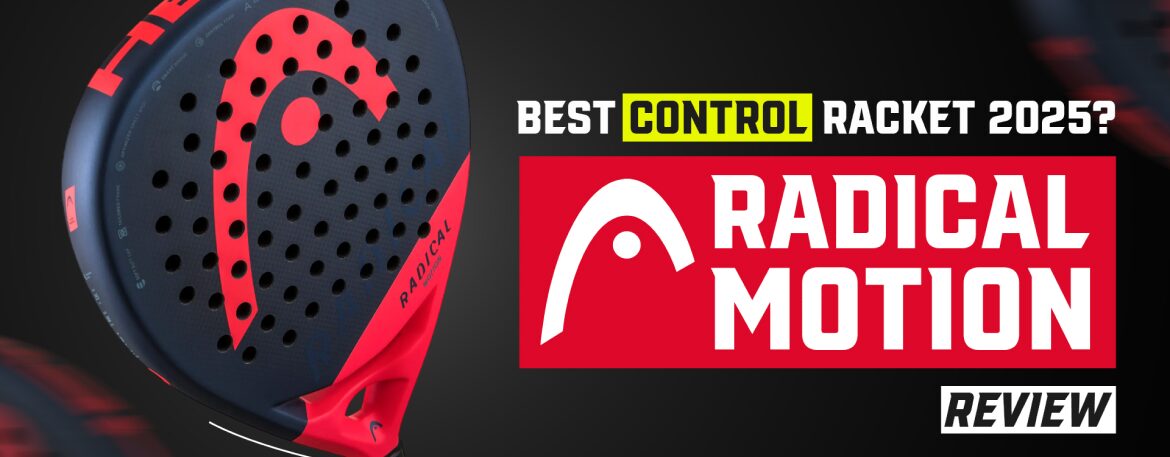
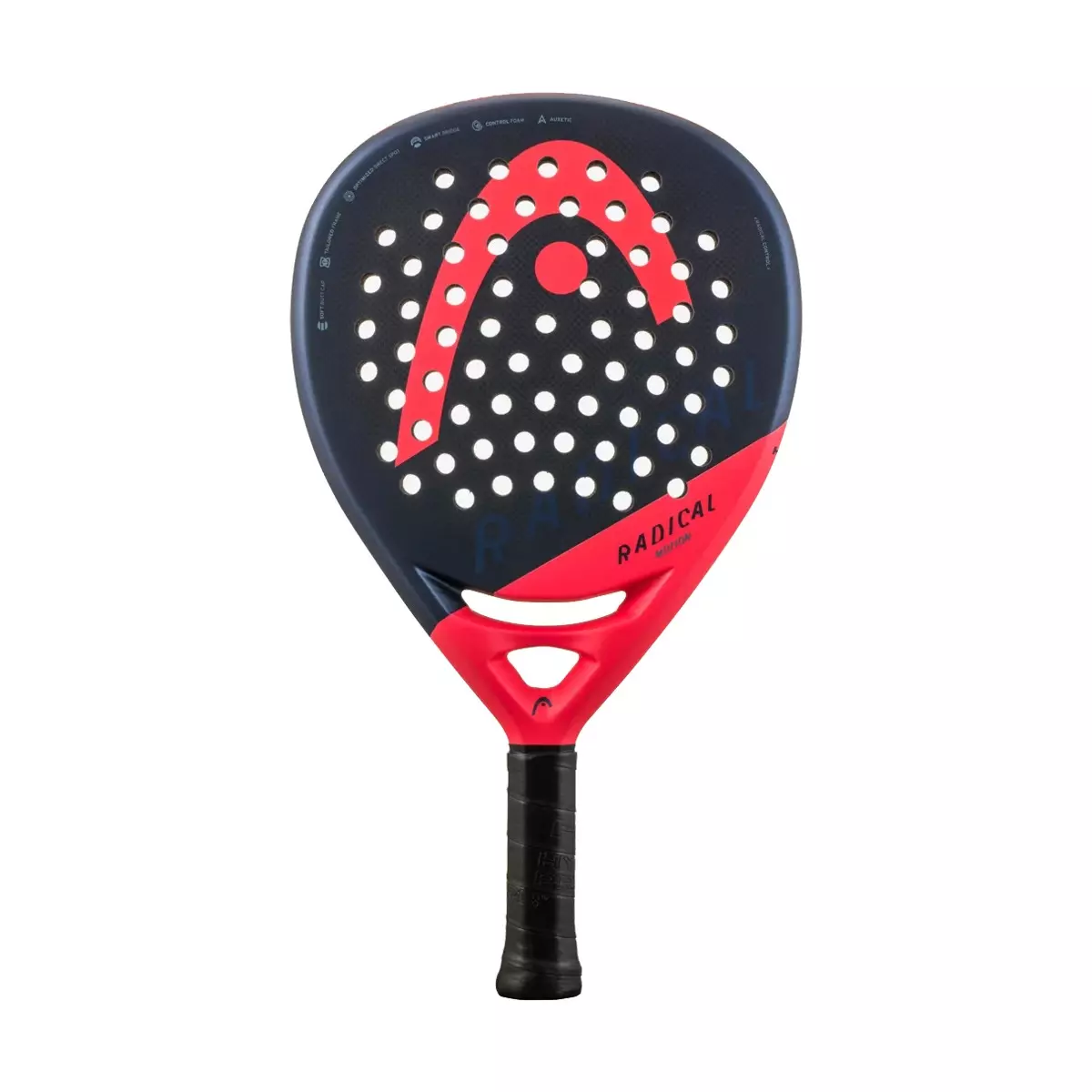
1. HEAD Radical Motion 2024 Padel Racquet
-
Best For: Intermediate to advanced players who want a precision-oriented racket with control but still enough punch.
-
Why We Like It: Teardrop shape with a 3K carbon surface, plus “Control Foam” core; pretty good sweet spot; technologies such as Auxetic, Smart Bridge, Soft Butt Cap to reduce vibrations and improve feel.
-
Approx Price (India): ~ ₹18,352
-
Pros: Great for control and precision; light enough for fast hands; good build quality; reduced vibration.
-
Cons: Not maximally powerful—smashes won’t be as explosive as diamond head power rackets; heavier than beginner models; needs good technique to make full use.
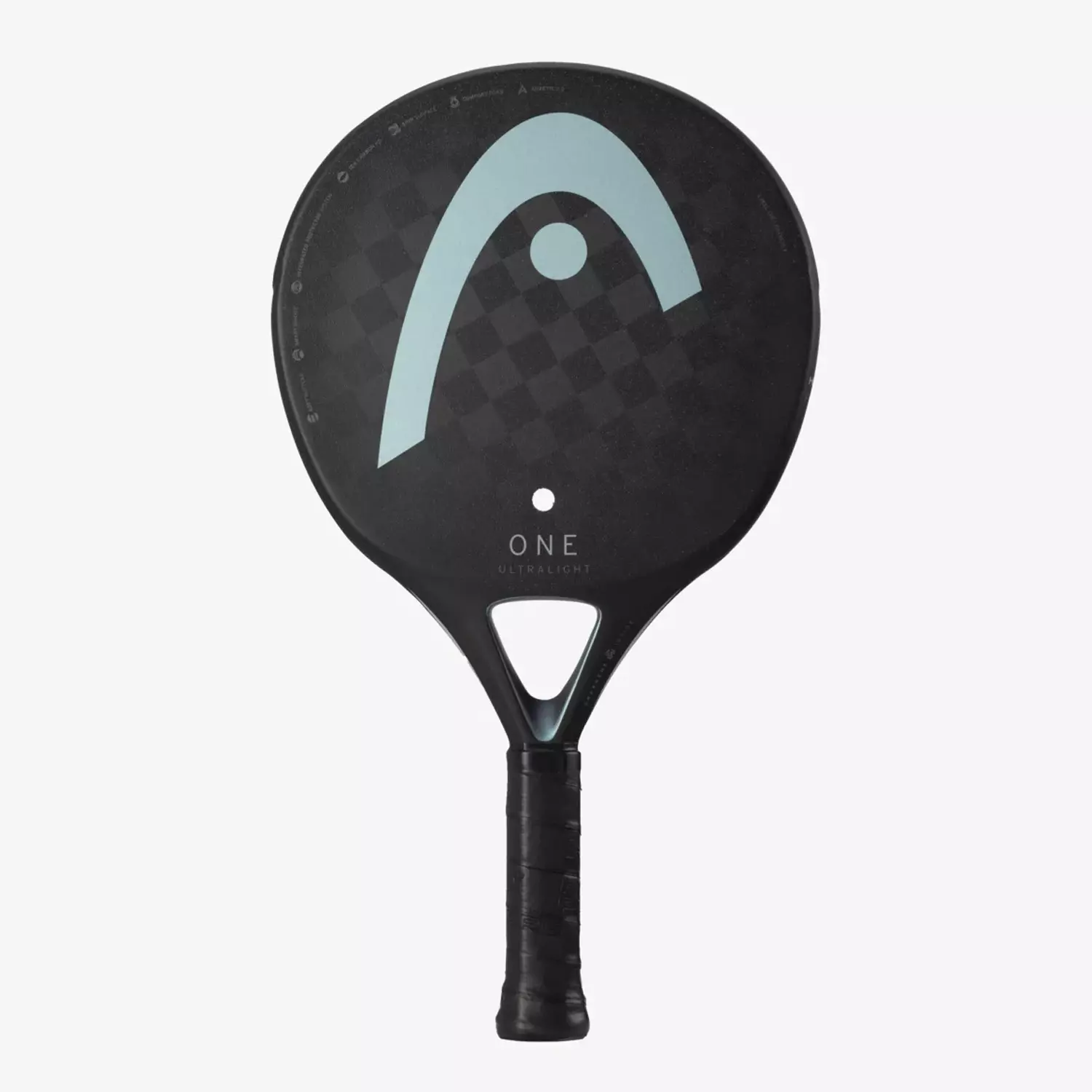
2. HEAD One Ultralight Padel Racquet
-
Best For: Players who want maximum maneuverability, especially those new to padel or with less arm strength.
-
Why We Like It: Claimed to be “the lightest adult padel racket ever made” (about 300 g), it’s extremely easy to swing. The round-shape helps with control. Great for high reaction speed and less fatigue during longer rallies.
-
Approx Price (India): ~ ₹17,543
-
Pros: Lightweight, forgiving, excellent for quick defense or soft touch.
-
Cons: Less power; may need to upgrade if you want more forceful smashes or more weight for stability.
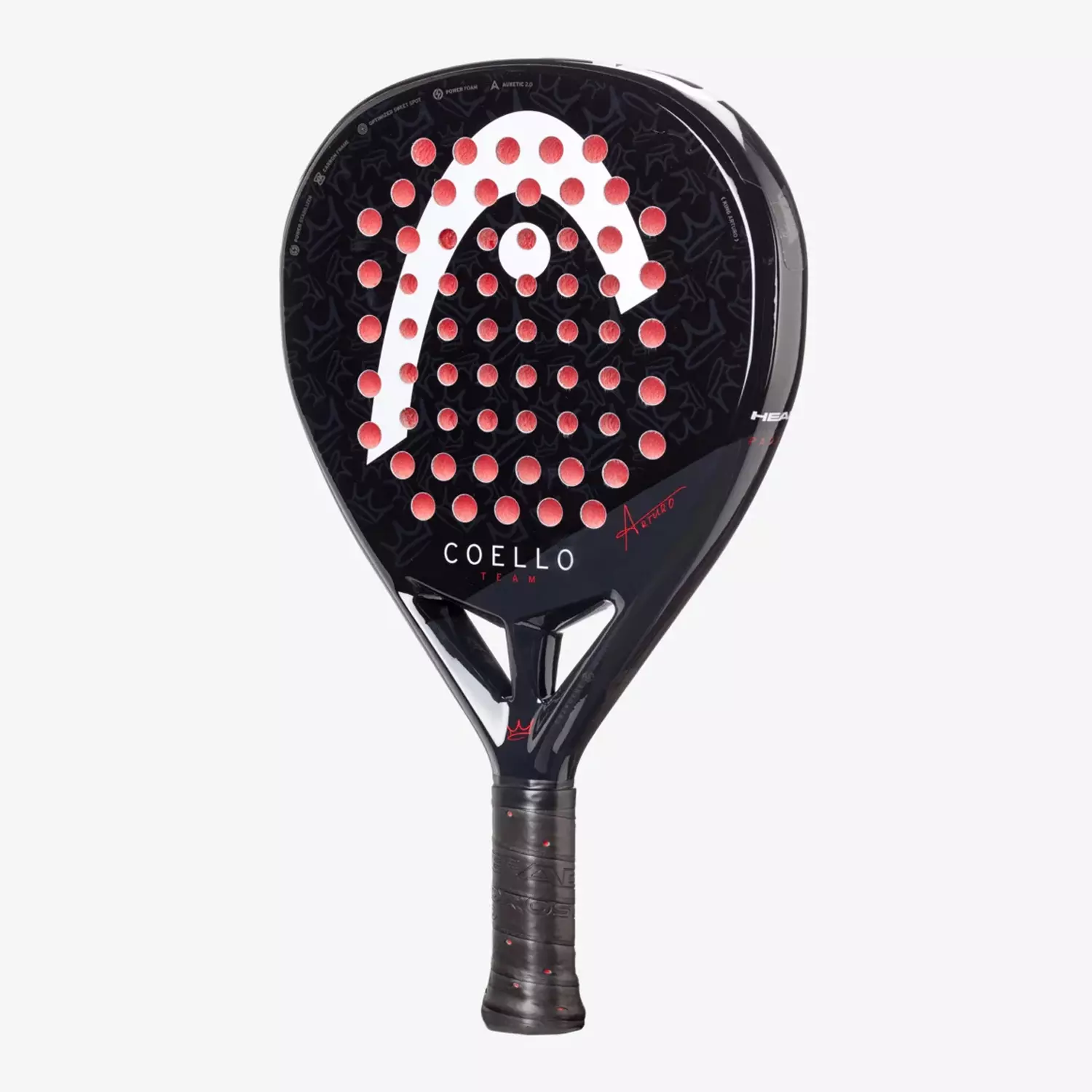
3. HEAD Coello Team 2025 Padel Racquet
-
Best For: Intermediate to advanced players who want a blend of power and comfort.
-
Why We Like It: Diamond-shaped with a high balance point, this racket has good output—helpful for aggressive shots—but also uses fiberglass on the surface for a little more flex and control. Great for players transitioning to higher levels.
-
Approx Price (India): ~ ₹19,492
-
Pros: Strong hitting power; still manageable for those moving up; good build quality.
-
Cons: Learning curve if you’re used to very light rackets; may feel heavy in long sessions; price is in the mid-to-high range.
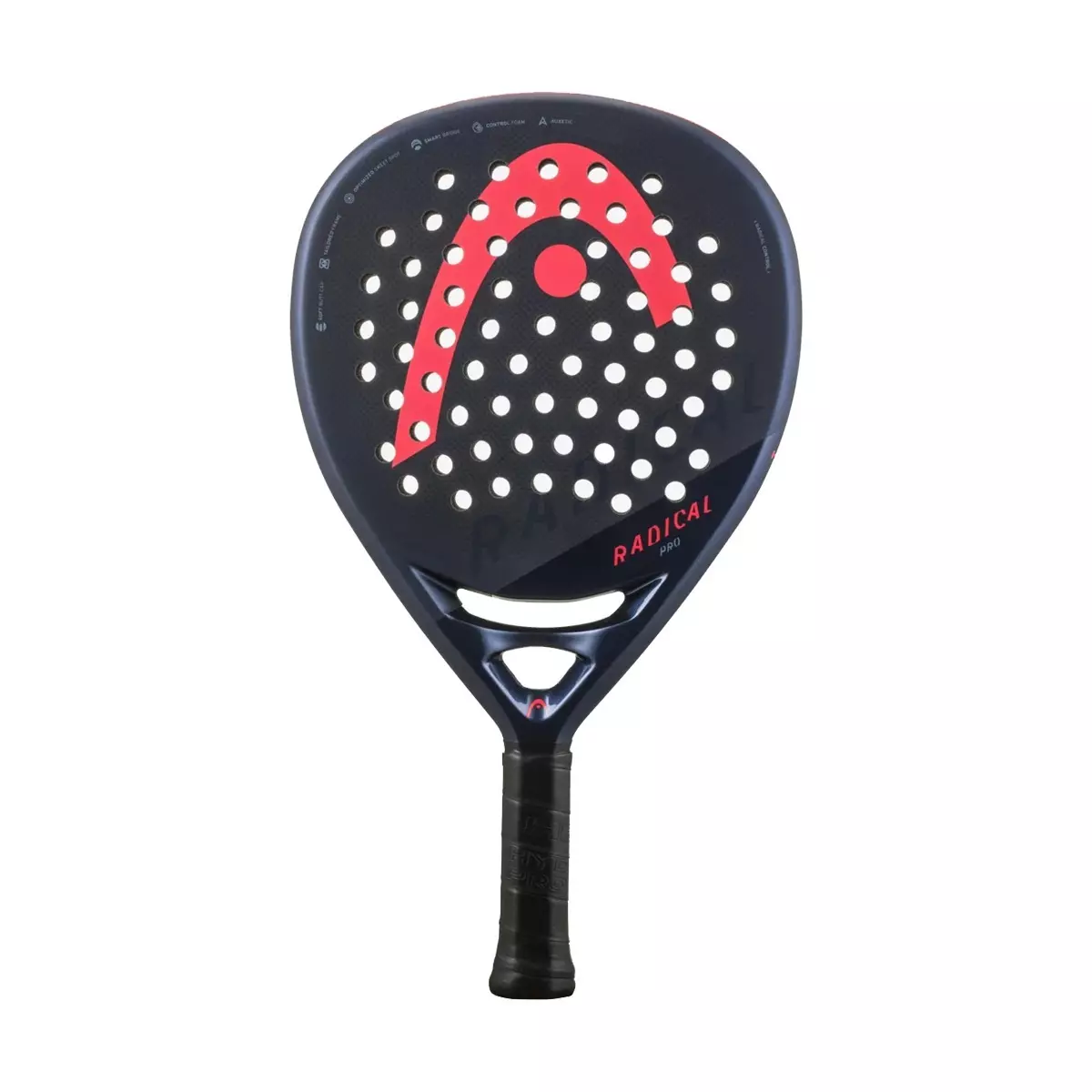
4. HEAD Radical Pro 2024 Padel Racquet
-
Best For: Advanced players who want precision, control, and the ability to handle fast exchanges.
-
Why We Like It: Teardrop shape (balance between power and control), carbon face (3K) with technologies that reduce vibration (better feel). Ideal for net play, quick volleys, and when you want your racket to respond sharply.
-
Approx Price (India): ~ ₹20,392
-
Pros: Excellent control especially on angled shots; strong tech features; good feedback.
-
Cons: Less forgiving than softer rackets; requires more precise technique; not the cheapest.
5. Nox AT10 Genius Attack 18K 2025 Padel Racquet (Agustin Tapia)

-
Best For: Pro-level players or serious amateurs who want top-tier performance and are willing to invest.
-
Why We Like It: Signature model of Agustín Tapia (“AT10” line), with an 18K carbon face—this gives high stiffness and lots of power. The construction, design, and player endorsement make it a prestige choice.
-
Approx Price (India): ~ ₹30,092
-
Pros: Exceptional power; excellent build quality; performance suited for aggressive and advanced strategies.
-
Cons: Steep price; requires strong technique and fitness; lower forgiveness if you mis-hit.
Playing Style & Strategy – How Padel is Won
Beginners
- Keep the ball in play.
- Focus on wall rebounds.
- Learn the lob—it resets the rally.
Intermediate Players
- Develop volley skills.
- Dominate at the net with positioning.
- Use lobs and angles to pressure opponents.
Advanced Players
- Smashes with precision.
- Tactical drop shots near the wall.
- Anticipation and teamwork at elite levels.
👉 Unlike tennis, padel is not about brute force—it’s chess with a ball.
Skill Progression – From First Game to Pro
- Weeks 1–4: Focus on rallies and basic serves.
- Months 2–3: Learn wall rebounds, volleys, and teamwork.
- Months 4–6: Improve consistency, footwork, and strategy.
- Year 1+: Enter local leagues, upgrade your racket, refine style.
Training Tips & Drills
- Warm-up Drill: Rally without smashing, focus on control.
- Wall Drill: Hit against the wall 50 times, practice rebounds.
- Volley Drill: Practice quick volleys with a partner at the net.
- Lob Drill: Hit 20 consistent lobs to force your opponents back.
👉 Practicing these for 20 minutes before each game will accelerate your progress.
Padel vs Tennis vs Pickleball
Let’s have a closer look at the basic difference between Padel, Tennis and Pickleball.
| Feature | Padel | Tennis | Pickleball |
| Court Size | 20 x 10 m | 23.7 x 8.2 m | 13.4 x 6.1 m |
| Serve | Underhand | Overhand | Underhand |
| Walls | In play | Out of play | Out of play |
| Racket | Solid, no strings | Strung | Solid paddle |
| Format | Always doubles | Singles/doubles | Singles/doubles |
| Style | Strategy, teamwork | Power, speed | Control, finesse |
Where to Play Padel in India
- Mumbai: New courts in Bandra and Powai have been constructed.
- Delhi NCR: Clubs in Gurgaon and Noida offer padel courts.
- Bangalore: Tech parks are opening various padel arenas.
- Goa & Pune: Boutique sports clubs introducing many padel courts.
👉 Websites like Playo and Hudle list available padel courts near you.
Where to Buy the Best Padel Gear in 2025
Getting started in padel is exciting, but choosing where to buy your gear is just as important as picking the right racket. With so many online stores, it can be tough to know who really understands the sport.
That’s why we recommend God of Sports — India’s trusted destination for racquet sports.
At God of Sports, you’ll find:
-
✅ Top International Brands – HEAD, Babolat, Adidas, Bullpadel, Nox, and more.
-
✅ Exclusive Indian Access – Imported padel rackets and accessories you won’t easily find elsewhere.
-
✅ Expert Reviews & Guidance – Honest advice to help you choose based on your skill level.
-
✅ Competitive Prices – Seasonal discounts, bundles, and exclusive deals.
-
✅ Fast Shipping Across India – Get your racket, shoes, or balls delivered quickly.
Whether you’re buying your first beginner-friendly round racket or upgrading to a pro-level diamond racket, The God of Sports makes the process simple, reliable, and affordable.
👉 Visit GodOfSports to explore the latest 2025 padel collection and gear up for your next game.
FAQs – Common Questions related to Padel
- What’s the difference between padel and tennis?
Padel is smaller, doubles-only, and uses walls. Tennis relies on power; padel relies on strategy. - How expensive is it to start?
Beginner rackets in India cost ₹4,000–₹8,000. Court rental varies from ₹500–₹1,000 per hour. - Can I use a tennis racket?
No. Padel rackets are solid and perforated. Tennis rackets are strung and not suitable. - Do I need special shoes?
Not at first, but padel shoes improve grip and prevent injury. - Is padel physically demanding?
Less than tennis. The smaller court and underhand serves make it accessible to all ages. - How long does a racket last?
6–12 months for regular players, 2+ years for casual players. - Where can I buy rackets in India?
Trusted retailers like GodOfSports stock global brands with Indian delivery. - Can kids play padel?
Yes! Padel is beginner-friendly and increasingly popular with children.
Final Thoughts – Your Padel Journey Starts Now
Padel is more than a sport—it’s a lifestyle. A blend of tennis, squash, and strategy, wrapped in a social, fast-paced format.
Whether you’re buying your first round racket, learning how to use the walls, or planning to join a weekend league, padel gives you the thrill of competition without the barrier of years of training.
Remember:
- Start with a control racket.
- Learn the lob and wall rebounds.
- Focus on teamwork—it’s the soul of padel.
Your 2025 starter kit is ready. The only thing missing is you on the court.
So grab a racket, call three friends, and step into the glass box. The world of padel is waiting.