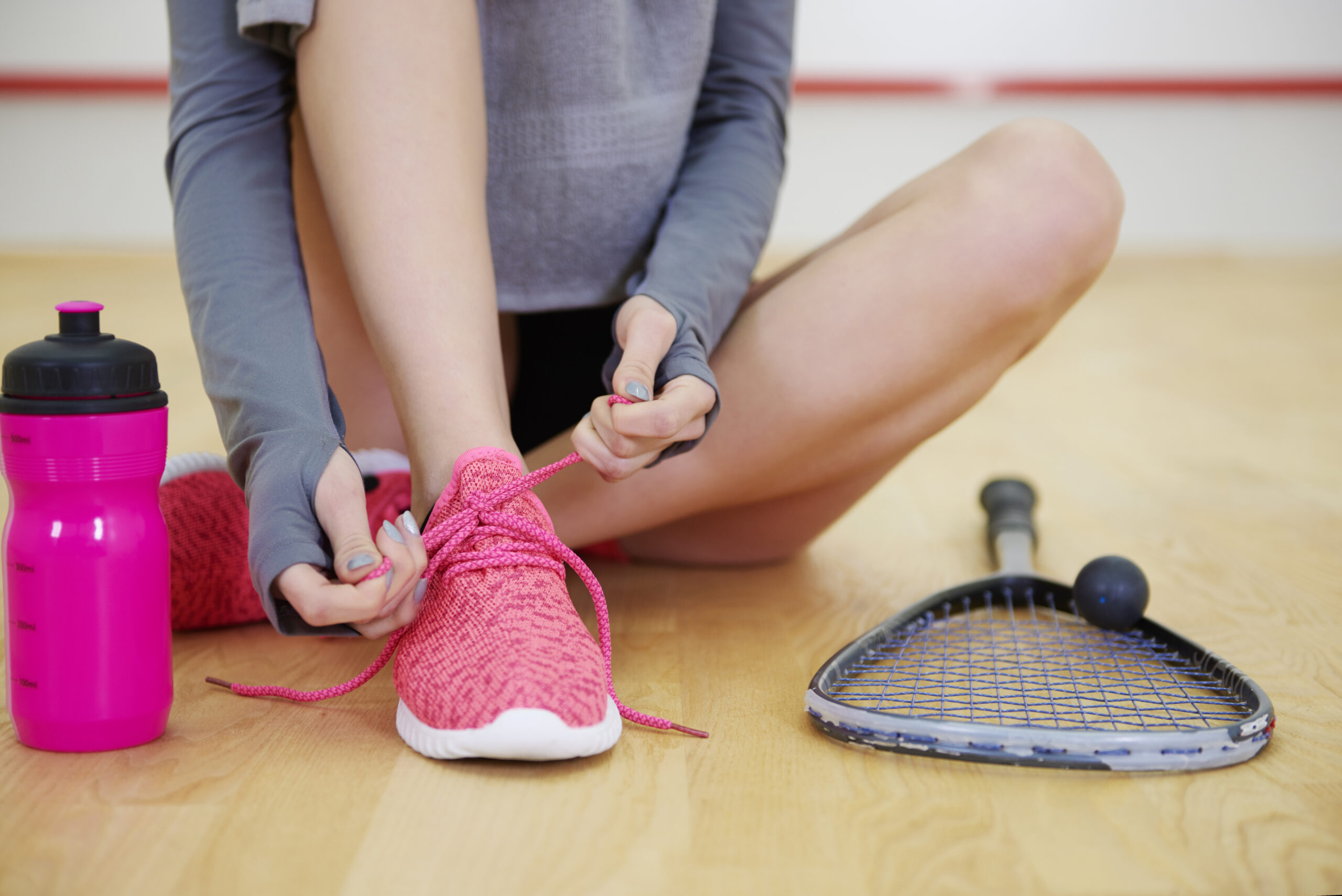
Walk into any sports store and you’ll see a wall of “court shoes”—tennis, badminton, volleyball, pickleball—plus a few pairs labelled specifically for squash. They all look similar: low-cut, grippy, supportive. So why do coaches and clubs insist on squash shoes? Because the demands of squash—tight corners, constant braking, violent lateral cuts, and forward lunges—are unlike any other indoor sport. The right shoe isn’t just about comfort; it’s about traction, stability, injury prevention, and confidence every time you explode off the T.
Below is a clear, no-nonsense breakdown of what sets squash shoes apart, how they compare to other court shoes, and how to choose the right pair for your game.
1) Movement Profile: Why Squash Is Different
- Short, explosive distances: Squash rallies happen within a few meters. You need instant grip, not rolling momentum.
- Hard braking + re-acceleration: Constant stop–start sprints hammer your feet and ankles; the shoe must resist shear (sideways slide) and twist.
- Deep lunges: Front-court retrievals demand a stable forefoot, reinforced toe box, and smooth toe-drag.
- 360° direction changes: Micro-adjustments on the T require torsional rigidity (midfoot doesn’t twist) and predictable traction.
Takeaway: A squash shoe is built for lateral stability and multi-directional grip on indoor wooden or synthetic floors—not for cushioning long runs or for gritty outdoor surfaces.
2) Outsole & Rubber: Grip That Doesn’t Mark
- Squash shoes: Use soft, non-marking gum rubber optimized for polished wood or PU sports floors. The compound is tacky to bite during sudden stops and toe plants.
- Badminton/volleyball shoes: Also non-marking and grippy, often similar compounds. Differences show up in tread patterns and forefoot stiffness (squash needs more side-to-side bite and toe-drag resilience).
- Tennis/pickleball shoes: Designed for abrasive outdoor or acrylic courts. Rubber is harder to withstand wear, which can feel slippery on indoor wood. Many are not officially “non-marking,” risking black scuffs.
- Running shoes: Outsoles prioritize forward traction and durability on pavement; tread and rubber blends are wrong for indoor grip and can be too grabby in the wrong direction or simply slide sideways.
What to look for: A flat, fine herringbone or radial pattern with broad contact area and “suction” feel. Always confirm NON-MARKING.
3) Midsole & Cushioning: Low, Stable, Responsive
- Squash shoes: Lower heel-to-toe drop (often ~6–10 mm) and firmer midsoles to keep you planted during cuts. Cushioning is present but tuned for short, repeated impacts and fast court feel.
- Badminton/volleyball: Often slightly bouncier for repeated jumps/landings. Great for comfort, but some models can feel too soft or wobbly in deep lunges.
- Tennis/pickleball: More heel cushioning for longer points and harder surfaces; can raise your center of gravity indoors, reducing feel and agility.
- Running: High stack and soft foam designed for forward motion. This promotes ankle roll in lateral moves and slows reactions on the T.
What to look for: A stable, medium-firm midsole that feels connected to the floor—enough cushioning to protect your joints, without “trampoline” bounce.
4) Lateral Support & Torsion: The Injury Decider
- Squash shoes: Emphasize outrigger sidewalls, wrap-around medial/lateral cages, and torsion plates/shanks to stop the shoe from folding on hard cuts. Uppers are reinforced around the forefoot and midfoot for containment.
- Badminton/volleyball: Good lateral features, but some prioritize jump comfort over aggressive cut stability. Try them, but test hard side pushes.
- Tennis/pickleball: Very good lateral support—built for side movement—but rubber and tread tuning are off for indoor floors.
- Running: Minimal lateral containment; uppers stretch in the wrong directions.
What to look for: Try a “twist test”: grip heel and forefoot and rotate. Less twist = better torsional support. In a lunge, your forefoot shouldn’t bulge over the edge of the midsole.
5) Toe Box, Toe Drag & Forefoot Rocker
- Squash shoes: Reinforced toe bumpers and smooth overlays for controlled toe drag on lunges and boasts; slight forefoot rocker helps roll out of a lunge.
- Badminton: Also good toe reinforcement; sometimes narrower toe boxes.
- Volleyball: Adequate, but not always tuned for abrasive toe drags.
- Tennis/pickleball: Stout toe guards for hard courts, but the outsole transition can feel sticky on indoor wood.
What to look for: A durable yet smooth toe bumper (no sharp edges), room for natural toe splay, and no pressure hotspot on the big toe during deep lunges.
6) Upper Materials, Lockdown & Breathability
- Squash shoes: Multi-layer mesh with PU or TPU reinforcements around the midfoot and eyelets; internal heel counters for lockdown; padded but not bulky tongues.
- Badminton/volleyball: Similar builds; some models lighter and airier.
- Tennis/pickleball: Heavier duty uppers for abrasion; can feel warmer and stiffer indoors.
- Running: Very breathable but stretchy—not ideal for side containment.
What to look for: Secure midfoot wrap without over-tightening laces. The heel should lock with zero slip. Mesh should breathe but hold shape.
7) Fit & Sizing: Squash-Specific Tips
- Length: A thumb’s width in front of the longest toe to protect during downhill (forward) lunges.
- Width: Enough forefoot splay to stay stable in deep positions. Too narrow = numb toes; too wide = sloppy cuts.
- Arch/instep: If you have high arches, check that the tongue/eyelets don’t bite when cinched hard.
- Try with your socks: Court socks are thicker—bring them.
Quick test routine (in-store):
- Split step → lateral shuffle → hard stop.
- Deep lunge with toe drag.
- Figure-8 cuts around boxes/racks (carefully!).
If you feel heel slip, side roll, or hot spots, pass.
8) Can You Use Other Court Shoes for Squash?
- Badminton: Often the closest substitute. Choose models with firmer midsoles and solid sidewalls.
- Volleyball: Fine for casual play; prioritize pairs with torsion shanks and not-too-soft foam.
- Tennis/Pickleball: Not ideal indoors—rubber hardness and tread are mismatched; risk of marking and sliding.
- Running/Trainers: No. Highest injury risk for ankles/knees.
Club rule: Many facilities require non-marking soles. Some tennis/pickleball shoes fail this test.
9) Maintenance & Lifespan
- Rotation: If you play 2–3×/week, consider rotating two pairs to let foam rebound and the upper dry out.
- Cleaning: Wipe the outsole with a damp cloth—restores tackiness. Avoid silicone sprays; they can alter grip.
- Storage: Air-dry; remove insoles post-session. Avoid hot car boots—heat breaks down glues/foams.
- Replacement window: 60–100 on-court hours for peak grip and support (varies by weight, surface, and movement style). If you’re slipping more or the midfoot feels soft/twisty, it’s time.
Final Rally
The “squash” label isn’t marketing fluff—it signals a shoe engineered for hard braking, deep lunges, and violent lateral cuts on indoor floors. While some badminton or volleyball models can cross over, nothing beats a squash-focused design for the mix of non-marking grip, torsional control, and forefoot stability the sport demands.
Choose a pair that passes your split–cut–lunge test, locks the heel, and feels planted without deadening your footwork. Keep the soles clean, rotate when you can, and replace them once support fades. Your reward: safer joints, quicker reactions, and the confidence to attack the T—without thinking about what’s on your feet.