


Squash may not have the global TV audiences of tennis or football, but among racket sports it has a reputation like no other—fast, brutal, tactical, and deeply respected by those who play it. Inside four white walls, players are pushed to the limits of stamina, speed, and skill. Matches often look like a blur of lunges, volleys, and impossible retrievals, yet behind the chaos lies years of discipline, training, and brilliance.
Throughout its history, squash has produced legends who didn’t just win matches—they redefined the game. Some were known for relentless fitness that ground down every opponent. Others dazzled with artistry, deception, or sheer dominance over an era. Their names—Jahangir, Jansher, Nicol, Sherbini—still echo in clubs and courts worldwide, inspiring new generations to pick up the racket.
But what makes someone the “greatest”? Is it an unbeaten streak that lasts half a decade? Is it holding the world number one spot for nearly a decade straight? Is it artistry that leaves fans breathless, or is it the cold, hard count of titles won? In truth, greatness is a blend of all these factors, and squash has been lucky to witness it across multiple eras, from Pakistan’s golden Khan dynasty to the modern Egyptian wave of champions.
In this article, we’ll look at the greatest squash players of all time—both men and women. From Heather McKay’s unmatched dominance to Nicol David’s decade at the top, from Jahangir Khan’s legendary streak to Ramy Ashour’s creative genius, we’ll celebrate the players who turned squash into a sport of legends.
Greatest Men’s Squash Players of all time
Jahangir Khan (Pakistan)
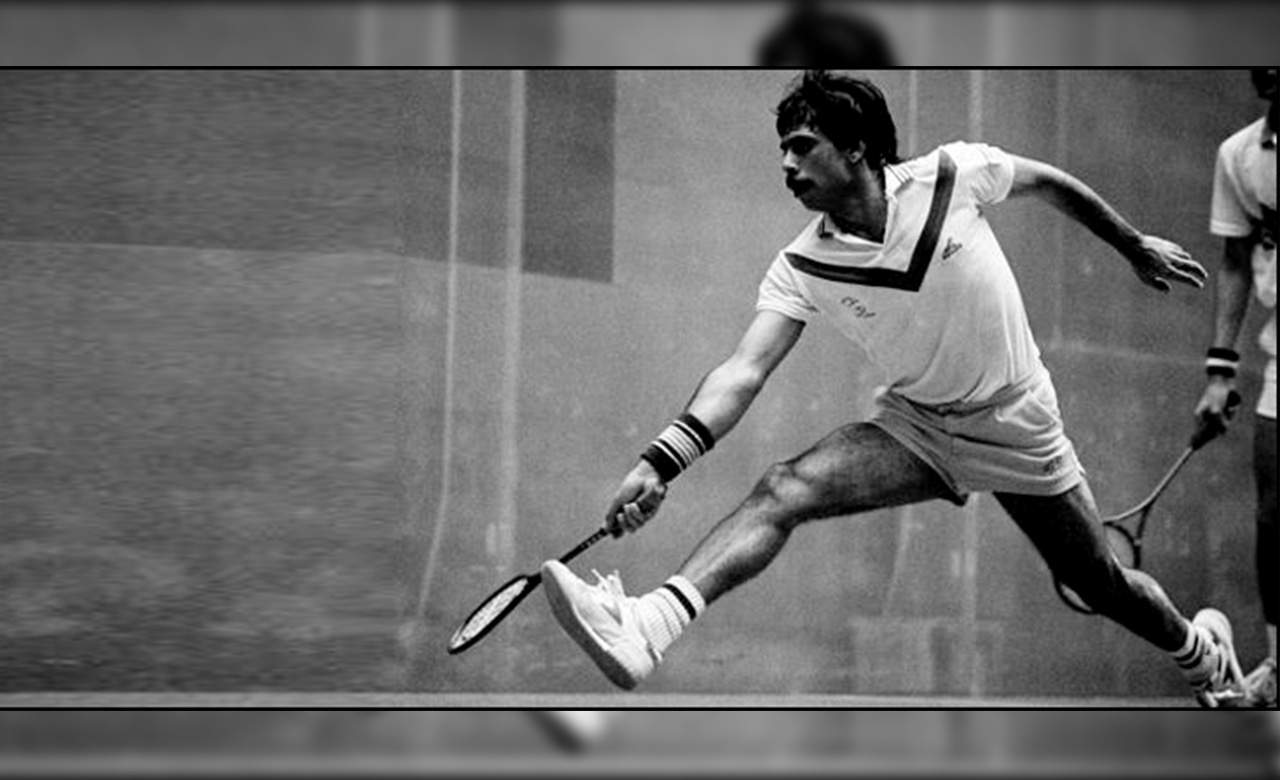
Often first in any GOAT conversation, Jahangir went on a 555-match unbeaten streak spanning five years (1981–1986)—an anomaly in any racket sport. His fitness, mental strength, and ability to grind out wins set new standards. He won multiple World Opens and British Opens and dominated during the 1980s.
Jansher Khan (Pakistan)

Jansher is often paired with Jahangir in legacy debates. He holds eight World Championship titles, still the record for men. He also collected numerous major titles and remained world number 1 for long stretches. His rivalry with Jahangir defined a golden era of Pakistani dominance.
Geoff Hunt (Australia)
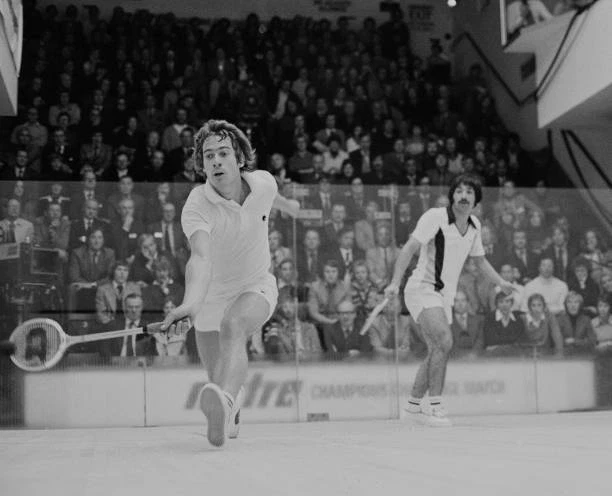
Before the Khans, Geoff Hunt was a dominant force in the 1970s and early 1980s. He won multiple British Opens and was world number one for extended periods. His consistency, tactical intelligence, and adaptability made him a benchmark for later generations.
Peter Nicol (Scotland / England)

Nicol bridged eras with success in the late 1990s and 2000s. He won the World Championship and British Open, and was ranked world number one. He is respected for his shot-making and consistency across many seasons.
Ramy Ashour (Egypt)
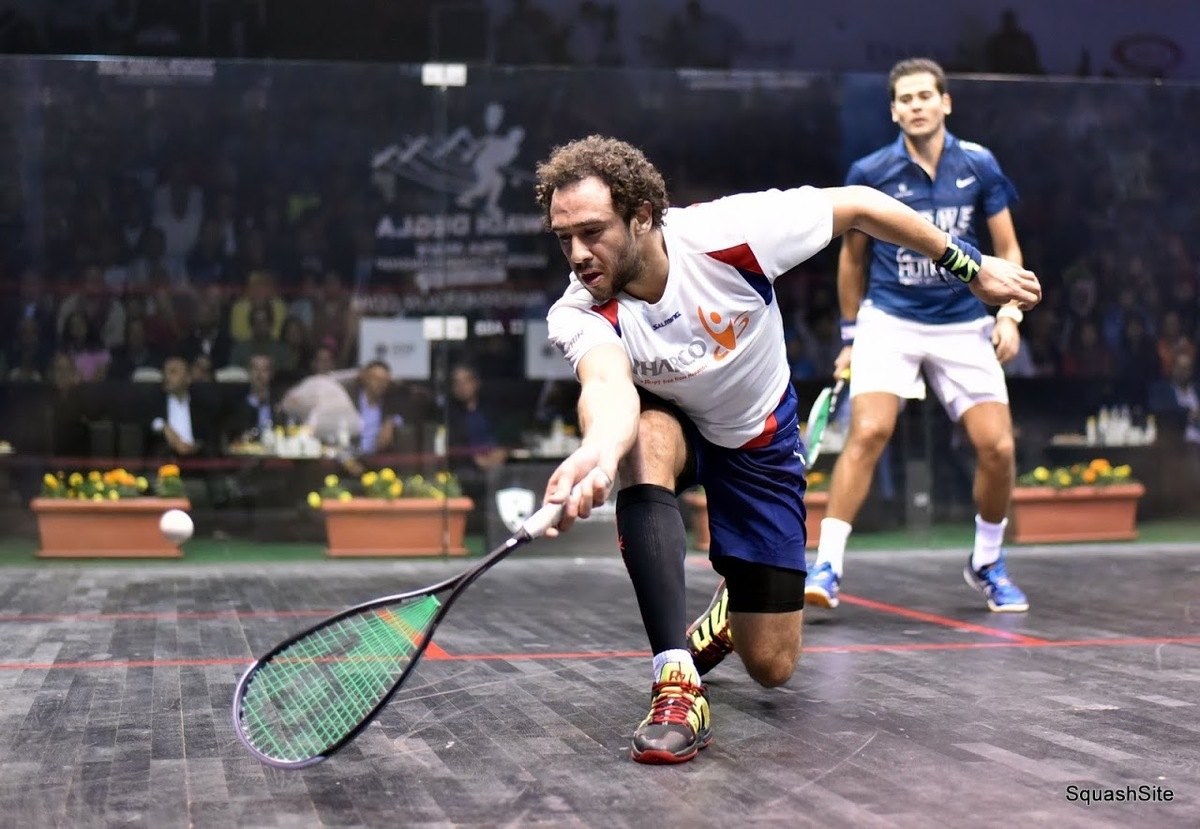
One of the most talented and creative players ever. Ashour’s style was flamboyant—drop volleys, kills out of nowhere, deceptive shots. He won multiple world titles despite injuries hindering parts of his career. Many fans cite him as the “Ronnie O’Sullivan” of squash.
Modern Names
-
Ali Farag (Egypt): A balanced, intelligent player who blends power and control. He’s had multiple stints as world number one.
-
Mohamed El Shorbagy (Egypt): Aggressive, powerful, and fiercely competitive—he’s captured numerous major titles.
Greatest Women’s Squash Players of all time
Nicol David (Malaysia)
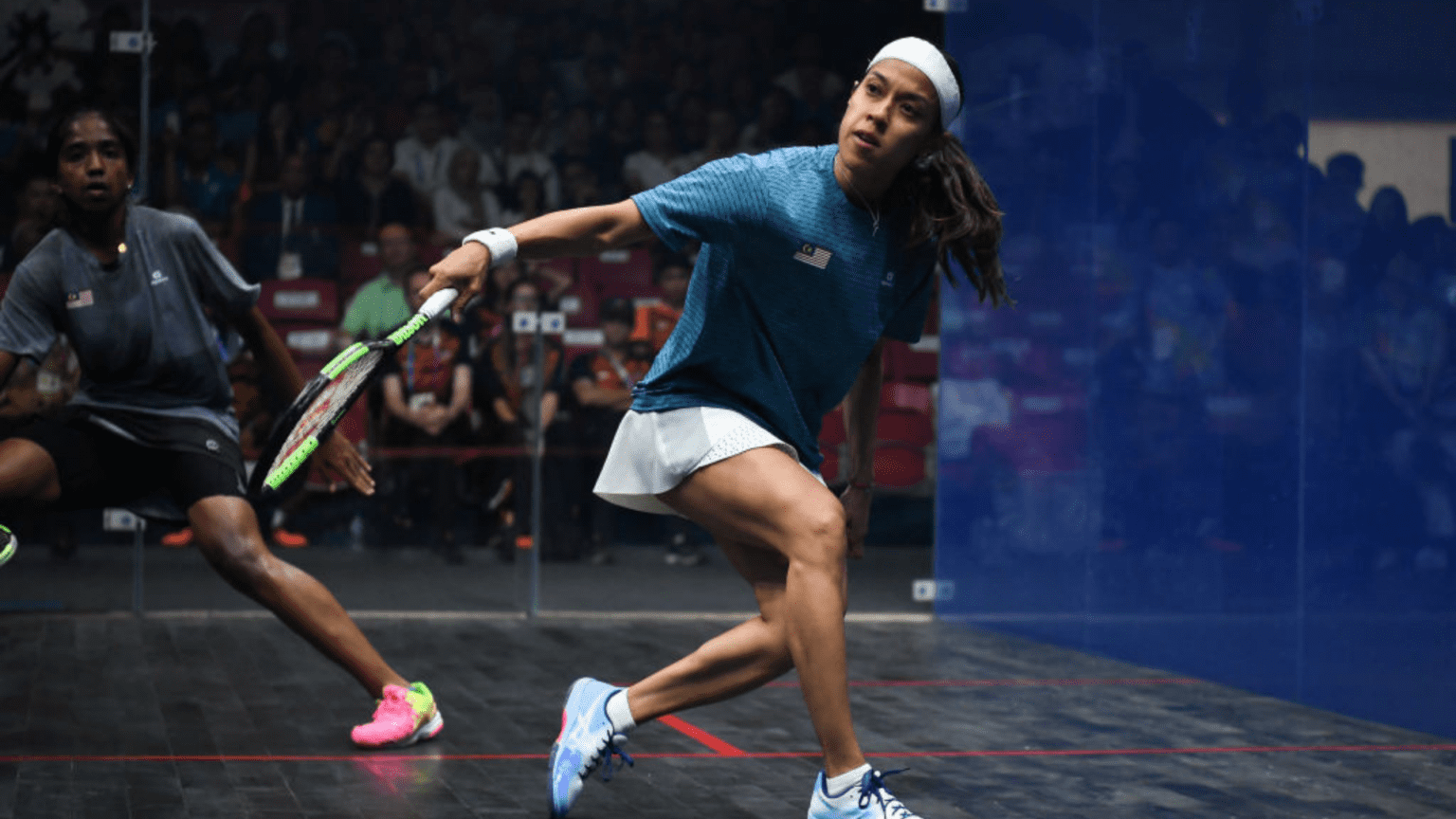
Widely regarded as the greatest female squash player of all time. She held World No. 1 for 108 consecutive months (2006–2015) and won eight World Championship titles. Her consistency, work ethic, and humility made her a role model globally.
Nour El Sherbini (Egypt)
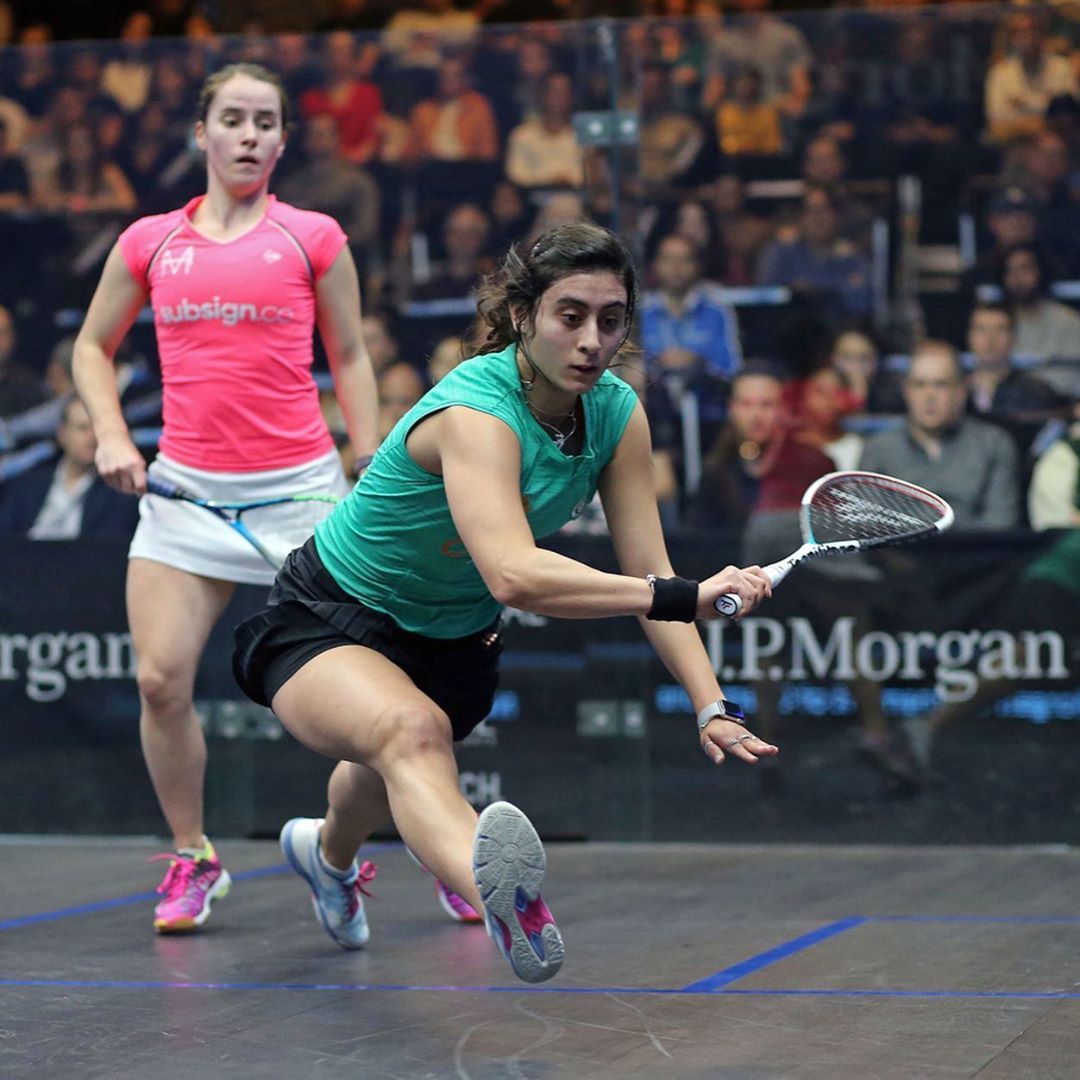
A modern icon. With her eighth world title in 2025, she matched Nicol David’s all-time women’s record. She has been a fixture at the top for more than a decade, combining nerves of steel with attacking flair and mental resilience.
Heather McKay (Australia)
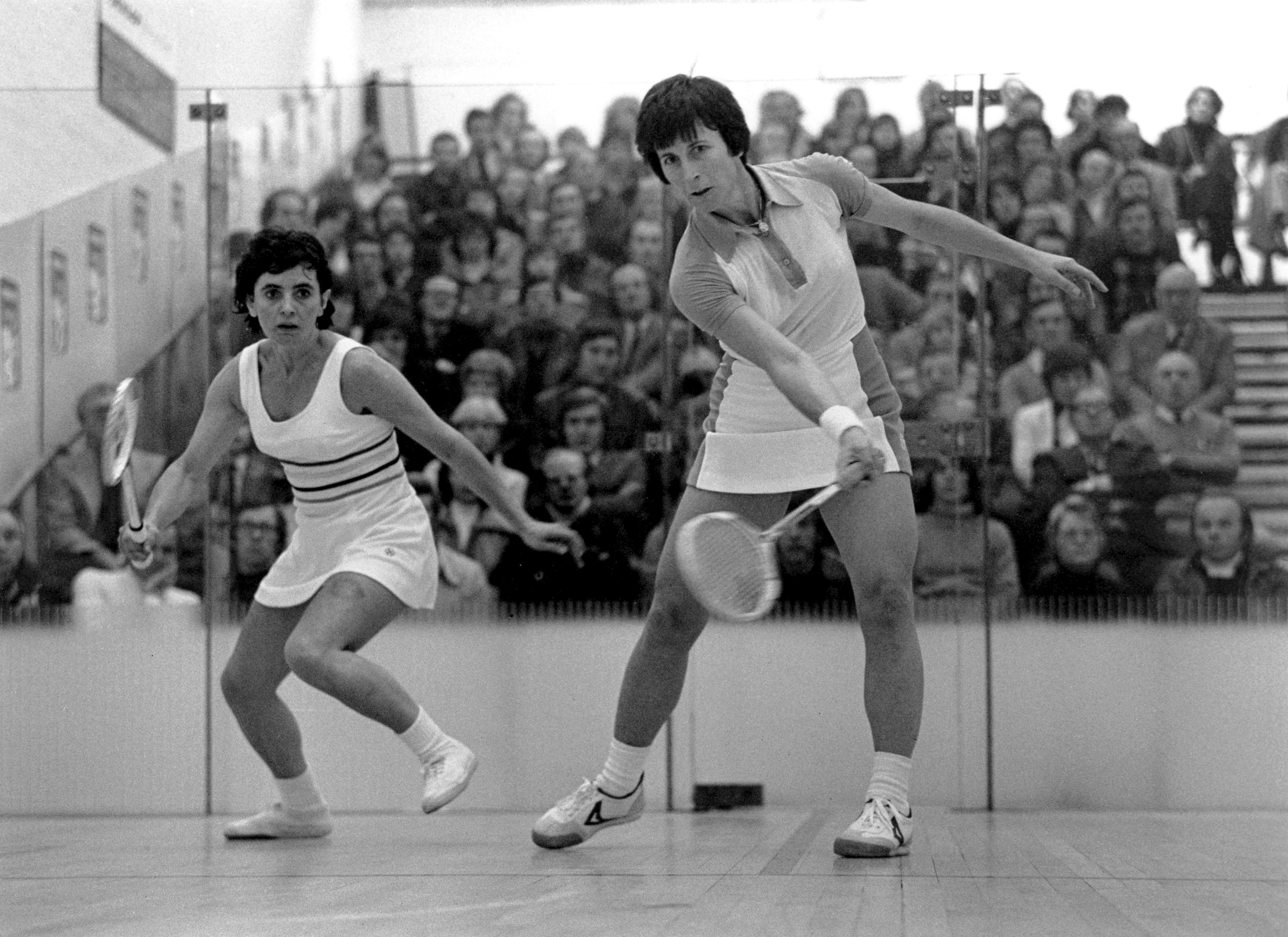
A name from squash’s earlier eras, McKay remains legendary. She won 16 consecutive British Open titles from 1962–1977 and lost almost no matches in her prime. Her dominance in her time is unmatched, and many see her as a pioneer for women’s squash.
Susan Devoy (New Zealand)

She held world number one status multiple times and captured world titles in the late 1980s and early 1990s. Her longevity and ability to sustain top-level performance make her one of the greats.
Sarah Fitz-Gerald (Australia)
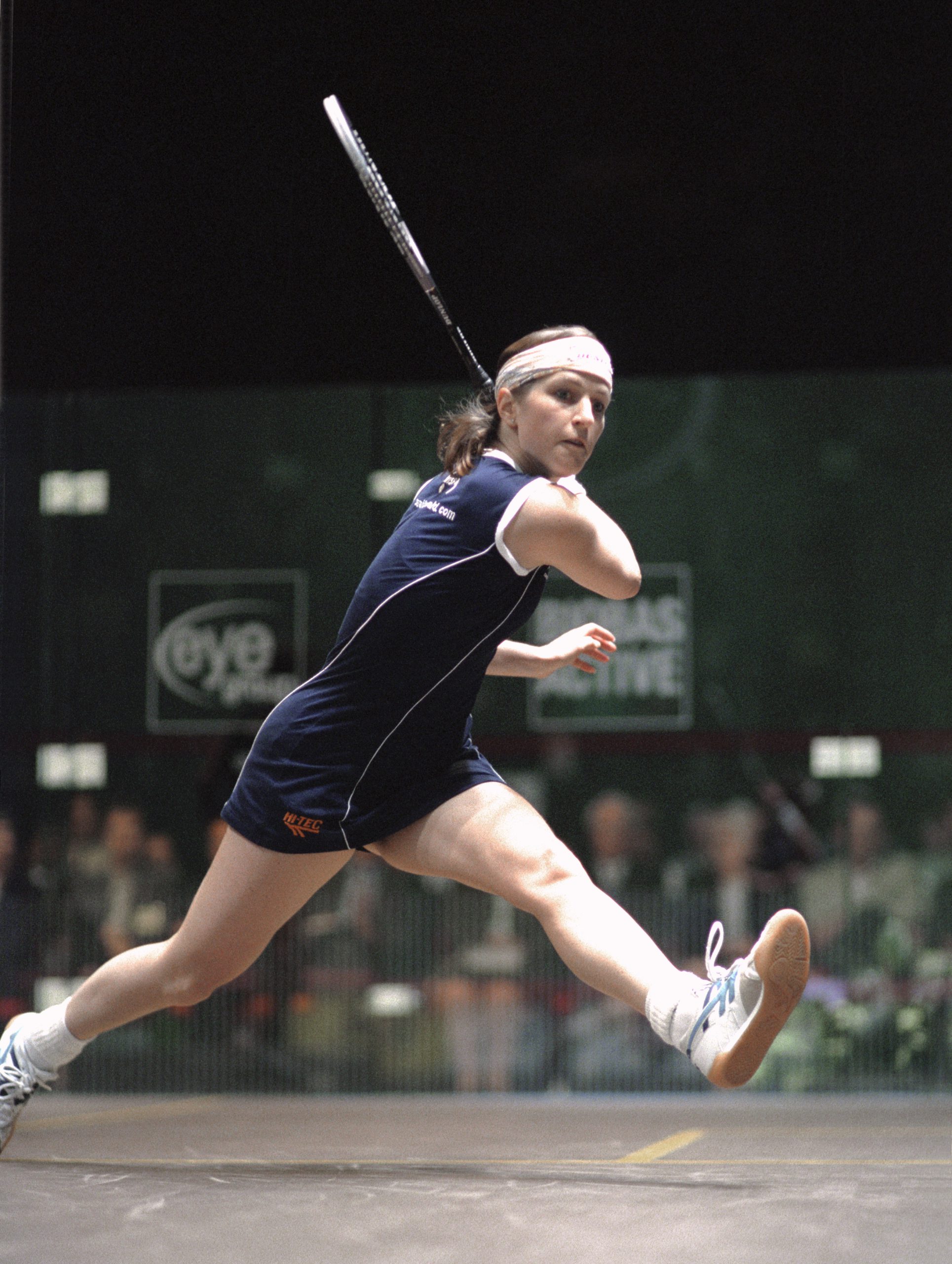
A dominant force in the 1990s, she won several World Championships and was often ranked at the top. Her style was tactical, precise, and mentally tough.
Final Rally
Greatness in squash can’t be measured by numbers alone. Yes, the stats are staggering—Jahangir Khan’s 555-match unbeaten streak, Jansher Khan’s eight World Championship titles, Nicol David’s 108 months at World No.1, Nour El Sherbini’s record-equaling eight world crowns—but beyond the records lies something more powerful. It’s the way these players changed the way squash was played, inspired nations, and left a legacy that outlives their time on court.
From Pakistan’s Khan dynasty that defined the sport in the 1980s and 1990s, to Australia’s Heather McKay and Sarah Fitz-Gerald who set impossible standards, to Nicol David’s reign that made squash a household name in Asia, to Egypt’s golden generation led by Nour El Sherbini and Ramy Ashour—each era brought a different flavor of dominance. Together, they form a lineage of champions whose impact transcends trophies.
Ask ten squash fans who the greatest player of all time is, and you may get ten different answers. For some, it’s the unbeatable aura of Jahangir Khan. For others, it’s Nicol David’s longevity and grace under pressure. Some will point to the artistry of Ramy Ashour, others to the steely resolve of Jansher or Sherbini. The truth is, there isn’t one single “greatest.” There are many, each carving their name into squash history in their own way.
What unites them is their ability to make the game bigger than themselves. They showed us that squash is not just about chasing a ball in a box—it’s about resilience, creativity, and the pursuit of perfection. And that’s why when we talk about the greatest squash players of all time, we’re not just counting titles—we’re celebrating the spirit of a sport that continues to inspire, challenge, and thrill.