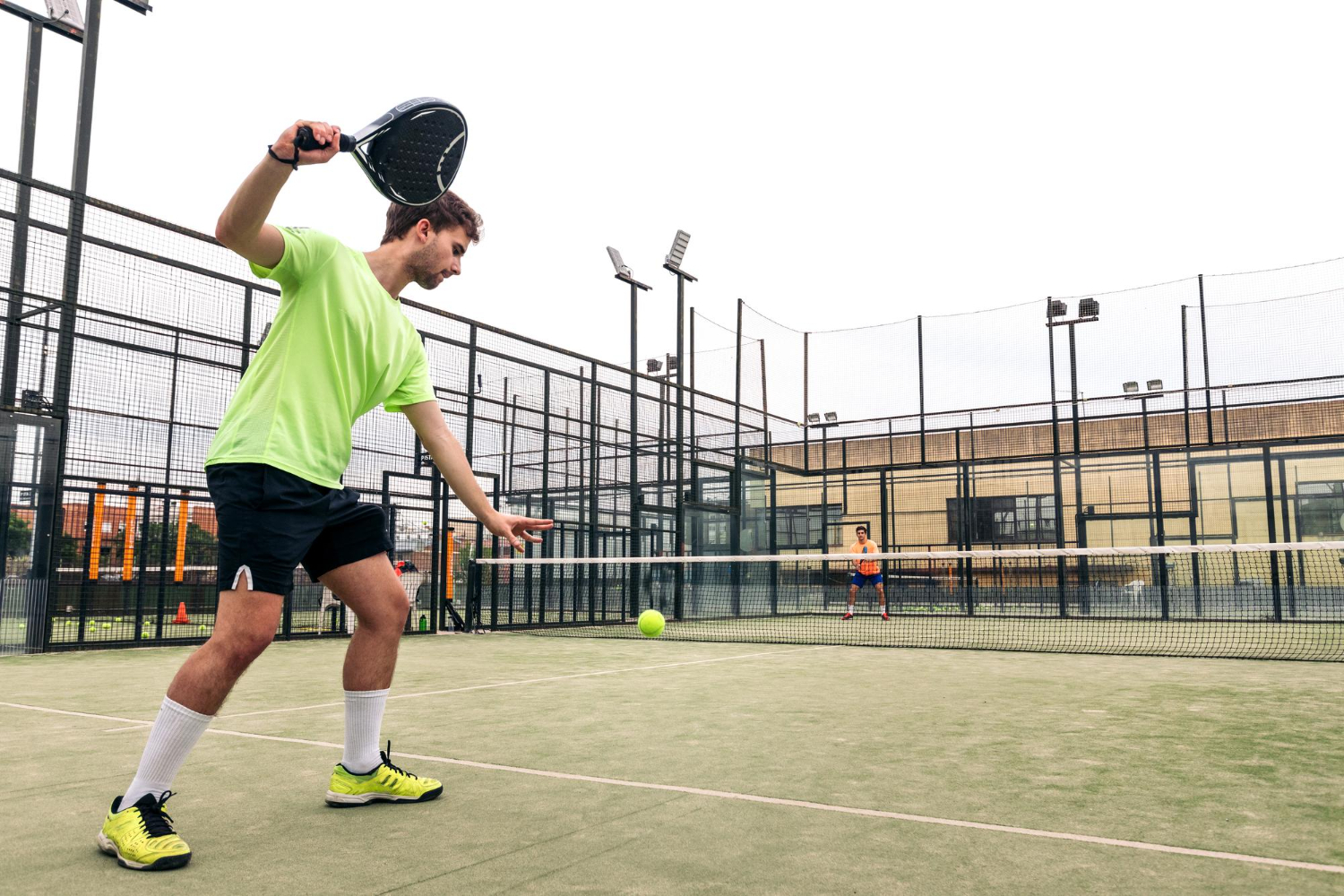
Padel isn’t just a sport—it’s a phenomenon that has grown from a quirky backyard invention into one of the world’s fastest-growing games. The story begins in 1969, when Mexican businessman Enrique Corcuera built a walled court at his home in Acapulco. He wanted a game that blended tennis, squash, and social play. What started as a creative experiment quickly spread to Spain and Argentina, where padel exploded in popularity. Today, with over 50,000 courts worldwide, it’s played everywhere from Europe to the Middle East to India.
But to truly play padel, you need to speak its language. Step onto a court and you’ll hear words like bandeja, víbora, chiquita, and por tres. At first, it may sound like code, but these terms capture the unique tactics and artistry that make padel different from tennis or pickleball.
This guide will walk you through 25 essential padel terms every player must know—so you can not only follow the game but play it with confidence and flair.
A) Overheads & Finishing Shots
-
Bandeja
The signature padel overhead: a controlled, sliced “defensive smash” you play against lobs to keep the net. Contact is high but relaxed; aim deep to corners so the ball stays low after the glass. -
Víbora (Viper)
Looks like a bandeja but faster with more side-spin and a later, wristier contact. Used to pressure feet or side glass and create ugly rebounds—an attacking cousin of the bandeja. -
Remate (Smash)
The power overhead to finish points. In padel, you choose flat, topspin (kick), or even angle into glass—always considering court position and wall rebounds. -
Kick Smash
A topspin smash that kicks violently after the bounce. Done right, it can jump back to your side or set up an “out of court” finish. -
Por Tres / X3
A smash that leaves the court over the 3-meter side wall (often after the back glass). The classic crowd-pleaser. -
Por Cuatro / X4
A flat, close-to-net smash that exits over the 4-meter back glass. Think “drill it down, send it out.” -
Gancho (Hook)
High contact overhead (often when the lob floats over your shoulder). Compact swing, direct line—great to hold the net without giving time to opponents.
B) Soft-Touch & Setup Shots
-
Chiquita
The little one: a soft, low ball from the back aimed at the volleyer’s feet to force a weak lift and let you move in. It’s a momentum shifter. -
Dejada (Drop Shot)
A gentle touch that dies short, best used when rivals are deep or leaning back. Use sparingly: disguise matters. -
Globo (Lob)
Padel’s safety valve. High and deep to reset, buy time, and take the net on the next ball. It’s the shot most beginners underuse.
C) Walls & Rebounds (Your Best Friend)
-
Salida de Pared (Wall Exit)
Your bread-and-butter rebound after the back or side glass. Let the ball come off the wall, step forward, and strike from a comfortable height. -
Bajada de Pared (Wall Descent)
An attacking wall shot: let the ball drop off the glass and drive it low and hard through the middle or to feet—often used to counter a smash. -
Doble Pared (Double Wall)
Playing the ball after two glasses (side+back or back+side). It buys time, changes angles, and is a key defensive skill under pressure. -
Contrapared (Against-the-Wall Boast)
Intentionally using your own back glass to send the ball back over the net—especially when the ball is already behind you.
D) Volleys, Grips & Formations
-
Block Volley (Bloqueo)
Minimal swing, firm face, absorb pace. The go-to answer when rivals fire from the back—reset the rally and hold your ground at the net. -
Continental Grip
The universal padel grip (like holding a hammer). It lets you volley, bandeja, and smash without grip changes—a non-negotiable habit for consistency. -
Australian Formation
Server and partner start on the same side to keep preferred forehand/backhand matchups. Popular among pros; requires a quick first step after serve. -
The Fridge (Nevera)
Tactic of freezing one player by sending almost every ball to their partner. Emotionally tough, tactically effective—agree ground rules in friendlies!

E) Scoring & Match Terms
-
Deuce (40–40)
Tie at 40. Traditionally, you must win two in a row (advantage, then game). -
Advantage
The point after deuce. Lose it and you’re back to deuce; win it and you take the game. -
Golden Point (Punto de Oro)
Used in many events: at 40–40, one point decides the game; the receivers choose which side to take the return. Popularised by the World Padel Tour in 2020. -
Tiebreak
At 6–6 in games, play a breaker to 7 points, win by 2; then record the set as 7–6. -
Let (on Serve)
Serve touches the net and lands correctly—replay the serve. -
Double Fault
Miss both serve into the box—point to receivers. (Also watch foot faults.) -
Foot Fault
Stepping on/over the line before contact on serve—counts as a fault.
Quick Usage Guide (90-second refresher)
-
Holding the net? Expect lobs; answer with bandeja, víbora, or gancho to keep pressure.
-
Pinned deep? Use salida de pared to reset, chiquita to their feet to take the net, or globo to recover.
-
Finishing a sitter? Choose kick smash (jumping bounce) or go big with por tres/por cuatro when the setup is perfect.
-
Under attack at the net? Stay compact with a block volley—absorb pace, aim deep middle, and re-establish formation.
-
Serving plan? Try the Australian formation to protect strengths; just be ready for the first ball.
How to Learn These Fast (Mini-Drills)
-
Wall warm-up: 10 × salida de pared on each side; focus on footwork and contact height.
-
Soft-touch ladder: Alternate chiquita → volley block exchanges with partners at half pace, aiming at feet.
-
Overhead circuit: 5 bandejas to deep corner → 3 víboras to feet → 2 controlled smashes. (Quality of placement > power.)
Final Word – From 1969 to Today
When Enrique Corcuera set up the first walled court in Acapulco back in 1969, he probably didn’t imagine millions of people would one day be shouting bandeja or por tres on glass courts across the globe. Yet that’s exactly what happened. Padel has grown from a backyard idea into a global movement—and with it, its own rich vocabulary.
Learning these 25 essential terms isn’t just about sounding like a pro. It’s about understanding the culture and strategy of the game. Every time you play a globo, set up a chiquita, or finish with a víbora, you’re connecting with decades of padel evolution.
So the next time you step onto court, remember: you’re not just hitting a ball—you’re carrying forward the language, history, and spirit of a sport that has united communities around the world.