
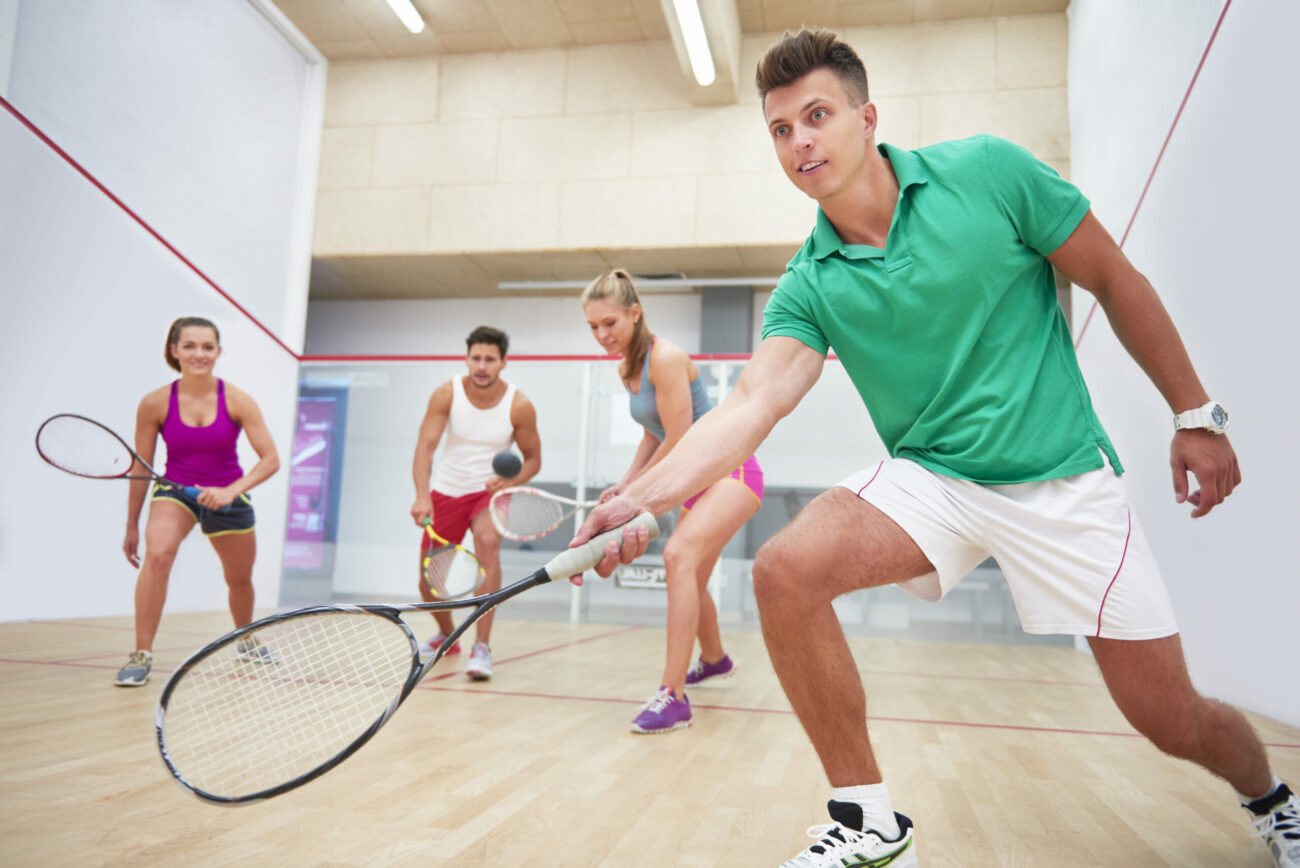
Smash the Walls: The Complete 2025 Squash Guide
Step onto a squash court and you’ll immediately sense it: the walls are alive, the ball moves like lightning, and every rally feels like a sprint wrapped inside a chess match. Squash is one of the few sports that simultaneously tests speed, stamina, skill, and strategy.
Named the world’s healthiest sport multiple times in global fitness studies, squash pushes you to your limits in short, intense bursts. It’s no wonder that professionals like Ali Farag, Nour El Sherbini, and Mohamed ElShorbagy are considered not just great athletes but masters of tactical intelligence.
This guide is your all-in-one squash playbook for 2025—whether you’re just starting, refining your game, or aiming to dominate your league. You’ll learn rules, court design, equipment picks, training tips, and the mental edge pros rely on.
What is Squash? How is it played?
Squash began in 19th-century England when schoolboys realized a punctured ball demanded more skill to control. Today, it’s a global sport played in over 185 countries.
Singles vs Doubles
- Singles: Standard version, 2 players on a 9.75m × 6.4m court.
- Doubles: Played by 4 players on a wider 9.75m × 7.62m court.
How It’s Played
- Player A serves.
- Player B must return the ball before it bounces twice.
- Ball can strike side/back walls but must always hit the front wall.
- Rally continues until a fault, tin, or double bounce occurs.
Matches are best-of-five, with games played to 11 (PAR scoring).
Why it’s unique: Unlike tennis or badminton, the walls create infinite shot angles, making anticipation and positioning just as important as raw power.
What are the Rules of Squash?
Scoring
- Point-a-Rally (PAR) to 11 is standard worldwide.
- At 10–10, you must win by 2 points.
Serving
- Start in one of the back service boxes.
- Ball must hit the front wall above the service line and land in the opposite quarter.
Rally Play
- Ball must strike front wall above the tin and below the out line.
- Use side and back walls freely.
- Rally ends if the ball goes out, hits the tin, or bounces twice.
Interference Calls
- Let: Rally replayed due to accidental obstruction.
- Stroke: Point awarded if your clear winning shot was blocked.
Pro tip: Good movement includes clearing your opponent’s path. At elite levels, failing to clear can cost you strokes.
What is the Layout of a Squash Court?
A squash court is compact but technical:
- Dimensions (Singles): 9.75 m (length) × 6.4 m (width).
- Front Wall: Has 3 boundaries—out line (top), service line (middle), tin (bottom).
- Back Wall: Often glass, especially in tournaments.
- Service Boxes: Two squares in back corners for serving.
- Short Line: Splits the court into front and back halves.
Tin Height
- Standard: 48 cm (19″).
- Professional events: 43 cm (17″) for more attacking play.
Types of Courts
- Plaster/wood: Traditional club courts.
- All-glass courts: Used for PSA tournaments, with LED-lit boundaries for spectators.
Top 5 Squash Rackets (2025 Picks)
1) Tecnifibre Slash 125 Squash Racquet
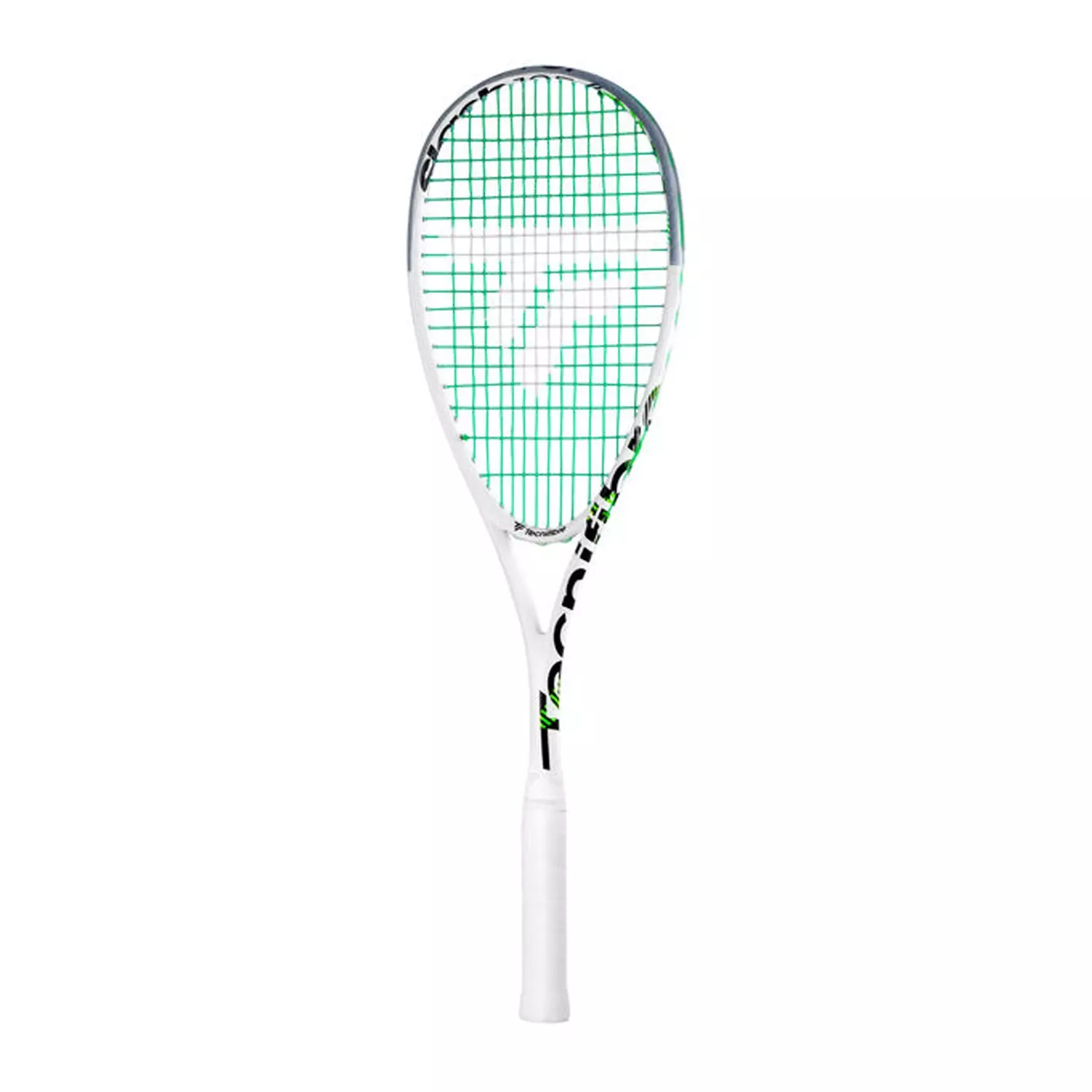
A modern “attack” frame that’s light through the air but still stable, great if you like holding the swing and snapping the ball short or drilling quick straight drives. The Slash line is known for easy racquet-head acceleration, so deception and volleying feel natural. If you generate your own pace, the 125g variant hits the sweet spot for touch + countering.
Who it suits: All-court and attacking players who volley often and like to hold/disguise.
Why it stands out: Lively power from the teardrop bed, quick maneuverability, confidence on counter-drops.
Try this string/tension: Multifilament 24–26 lbs for a crisp-but-forgiving pocket.
2) HEAD Microgel Blast Squash Racquet
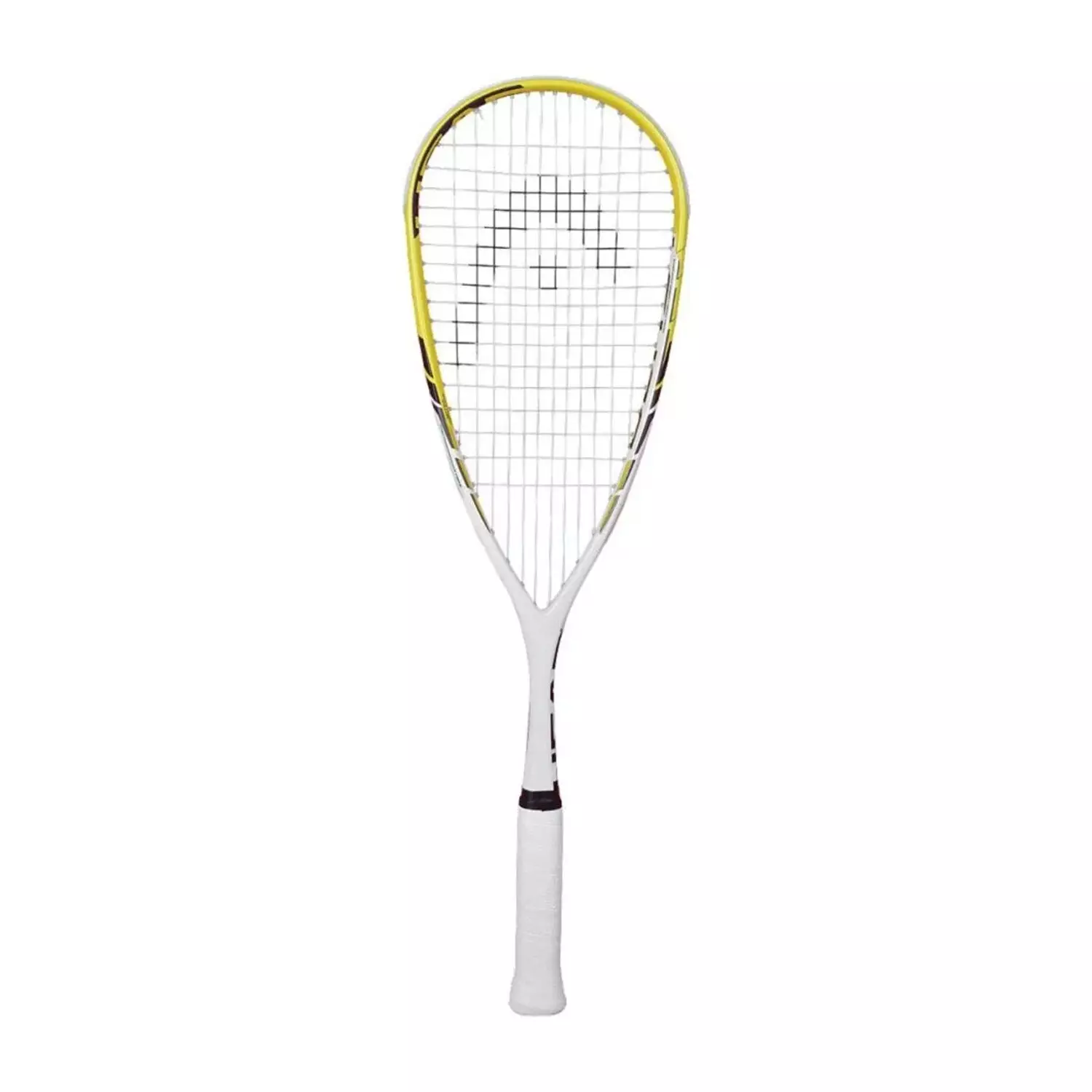
A value workhorse with classic HEAD feel. The frame gives a forgiving contact and predictable length, so it’s a strong choice if you’re moving from beginner to club-level and want something solid that won’t punish slight timing errors.
Who it suits: Improving intermediates looking for stability and straight-hitting discipline.
Why it stands out: Friendly feel on off-center hits, easy depth to the back corners, and price-to-performance.
String/tension idea: 25–27 lbs if you want a touch more control on rails.
3) HEAD Graphene 360 Speed 125 Squash Racket
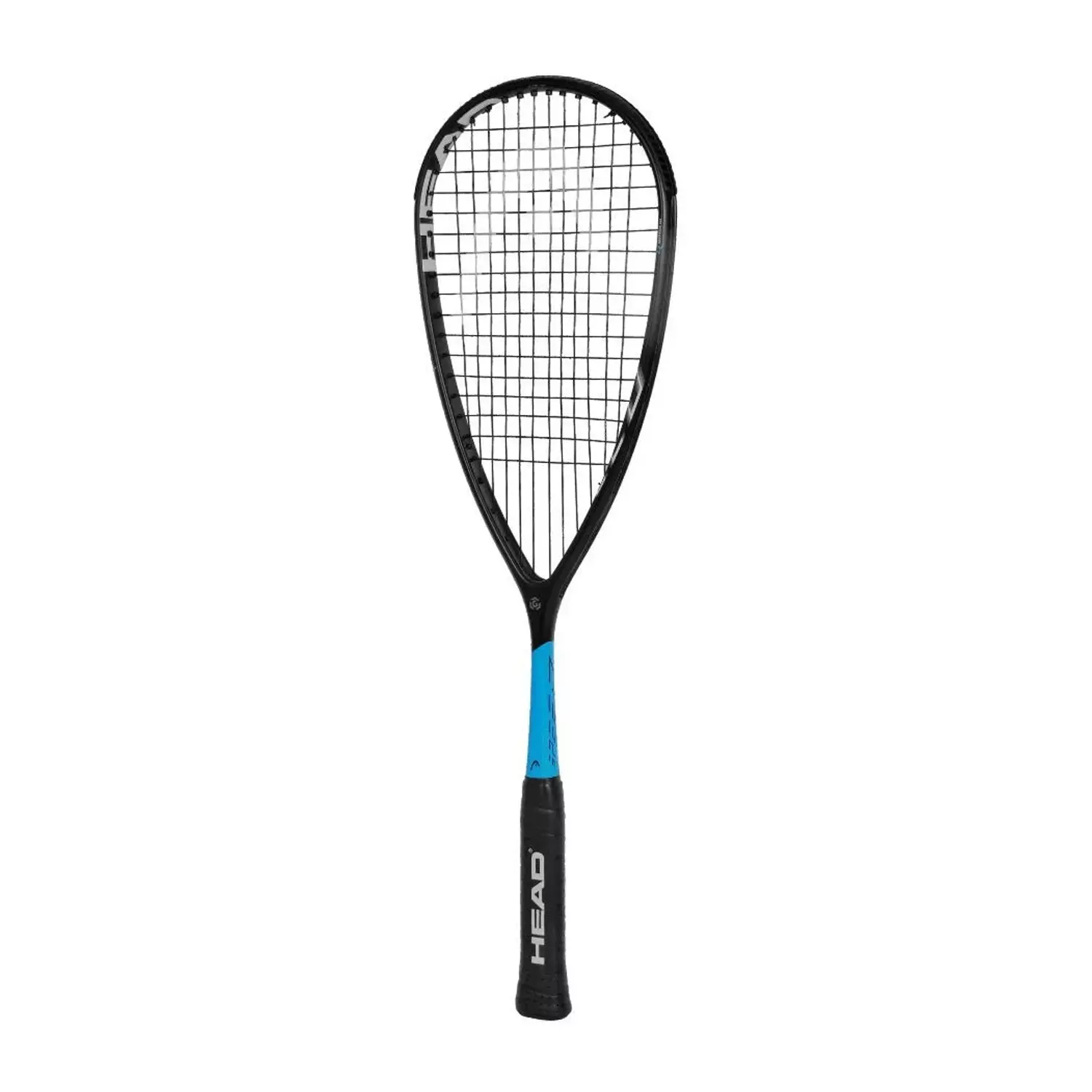
A high-performance frame engineered for attacking players. At 125 g, it offers explosive power while still giving the option to fine-tune control thanks to its Adaptive Fan Pattern. The teardrop head and Graphene 360 technology combine for crisp energy transfer and stability, making it a true pro-level choice.
Who it suits: Advanced players who thrive on aggressive drives, volleys, and fast-paced attacking rallies.
Why it stands out: Graphene 360 stability, Corrugated Technology for stiffness, and Adaptive Fan Pattern stringing—giving you both power and precision in one frame.
String/tension idea: 24–25 lbs to balance touch at the front and depth at the back corners.
4) Prince Shadow Response 400 Squash Racket
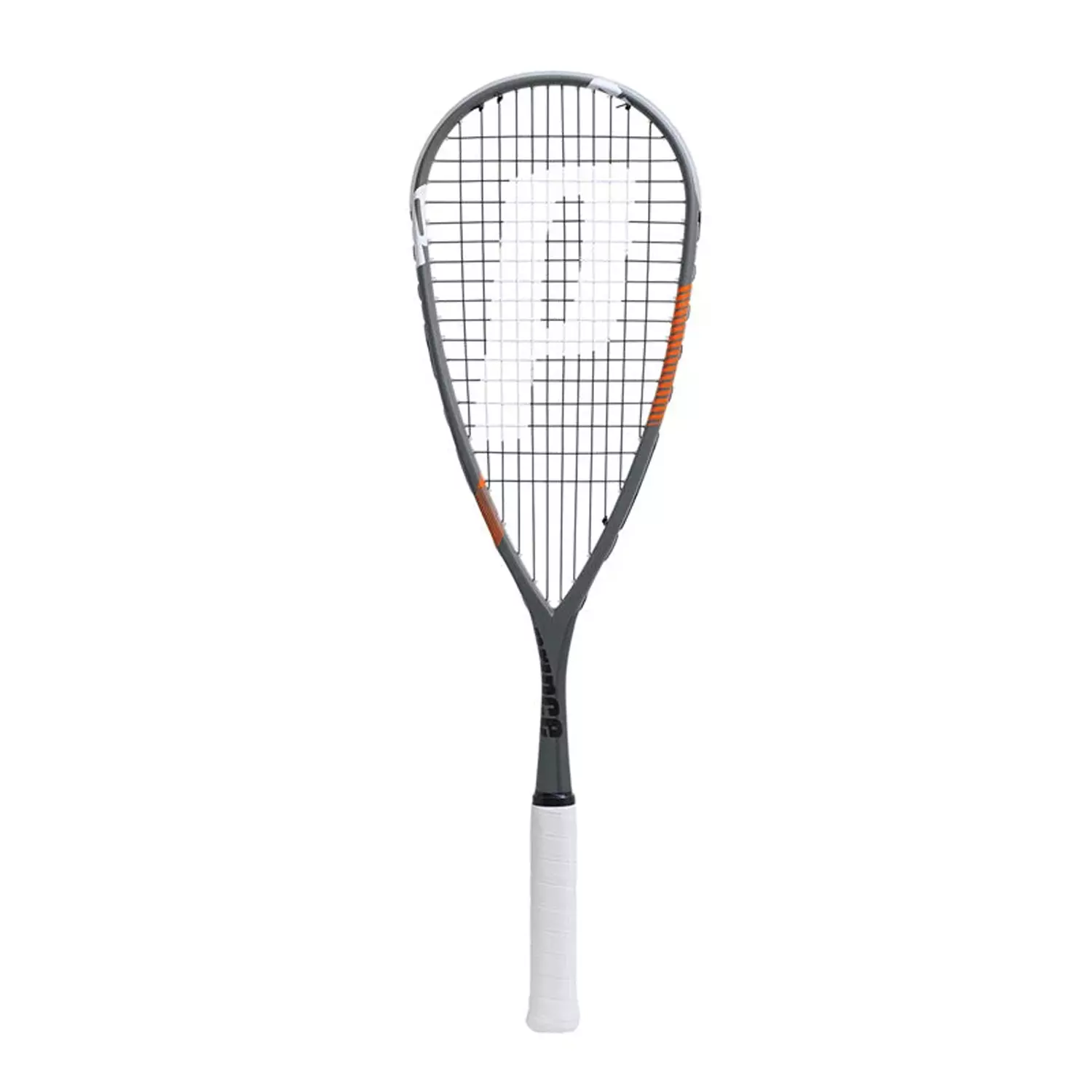
A dependable, mid-weight racquet designed with graphite construction for a steady all-round game. Its 135 g frame and neutral balance make it forgiving yet responsive, ideal for players moving beyond entry-level equipment.
Who it suits: Club players and improving intermediates who want a stable racquet that doesn’t demand perfect technique.
Why it stands out: Neutral balance makes it versatile, delivering a consistent feel on straight drives and boasts without overcomplicating handling.
String/tension idea: 25–27 lbs for sharper control while maintaining forgiving power.
5) HEAD Cyber Tour 2024 Squash Racket
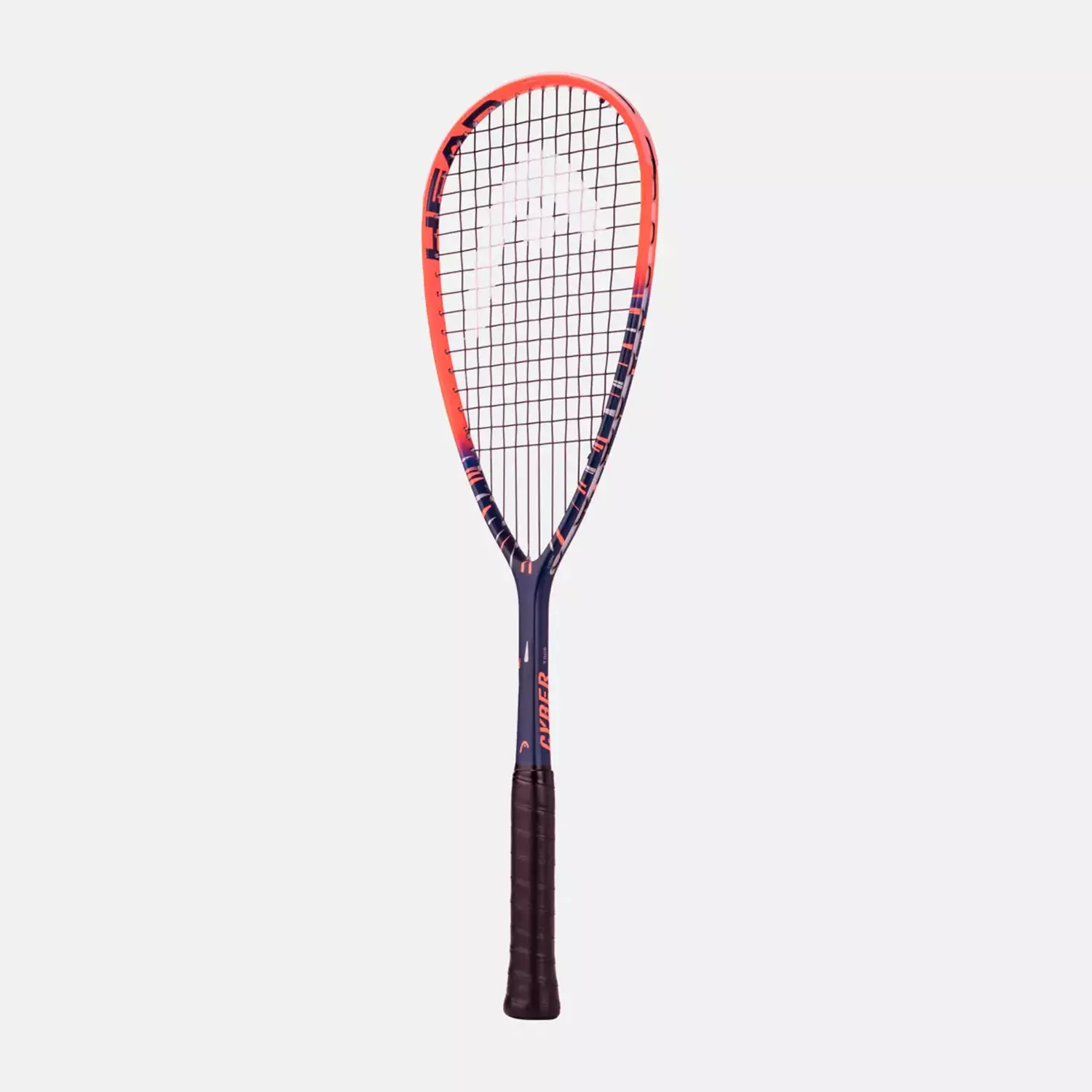
A beginner-friendly racquet with a forgiving teardrop design that helps generate easy power. At ~160 g, it’s heavier than advanced frames but provides the momentum new players need to strike confidently. Amplified Fibre Technology gives extra stiffness, improving pop for recreational rallies.
Who it suits: Beginners and recreational players who want an affordable racquet that builds confidence and consistency.
Why it stands out: Large sweet spot, forgiving frame, and easy power make it a smooth entry into squash without overwhelming new players.
String/tension idea: 23–24 lbs to keep the ball lively and make length shots easier.
Top 5 Squash Balls in 2025 (Our Picks)
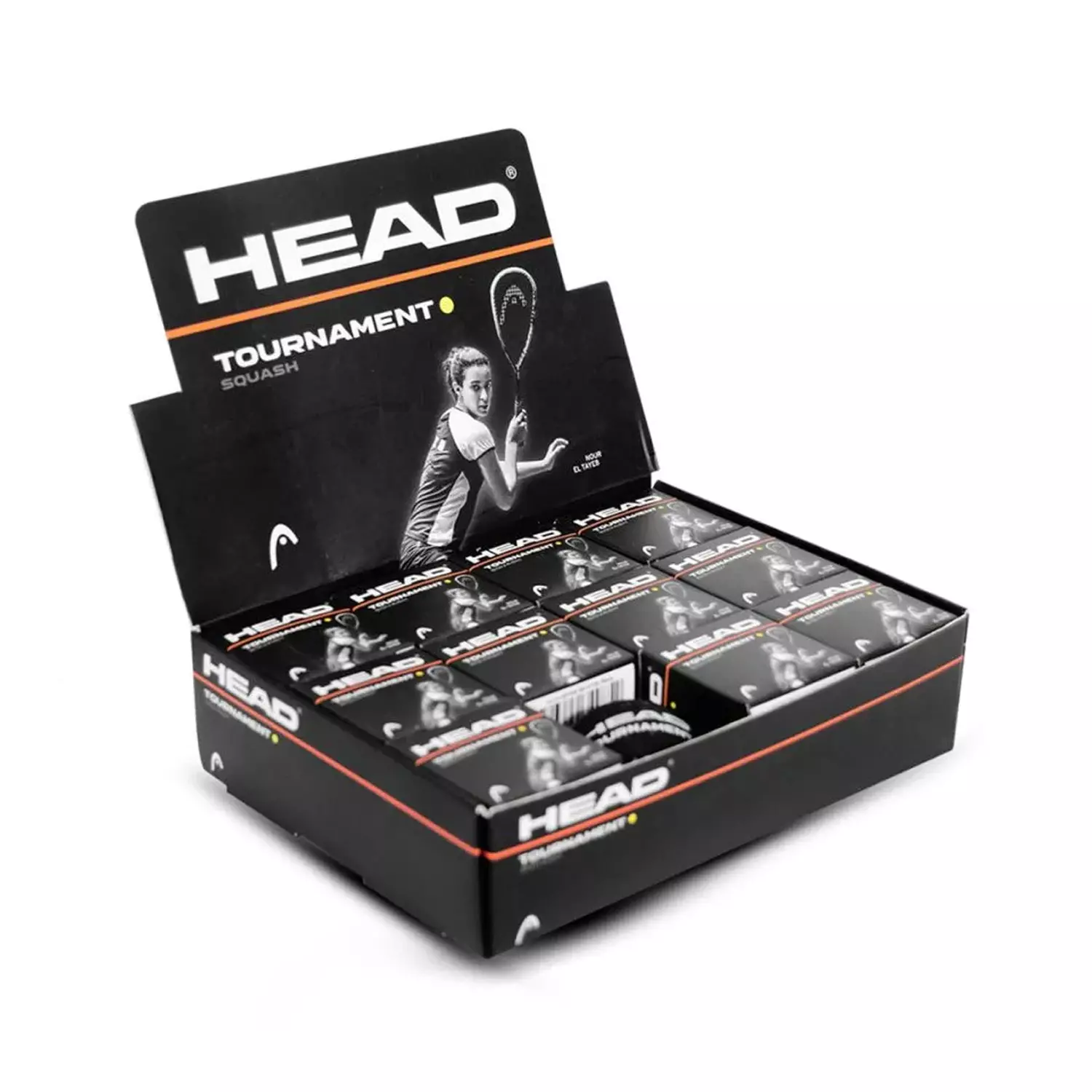
1) HEAD Tournament Squash Balls (12 Pcs)
A solid intermediate / club-level ball offered in a 12-pack, the HEAD Tournament is designed with a special rubber compound to deliver longer and higher bounce under normal conditions. It’s typically listed as a single yellow dot / slow ball, providing more liveliness than high-level double dot balls yet still emphasizing control and rally stability.
Who it suits:
-
Club players who want a dependable ball that lasts and gives good rallies.
-
Players who find double yellow too “dead” on cooler courts.
-
Intermediate level players transitioning from beginner balls.
Why it stands out:
-
Uses a compound aimed at enhanced rebound and resilience.
-
Provides more bounce (hang time) than pure “competition / tournament” balls, making rallies easier and more forgiving.
-
Because it’s in a 12-pack, good for team use, practice sessions, or long tournaments.
String / tension idea:
-
No direct “stringing” for a ball, but in practical play: if rallies seem “too slow,” warm the ball more (hit it hard for several minutes).
-
On cold days, pairing this ball with a slightly lower tension string setup (on your racket) can help maintain better feel when the ball’s bounce is marginal.
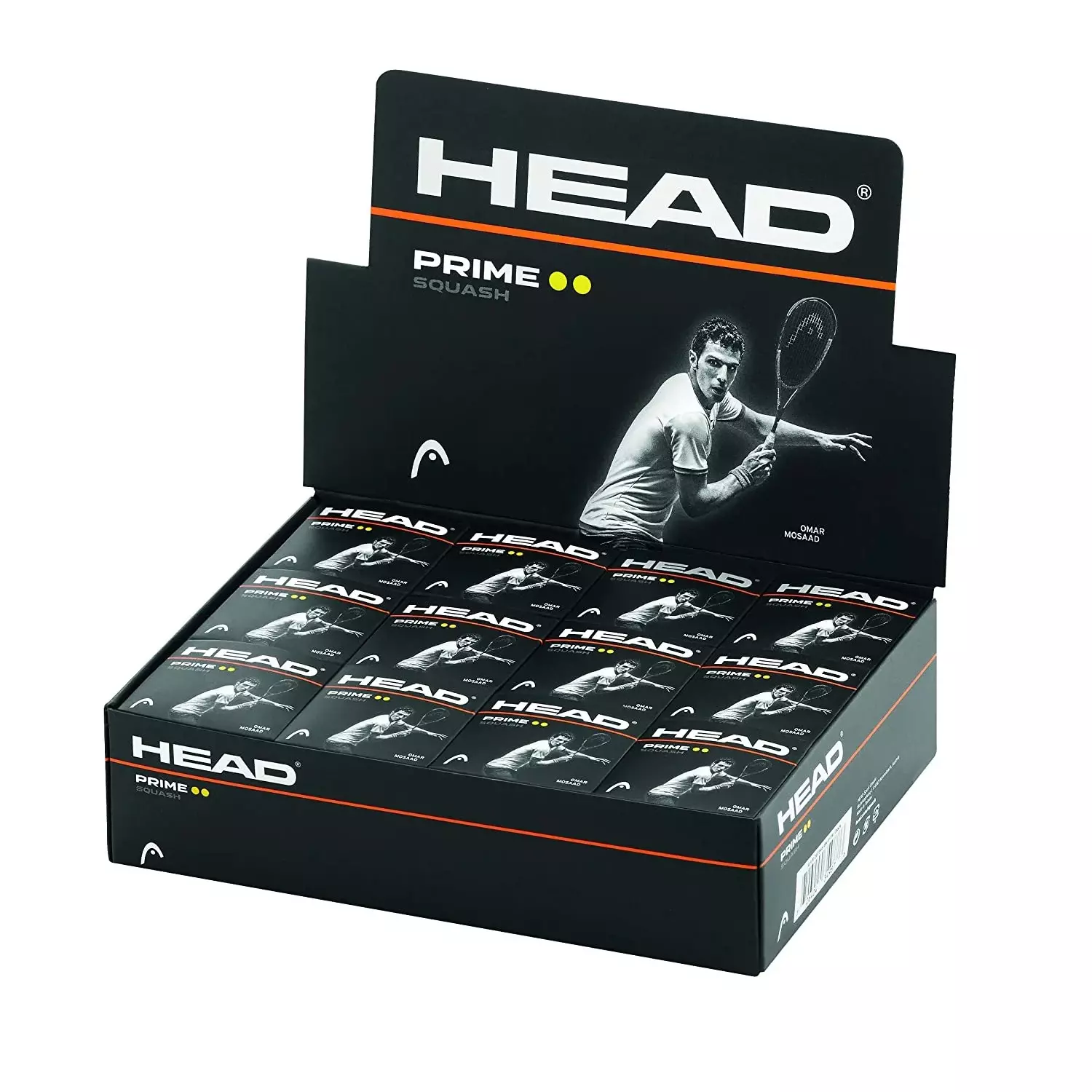
2) HEAD Prime Double Dot Squash Ball
This is HEAD’s higher-end double yellow dot ball, meant for advanced and serious players who demand precision and lower bounce. The Prime ball is engineered for both indoor and outdoor play, offering consistent performance and durability.
Who it suits:
-
Advanced players comfortable playing with minimal bounce.
-
Club leagues and competitive play where regulation balls are required.
-
Courts in warmer climates where the ball can “heat up.”
Why it stands out:
-
As a double yellow dot, it gives low bounce, demanding stronger drives and better shot precision.
-
Built with durable rubber to maintain consistent bounce over many rallies.
-
Designed to perform reliably across varying indoor and outdoor conditions.
Setup / usage tip:
-
Warm it aggressively before play (30+ hard hits) to bring it up to bounce.
-
On hot courts, monitor for over-bounciness; sometimes a slightly softer string or lower tension helps balance things.
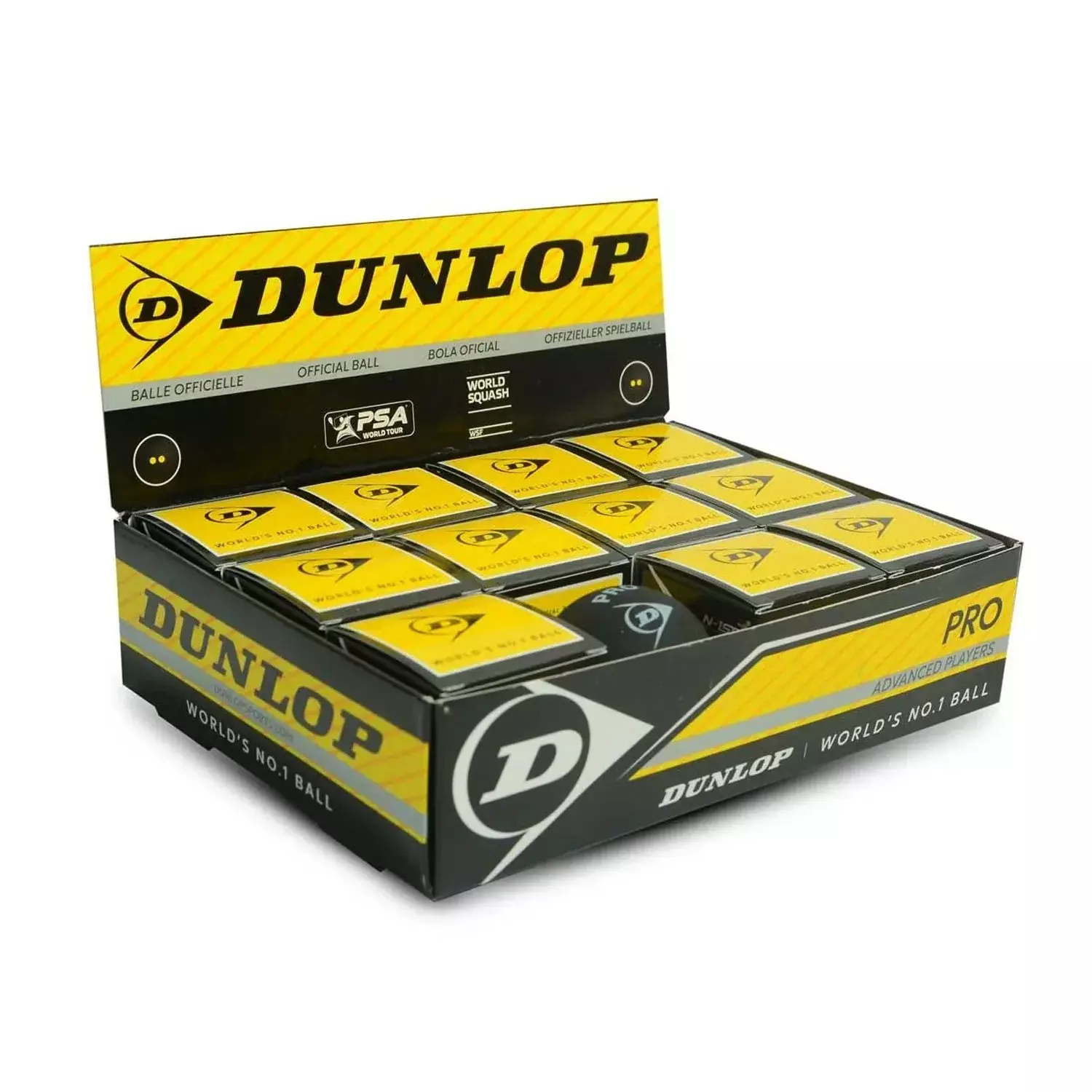
3) Dunlop Pro Double Dot Squash Ball (Box of 12)
The Dunlop Pro double yellow dot ball is one of the most recognized tournament balls globally. It’s the official ball for PSA and WSF events, offering the slowest bounce, demanding high skill, and excellent consistency.
Who it suits:
-
Tournament players, serious club competitors.
-
Players who can generate pace and maintain long rallies even with minimal bounce.
-
Courts in warm environments where ball heating is reliable.
Why it stands out:
-
The benchmark standard for competitive play—used in pro tournaments.
-
Made from advanced rubber compounds (e.g. N-1SR³ tech) for durability and consistent performance.
-
Recognized worldwide—players moving between clubs, countries, or tournaments won’t struggle with compatibility.
Setup / usage tip:
- Aggressively warm up before match: many advanced players do > 50 hard drives just to “wake the ball up.”
- In colder courts, this ball might feel “dead”—if so, use a single condition ball for warm up or earlier sets.
- Monitor wear: once the surface dulls or loses bounce, retire it for practice use.
Top 5 Squash Eyewear You Should Buy in 2025
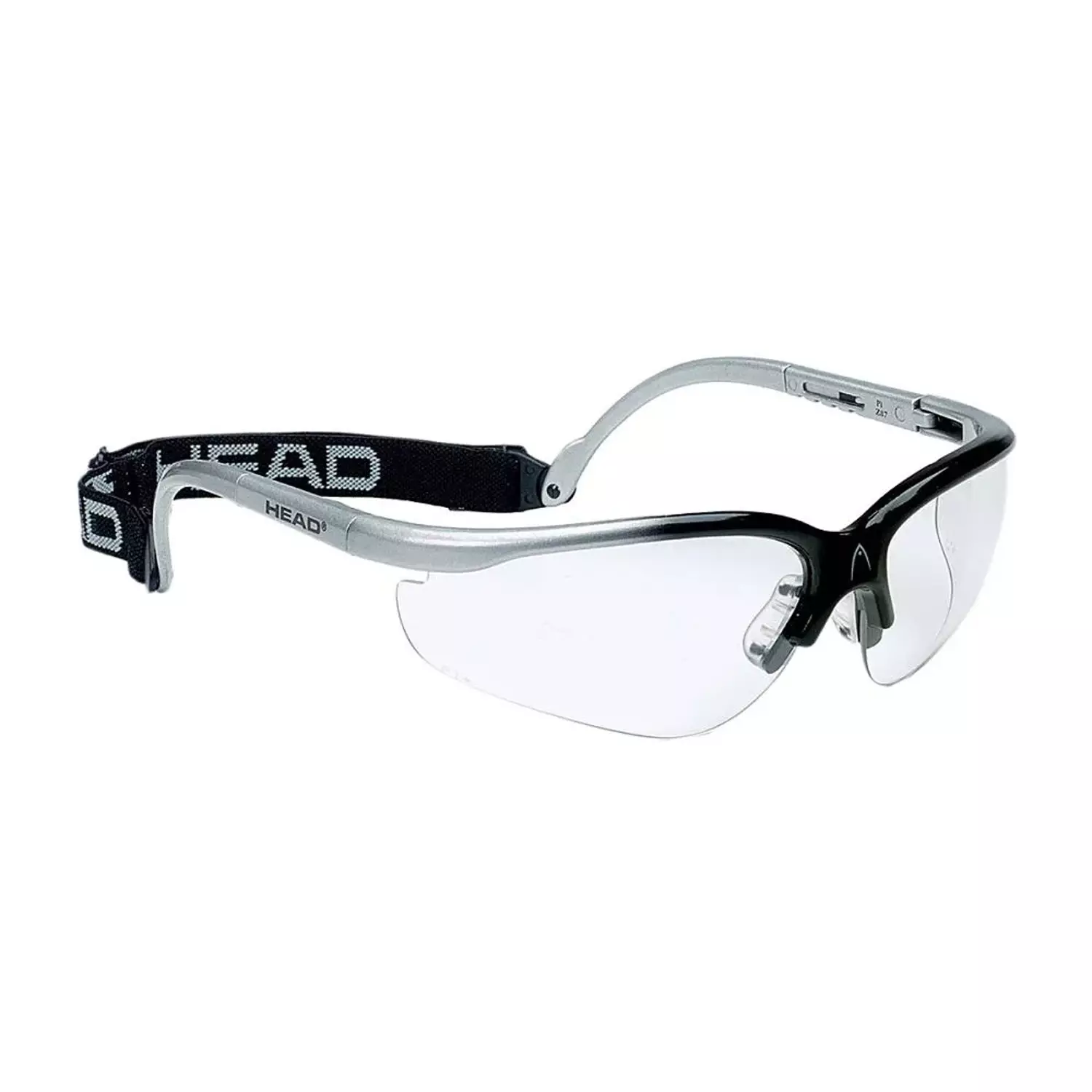
1) HEAD Pro Elite Squash Eyewear
HEAD’s premium protective eyewear — a pro-grade goggle likely with robust lens material, wraparound design, and comfort features.
A top-tier squash goggle built for serious players who demand both clarity and protection. With its sturdy frame and likely advanced lens tech, the HEAD Pro Elite is designed to keep your vision sharp in fast rallies without compromising safety.
Who it suits:
-
Club and competitive players who require maximum eye protection.
-
Players who sweat heavily or train intensely and need anti-fog, scratch-resistant features.
-
Anyone switching from basic eyewear to a “heavy-duty” model for added confidence in match play.
Why it stands out:
-
Elite build quality—likely thicker polycarbonate lenses or coatings for durability.
-
Designed by HEAD, which is already a trusted name in racquets and balls — compatibility in brand DNA.
-
Expect better field-of-view & stability under pressure (less slipping or shifting) compared to entry models.
Usage tip:
-
Ensure the frame fits snugly but not too tightly—adjust nose pads or padding if necessary.
-
Keep anti-fog coatings maintained (use mild soap & air dry).
-
During training or multisession digs, rotate between this and a backup pair to reduce scratch wear.
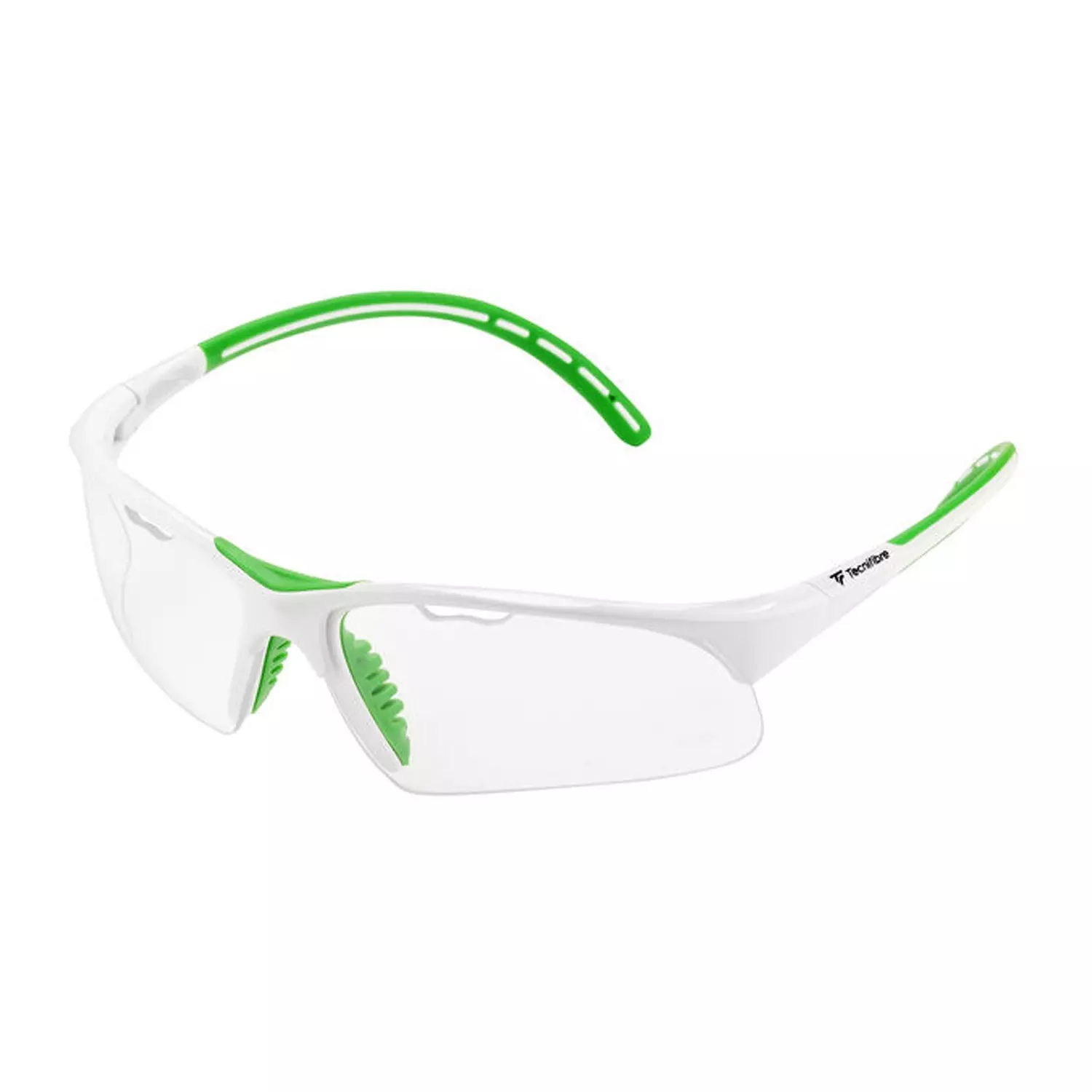
2) Tecnifibre Lunettes Squash Eyewear — White/Green
Tecnifibre’s squash-specific goggle in a clean White/Green colorway, built with lens protection and comfort in mind for match play or practice.
A stylish yet functional goggle, combining Tecnifibre’s design sensibility with protective features needed on court. The White/Green finish gives it a sharp, modern look while maintaining performance.
Who it suits:
-
Players wanting a balance of style and safety.
-
Juniors or club players who must comply with mandatory eyewear rules.
-
People who prefer lighter, less obtrusive goggles that still hold up through rallies.
Why it stands out:
-
Brand synergy: pairs well with Tecnifibre racquets for consistent family branding.
-
Likely lighter than bulkier options—easier for longer rallies and reduced fatigue.
-
Good optics and field of view—less lens distortion, better peripheral awareness.
Usage tip:
-
Clean lenses after every session with a microfiber cloth — grit is eyewear’s enemy.
-
Check the strap/temple fit before the match starts — sometimes the frame loosens with sweat.
-
If side vents or holes exist, keep those clear (dust, sweat residue) to prevent fogging.
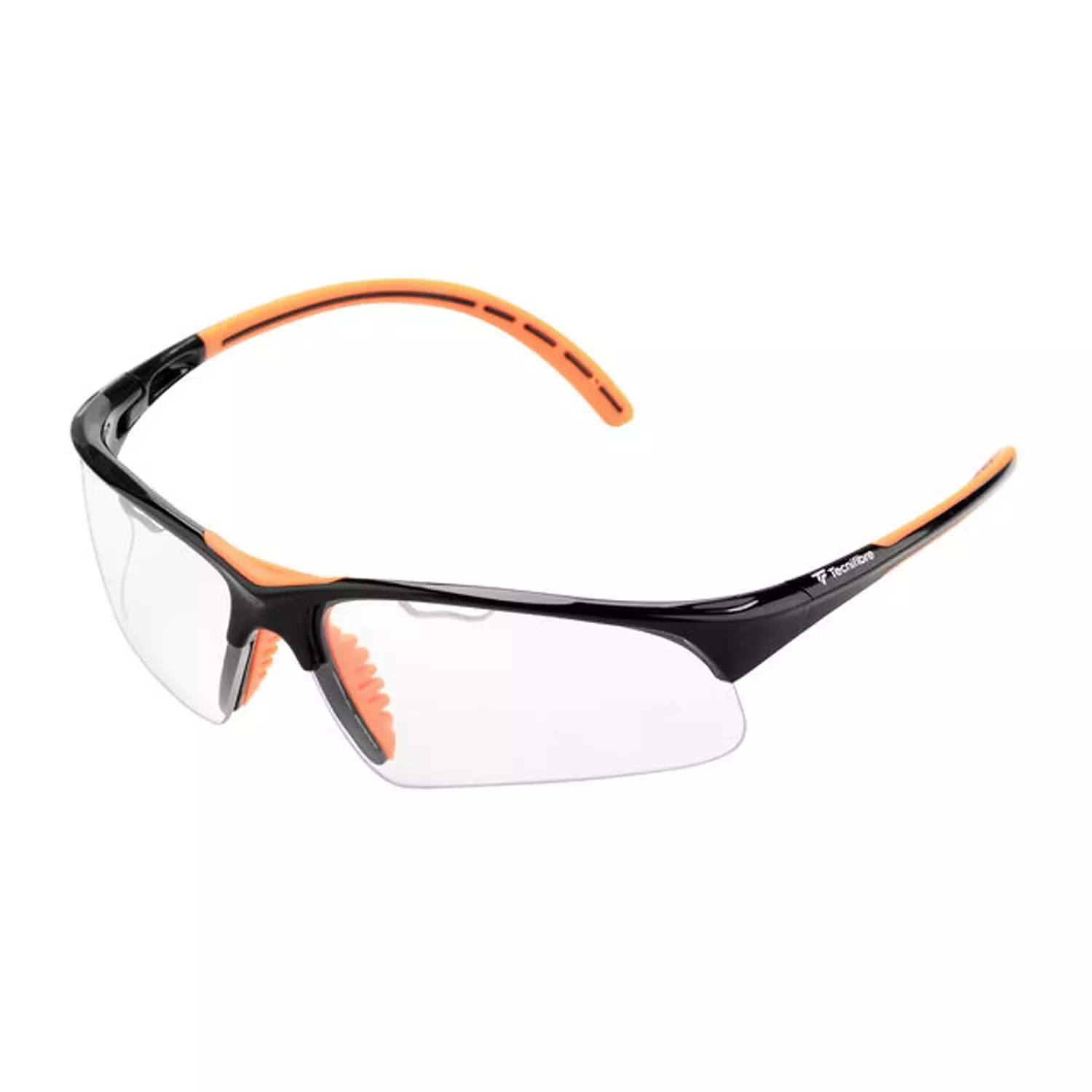
3) Tecnifibre Lunettes Squash Eyewear — Black/Orange
The same Tecnifibre Lunettes model in a contrasting Black/Orange color scheme.
This is essentially the same protective frame as the White/Green version, but with a bolder Black/Orange aesthetic. Same protective specifications, just a different look.
Who it suits:
-
Players who prefer darker frames or match their gear/kit color scheme.
-
Those who like the Lunettes design but want a more aggressive, contrasting appearance.
-
Anyone replacing a scratched frame but staying with a model they like.
Why it stands out:
-
Same trusted performance as the Lunettes family—comfort, vision, coverage.
-
Easier to mask wear and dirt (black frame hides scuffs).
-
Visually striking for those who like standout gear on court.
Usage tip:
-
Use a UV-safe lens cleaner to preserve the coating and color vibrancy.
-
Store in a hard case so that orange accents don’t fade or scratch against rough surfaces.
-
Keep the strap tight at the start of play—straps may stretch during long sessions.
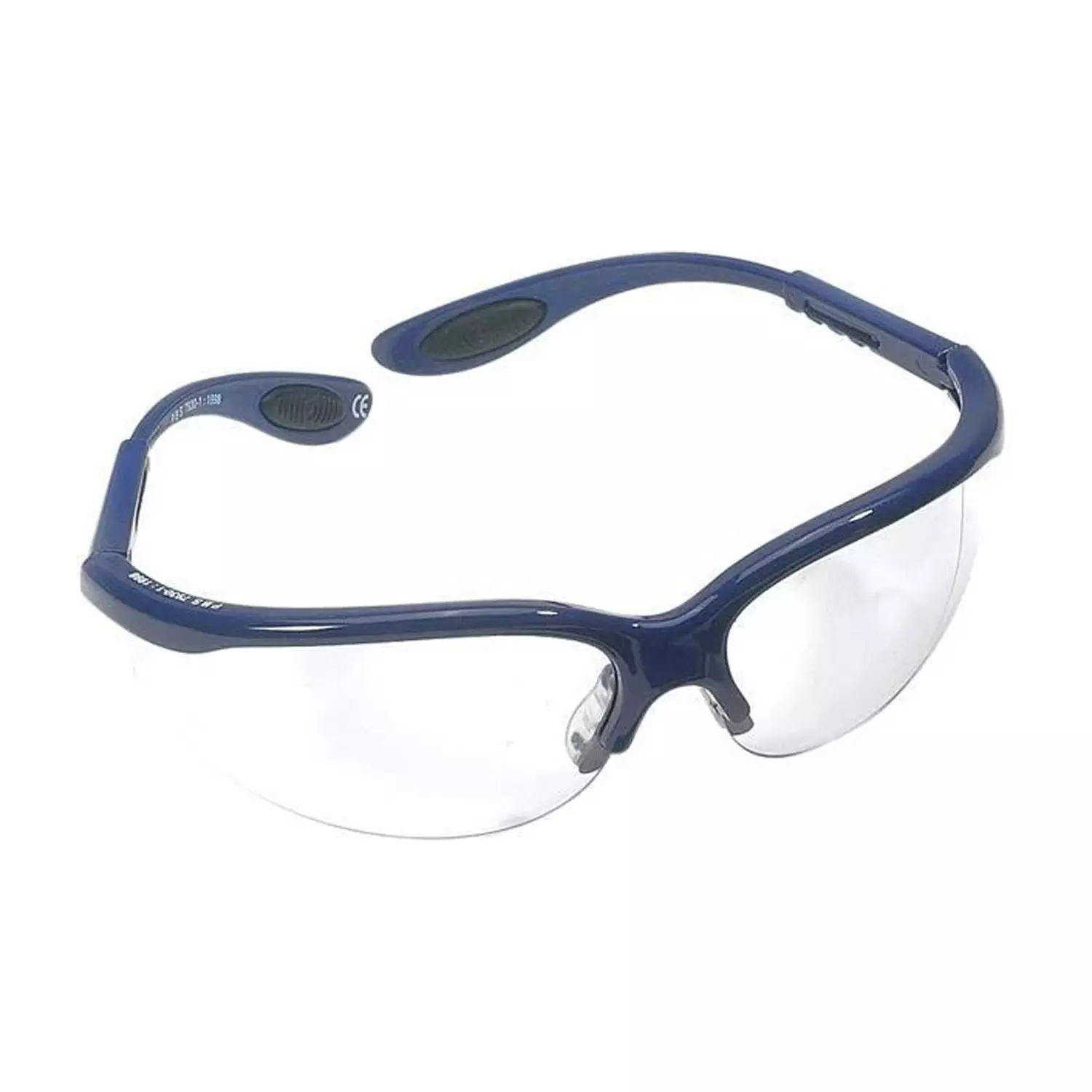
4) Prince Pro Lite Squash Goggles
Prince’s lightweight yet protective goggle (Pro Lite)—a minimal, streamlined design aiming to give protection without bulk.
True to its name, Pro Lite is built for players who favour a “bare-feel” approach to eyewear—providing essential protection while minimizing intrusion and weight. Great for players who are sensitive to heavy frames or prefer less weight at the temples.
Who it suits:
-
Players who dislike bulky goggles and want near “invisible” protection.
-
Teenagers or lightweight players who get annoyed by heavy goggles.
-
Competitive club players who value comfort across multi-match sessions.
Why it stands out:
-
Slimline profile reduces fatigue, especially on long days.
-
Likely good for pairing with hats/visors (less interference).
-
Combines protection with minimalism: ideal when you want just the essential coverage without extra mass.
Usage tip:
-
Ensure a snug fit around the orbital bones to prevent lens-frame bounce, especially when stretching.
-
Because frames are lighter, inspect for flex or micro-cracks periodically.
-
Make sure lens ventilation is effective—light frames tend to fog more easily under heavy sweat.
Tips to Improve Your Squash Gameplay
Technical Tips
- Master the T: Always recover to center court.
- Length First: Tight rails and deep drives are foundations of pressure.
- Volley Early: Take balls before they drop to reduce the opponent’s reaction time.
- Mix Heights: Use lobs to reset rallies.
Tactical Insights
- Disguise Shots: Same swing, multiple outcomes (drop, drive, boast).
- Change Tempo: Alternate between fast drives and soft touch to disrupt rhythm.
- Anticipation: Read your opponent’s body position—pros like Nicol David were masters at this.
Fitness & Conditioning (Pro Routines)
- Ghosting Drills: Sprint to corners without the ball. Example: 30s on / 30s off × 8 sets.
- Court Sprints: From T to each corner × 10 reps.
- Strength Training: Squats, lunges, and planks for explosive leg power and core stability.
- Endurance: Interval running or rowing builds squash-specific stamina.
Mental Game
- Stay Calm Under Pressure: Champions like Ramy Ashour thrived by keeping composure during tight games.
- Visualization: Picture your shots before stepping on court.
- Short Memory: Forget mistakes quickly; focus on the next rally.
Commonly Asked Questions about Squash
Q1: How long does a squash game last?
Anywhere from 20 minutes (club match) to 60 minutes (pro-level).
Q2: Do I need special shoes?
Yes. Indoor court shoes with gum soles are non-negotiable for grip and safety.
Q3: Which squash ball is right for me?
- Beginners: Blue/Red.
- Club/intermediate: Single Yellow.
- Advanced: Double Yellow.
Q4: How dangerous is squash?
With protective eyewear, risk is minimal. Without it, eye injuries can be serious.
Q5: Who are the best players to watch for inspiration?
- Ali Farag (tactical genius).
- Nour El Sherbini (women’s powerhouse).
- Mohamed ElShorbagy (explosive style).
- Nicol David (legend, 8× World Champion).
Conclusion
Squash is a rare blend of athleticism, mental strength, and tactical mastery. With the right equipment, knowledge of rules and court, and a commitment to training, anyone can elevate their game.
From controlling the T-position to disguising shots, from choosing the right ball to wearing proper eyewear, success in squash comes down to preparation and consistency.
So, the next time you step into the box, remember—you’re not just playing a game, you’re stepping into one of the most challenging and rewarding sports ever created. Control the walls, command the T, and let your squash journey begin.